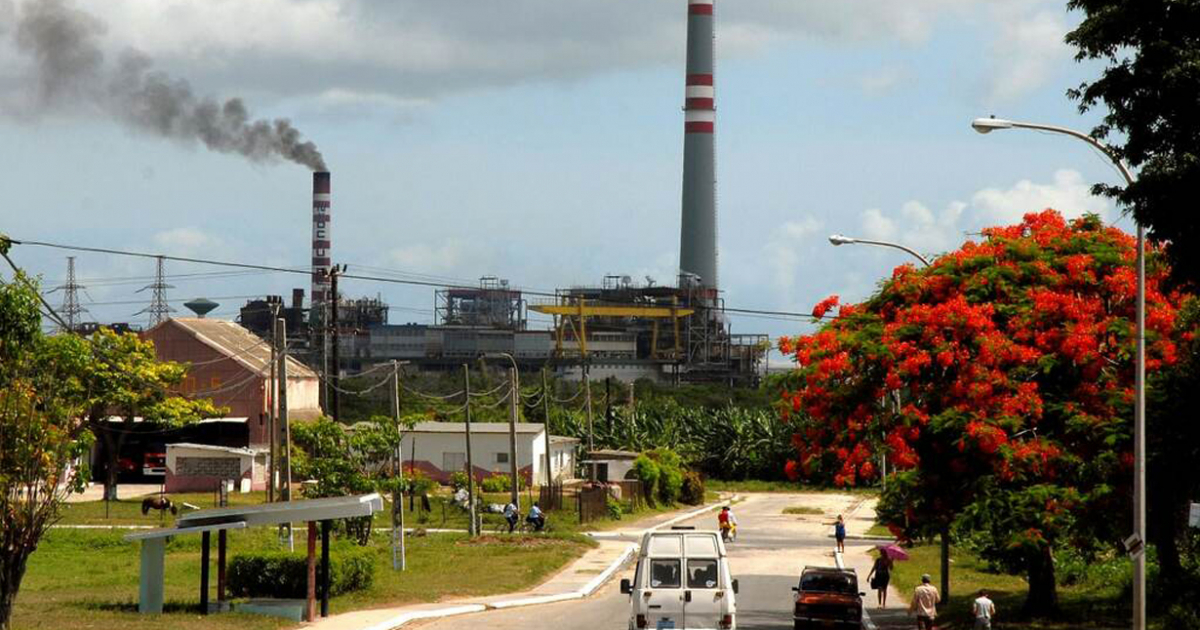
On Monday, Cuba experienced a total shutdown of its National Electric System, as reported by the Union Eléctrica (UNE). The organization confirmed the collapse and announced that protocols for restoring power were being activated.
"A complete disconnection of the National Electric System has occurred. Protocols for restoration are being implemented. We will continue to provide updates," the UNE stated in a Facebook post.
Meanwhile, the Ministry of Energy and Mines indicated that an investigation into the causes of the blackout is underway, though no further details were provided.
The nationwide blackout followed a day already plagued by severe service disruptions. According to UNE's update for March 16, there were interruptions due to capacity deficits throughout the previous 24 hours, which persisted into the early morning hours.
The peak disruption reported the previous evening was 1,891 megawatts at 7:20 p.m., a figure that exceeded planned levels due to higher-than-expected demand, according to the company.
Critical State of Cuba's Power System
Before the complete disconnection, the situation was already dire. At 6:00 a.m. on March 16, UNE reported an availability of only 1,140 megawatts against a demand of 2,347, with 1,220 megawatts affected at that time.
By midday, an impact of 1,250 megawatts was anticipated. A host of issues plagued the generation system, including malfunctions in several major units: Unit 5 at CTE Mariel, Units 2 and 3 at CTE Santa Cruz, Unit 2 at CTE Felton, and Units 3 and 6 at CTE Antonio Maceo. Additionally, maintenance was ongoing at Unit 6 of CTE Mariel, Unit 5 of CTE Nuevitas, and Unit 4 of CTE Carlos Manuel de Céspedes in Cienfuegos.
The company also reported 492 megawatts offline due to thermal generation limitations. Despite these challenges, UNE planned for the entry of Unit 4 at CTE Cienfuegos during peak hours, providing 80 megawatts, which was “in the start-up process.”
Solar Power's Role Amid Energy Crisis
Assuming this addition, UNE calculated a power availability of 1,220 megawatts against an estimated peak demand of 3,150, resulting in a deficit of 1,930 megawatts and a predicted impact of 1,960 megawatts during peak consumption hours.
The official report also highlighted the contribution of solar power. The 52 new photovoltaic solar parks generated 4,262 megawatt-hours, delivering a maximum output of 732 megawatts at midday. However, this was insufficient to prevent the worsening crisis and the subsequent total system collapse.
With the confirmation of the total disconnection of the National Electric System, the island shifted from a severe energy deficit situation to a widespread blackout.
The system was already operating under extremely fragile conditions before the UNE's announcement of the total shutdown. Cuba is grappling with a severe energy crisis marked by outdated thermal power plants, fuel shortages, and constant malfunctions, leading to daily blackouts across much of the country.
Understanding Cuba's Widespread Blackout
What caused the total power shutdown in Cuba?
The exact cause of the total power shutdown is under investigation by the Ministry of Energy and Mines, but it followed severe service disruptions and capacity deficits.
How did the solar power parks contribute during the crisis?
The 52 new photovoltaic solar parks produced 4,262 megawatt-hours, providing a maximum output of 732 megawatts, though this was not enough to prevent the overall power system failure.
What is the current state of Cuba's energy infrastructure?
Cuba's energy infrastructure is in a critical state due to aging thermal power plants, fuel shortages, and frequent malfunctions, leading to daily blackouts.