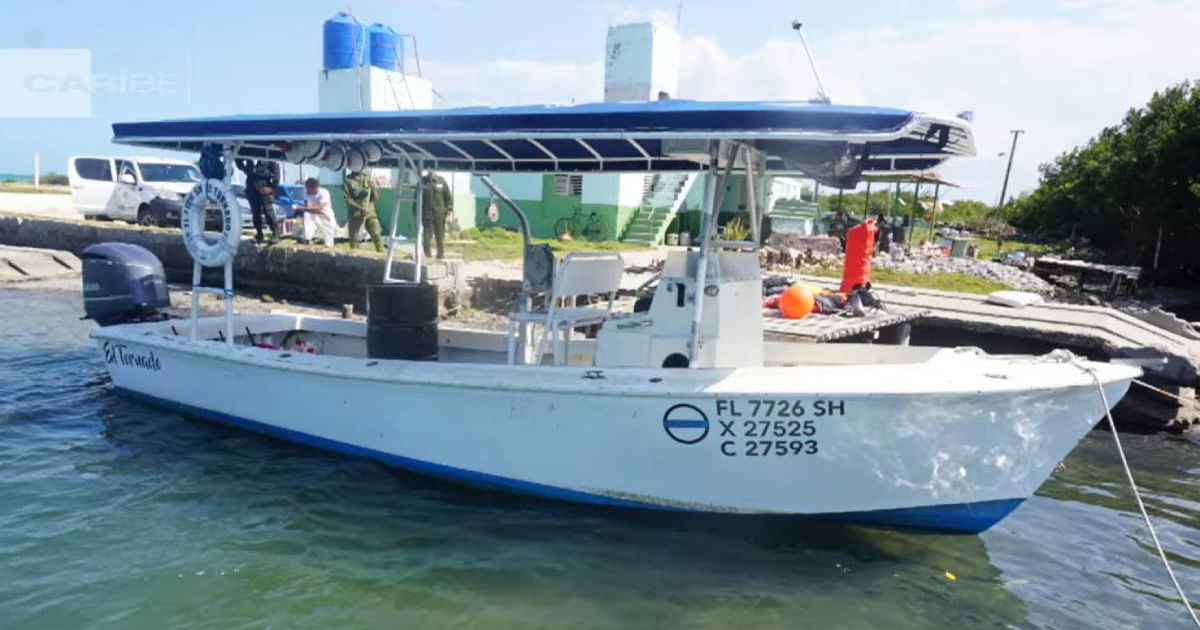
A warm bowl of soup lovingly prepared by a mother, a hurried farewell before heading to work, and a promise to return in a few hours. These were the final moments, as uncovered by The New York Times, of several of the ten Cubans who embarked on a boat from the Florida Keys toward Cuba—a mission that culminated in a deadly confrontation with the island's coast guard.
None of them made it back home.
Héctor Cruz Correa assured his mother he was off to fish, requesting his favorite meat soup for the journey. Roberto Álvarez Ávila, a father of three, promised his wife he'd see her after finishing his security shift at Walmart. Conrado Galindo Sariol informed his partner that he was heading out to deliver packages.
Hours later, these men became part of a group of ten Cuban migrants who, according to the Cuban government, had left Florida carrying weapons, with the intent of reaching Cuba's northern coast.
Tragic Confrontation at Sea
The clash took place on February 25, about a mile from the island. Four of the men died during the gunfire, and another succumbed to injuries days later. The five survivors, wounded, remain detained in Cuba.
More than two weeks after the incident, numerous questions linger regarding their true intentions.
Connections and Motivations
The American newspaper reported that the men were connected through TikTok group chats and organizations advocating against Cuba's communist regime. Many resided in Miami and Tampa, cities with strong anti-Castro sentiments.
Some in exile speculate that the group might have believed a small contingent could challenge the Cuban government amid what they perceived as political and economic vulnerability on the island.
"It was an act of bravery, of courage," remarked Cuban activist Jorge Luis García Pérez, also known as Antúnez, during a memorial in Little Havana. "Those men went there ready to sacrifice everything."
The Families' Perspective
However, for the families, the ordeal is viewed through a different lens.
María Antonia Correa Pérez, mother of Cruz Correa, reminisced about her last moment with her son in their Homestead, Florida, home. He enjoyed some of the soup she prepared, taking the rest with him before heading to the Keys.
Days later, she had to identify his body via a video call from Cuba.
"My heart is shattered," she expressed. "I cannot bear this pain."
Allegations and Legal Consequences
Cuban authorities claim the men were armed with high-caliber weapons, thousands of rounds of ammunition, and military equipment. They allege the group intended to attack targets on the island and "create chaos, incite anxiety, and instill fear."
The survivors might face terrorism charges in Cuba.
Meanwhile, in Miami, the incident has sparked a mix of questions, sorrow, and controversy. Some exiles view them as men willing to fight the Cuban government, while others ponder how these migrants embarked on a mission seemingly doomed from the start.
Beneath the gunfire, weaponry, and politics lie the personal stories of families still grappling with why their sons, husbands, or fathers left home that morning, never to return.
FAQs About the Florida-Cuba Mission
What was the intended purpose of the Cubans' journey?
The exact intentions remain unclear, but it is speculated that the group aimed to challenge the Cuban government during a perceived period of vulnerability.
What were the charges faced by the survivors?
The survivors could potentially face terrorism charges in Cuba, as authorities claim they carried weapons and intended to incite chaos on the island.
How did the families of the deceased cope with the tragedy?
The families are struggling with grief, as they recount the last moments with their loved ones who left on what turned out to be a fatal journey.