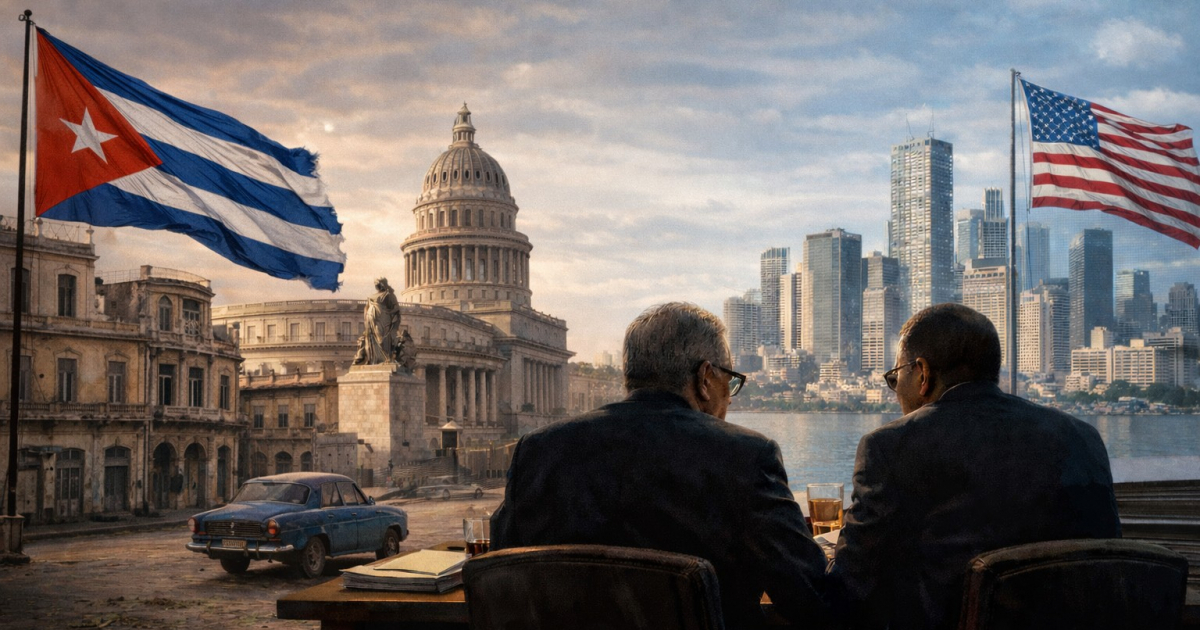
In recent times, Cuba has emerged as a potentially less risky strategic focus for Washington than the ongoing conflict with Iran. As the Trump administration weighs various foreign policy options, this shift in perspective gains significance.
An opinion piece by José M. de Areilza, published in ABC, highlights that President Donald Trump himself has discussed a possible "friendly takeover of Cuba," a strategy he believes could be politically advantageous and carry fewer risks than escalating military tensions in the Middle East.
Trump brought up this topic during a meeting held at his Doral golf club in Florida, where he engaged with representatives from twelve Latin American countries. The discussions during this meeting centered on shared challenges related to immigration and regional security.
The analysis suggests that the initial steps of this strategy might already be underway. These actions could gain momentum if Trump opts to declare victory on the Iranian front and seeks a ceasefire, provided the Iranian regime eases regional tensions.
The article posits that the framework for extending U.S. influence over Cuba could mirror the approach taken in Venezuela following the government collapse of Nicolás Maduro on January 3. This plan's first phase would focus on maintaining internal order and safeguarding U.S. economic interests before promoting political changes.
In this context, Secretary of State Marco Rubio is reportedly spearheading discussions with figures close to Raúl Castro, who remains a significant influence on the island. Among these interlocutors is Raúl Rodríguez Castro, known as “El Cangrejo,” the grandson and bodyguard of the historic Cuban leader, who could act as a conduit to protect family interests and potentially play a role in a political transition.
Meanwhile, the situation within Cuba continues to deteriorate, marked by power outages, protests, and arrests of those demanding freedom on the streets of Havana, all amidst an energy crisis exacerbated by the loss of Venezuelan oil supplies.
The analysis concludes that despite Rubio's democratic convictions and alignment with those advocating for political changes in Cuba, he must adhere to Trump's strategic approach in managing the Cuban dossier.
Understanding U.S. Policy Toward Cuba
Why is Cuba considered a less risky focus than Iran for the U.S.?
Cuba is perceived as a less risky focus because engaging with the island could be politically more advantageous and less hazardous than escalating military conflicts in the Middle East, particularly with Iran.
What role does Marco Rubio play in the U.S. strategy toward Cuba?
Marco Rubio is leading discussions with key figures in Cuba, including those close to Raúl Castro, as part of a strategy to extend U.S. influence on the island while maintaining internal order and protecting economic interests.
What challenges does Cuba currently face?
Cuba is grappling with energy shortages, frequent power outages, public protests, and arrests, all exacerbated by the cessation of oil supplies from Venezuela.