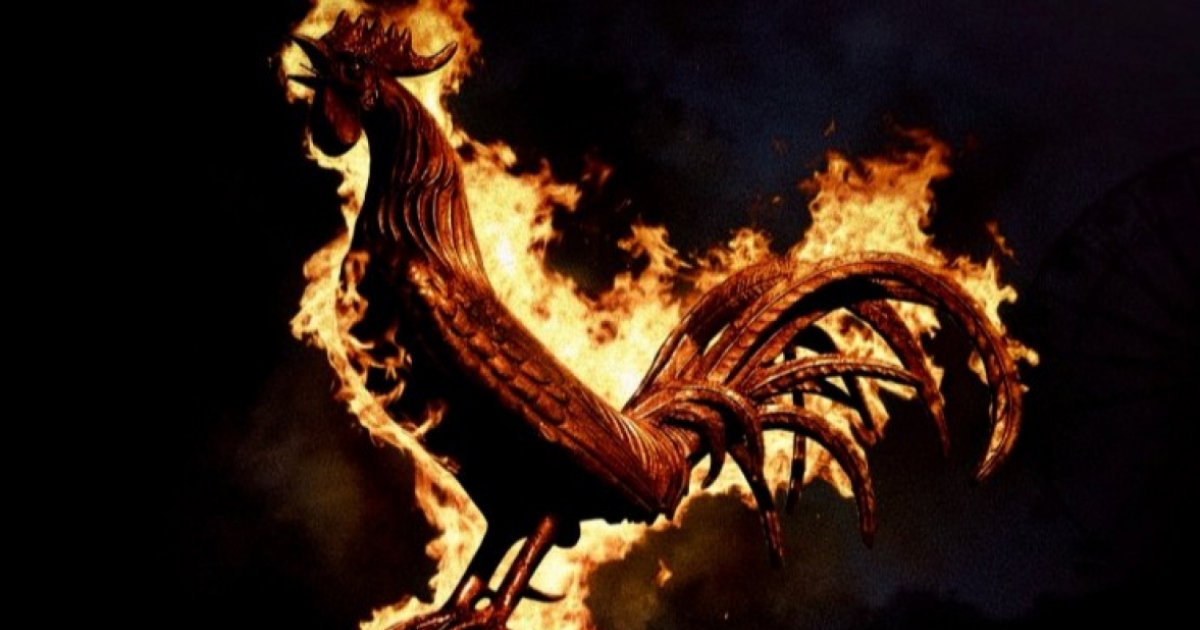
An image has recently taken social media by storm, transforming into a powerful symbol within just a few hours. Though it's not a real photo, this artistic creation depicts a rooster engulfed in flames, accompanied by the phrase "Morón Libre."
This striking illustration was posted on Instagram by Cuban filmmaker Asiel Babastro, who hails from the very city of Ciego de Ávila. It didn't take long for this vivid portrayal to go viral.
The Rooster: A Symbol of Defiance
In Morón, the rooster is no ordinary emblem. It stands as the most recognized symbol of the city, which even boasts a bronze monument of the bird at its entrance. For decades, it has been a proud, defiant, and vigilant icon of local identity.
Babastro's rendition of the rooster wrapped in flames evokes the passionate spirit of the community. Many Cubans grasped the significance of this image at once.
A Viral Image That Became a Rallying Cry
The comments on Babastro's post reveal how deeply the image resonated. Ariday Villar, a beauty pageant contestant from Ciego de Ávila, simply wrote, "Cuba libre." Meanwhile, fellow model Milena Rivalta added, "God protect Cuba. Freedom!"
Some users employed metaphors to capture the unfolding events. "The brave rooster is out on the streets," one person remarked, suggesting that Morón's symbol had morphed into the embodiment of a populace refusing to stay silent.
Another commenter recalled a historic episode from the struggle against Fulgencio Batista's dictatorship, when young revolutionaries attacked the Presidential Palace and Radio Reloj in 1957. The sentiment expressed was that history is often biased by those who write it, as reflected by the contrasting portrayals of past and present events in Morón.
Spontaneous expressions of emotion echoed throughout the comments: "Long live a Cuba free from communism!" and "Let's begin writing our own history. No more lies, no more communism," penned various users.
Understanding the Artist's Vision
Babastro, born in 1989, has made a name for himself as a director, screenwriter, editor, and art director. His work in advertising, music videos, and independent film is marked by meticulous attention to visual aesthetics and symbolic imagery that mirrors Cuban reality.
He is also renowned for directing the music video for "Patria y Vida," a song that became an anthem during the July 11 protests in Cuba. Consequently, when Babastro unveiled the fiery rooster, it was perceived not merely as an illustration but as a statement.
Morón: A City That Shed Its Fear
The image's release coincided with a pivotal night in Morón's history. Amid prolonged power outages, food shortages, and worsening living conditions, dozens of residents took to the streets, banging pots and pans while chanting "Libertad!" over and over.
During the protest, a profoundly symbolic act took place. Protesters entered the local Communist Party headquarters, removing propaganda, portraits, and furniture, and piling them on the street. This heap was then set ablaze.
While Cuba often lacks essentials like food, medicine, electricity, and transportation, political slogans and propaganda are plentiful. On that Friday night, Morón's residents repurposed these materials as fuel for their fire.
Government Response: A Predictable Pattern
The authorities reacted with familiar tactics. Reports surfaced of gunfire, police presence, and claims that a young person was injured amid the chaos. Internet access was also reportedly cut, hampering the real-time sharing of the unfolding events.
This pattern—repression, information blackouts, and official silence—is one that the regime has employed repeatedly during crises. Yet, people still took to the streets.
The Impact of a Defiant Night
While the political system remains unchanged, that night in Morón left an indelible image of ordinary citizens overcoming fear. This is why Babastro's illustration of the burning rooster resonated so profoundly; many Cubans saw it as more than just a local symbol. It became a metaphor for the nation's current moment.
The proud, defiant rooster engulfed in flames serves as a warning to any authoritarian regime: once fear dissipates, ideas spread like wildfire.
And perhaps this is why the image continues to circulate, as many Cubans feel that the blazing rooster represents more than just Morón.
It's Cuba awakening.
Understanding the Symbolism of Morón's Fiery Rooster
Why is the rooster a significant symbol in Morón?
The rooster is a well-recognized symbol of Morón, representing pride, defiance, and vigilance. It is even commemorated with a bronze monument at the city's entrance.
Who is Asiel Babastro, the artist behind the fiery rooster image?
Asiel Babastro is a Cuban filmmaker known for his work as a director, screenwriter, editor, and art director. He gained recognition for directing the music video for "Patria y Vida," a protest anthem in Cuba.
What does the image of the burning rooster symbolize?
The image symbolizes the passionate spirit and defiance of the Cuban people, representing a call for freedom and resistance against oppression.