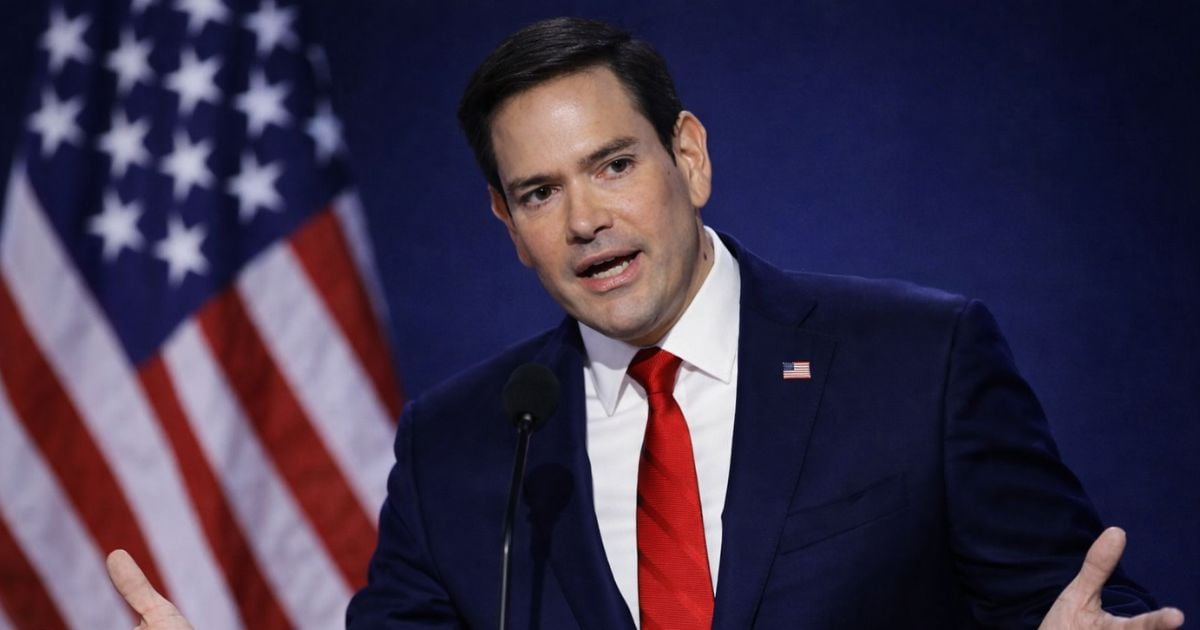
United States Secretary of State, Marco Rubio, declared on Monday that Afghanistan has been labeled as a "State Sponsor of Unjust Detentions," accusing the Taliban of using American citizens as political leverage.
"Today, I am designating Afghanistan as a State Sponsor of Unjust Detentions. The Taliban continues to employ terrorist tactics to gain political concessions, but this will not be tolerated by our administration," Rubio announced via his official account on X.
The U.S. diplomatic leader demanded the immediate release of Dennis Coyle and Mahmood Habibi, along with all other Americans whom Washington believes are being unjustly detained in Afghanistan.
Rubio further urged the Taliban regime to cease what he termed as hostage diplomacy. "The Taliban must release Dennis Coyle, Mahmood Habibi, and all Americans unjustly held in Afghanistan," he stated.
This designation is part of a blacklist established by an executive order signed by President Donald Trump in September, targeting governments accused of holding foreign nationals to gain diplomatic or financial advantages.
Escalating Concerns in U.S. Foreign Policy
Reports from DW indicated that U.S. officials have also cautioned that Afghanistan is not a safe destination for American citizens, with Washington considering potential restrictions on the use of U.S. passports for travel to the country.
This decision to include Afghanistan on the list comes amid heightened tensions in U.S. foreign policy concerning the Middle East and Central Asia. On February 27, Washington also designated Iran with the same "State Sponsor of Unjust Detentions" label, just a day before the U.S. and Israel launched strikes against the Islamic Republic.
The U.S. administration believes several governments are leveraging the detention of foreigners as a geopolitical pressure tool. Rubio emphasizes that these practices are a form of coercion that Washington will oppose with sanctions and diplomatic pressure.
Focus on High-Profile Detention Cases
In particular, the situation of Mahmood Habibi, an Afghan-American businessman and former chief of the country's civil aviation authority, who disappeared in Kabul in August 2022, receives significant attention. Although the Taliban claims they do not have him in custody, the U.S. has offered a $5 million reward for information leading to his release.
Another case involves Dennis Coyle, a U.S. academic detained in January 2025. Washington also seeks information regarding the whereabouts of writer Paul Overby, who vanished in 2014 near the Afghanistan-Pakistan border.
International Pressure and Humanitarian Crisis
The pressure from Washington has extended to the United Nations. U.S. Ambassador to the UN, Mike Waltz, recently expressed skepticism regarding the Taliban's willingness to adhere to international commitments.
During a Security Council meeting, Waltz called for a review of international assistance to Afghanistan, highlighting that the Taliban regime continues to restrict fundamental rights, especially those of women.
"As we discuss expanding the UN’s presence in Afghanistan, we must remember that the Taliban engages in hostage diplomacy, manipulates humanitarian aid, brutally abuses women, and allows their people to suffer," Waltz stated.
In recent years, the Taliban authorities have imposed severe restrictions on female participation in public life, blocking many women from pursuing education or working in offices and institutions.
These restrictions are occurring while Afghanistan faces one of the world's most severe humanitarian crises. Estimates from the World Food Programme indicate that about a third of the population suffers from severe food insecurity.
Key Questions on Afghanistan's Designation and U.S. Policy
Why has Afghanistan been labeled a State Sponsor of Unjust Detentions?
Afghanistan has been labeled as such due to the Taliban's alleged use of American citizens as political leverage, employing terrorist tactics for political concessions.
What measures is the U.S. taking against Afghanistan's designation?
The U.S. plans to counter these practices with sanctions and diplomatic pressure, as part of a broader effort to oppose coercion through unjust detentions.
Who are Dennis Coyle and Mahmood Habibi?
Dennis Coyle is an American academic detained in Afghanistan, while Mahmood Habibi is an Afghan-American businessman and former aviation chief, both considered unjustly detained by the U.S.