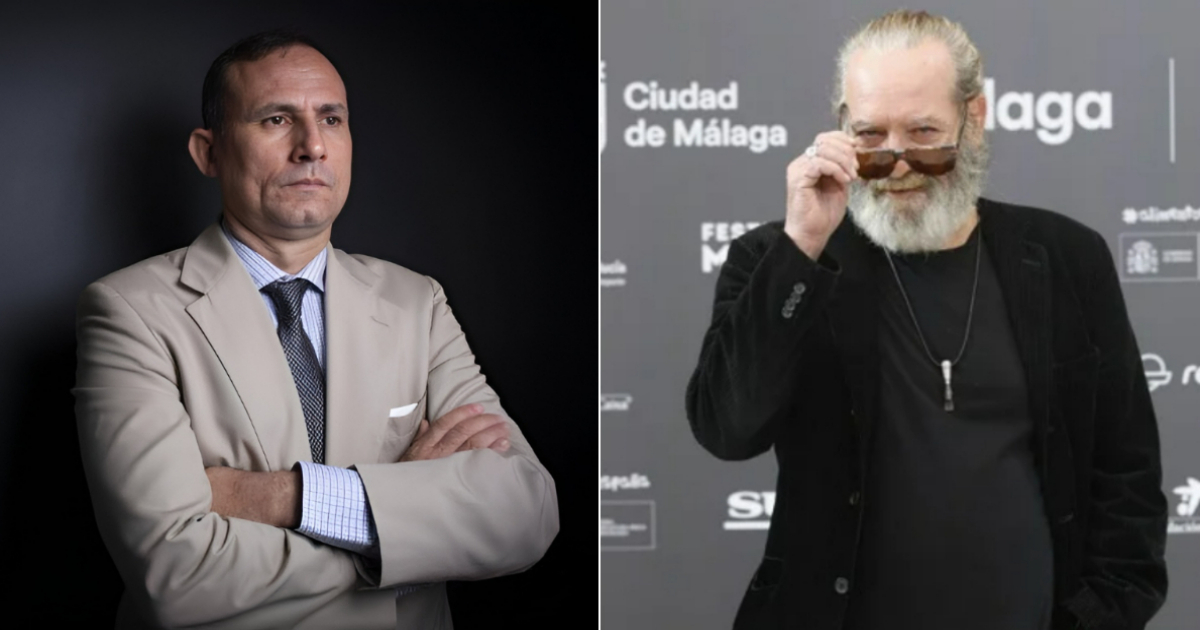
The Cuban opposition leader, José Daniel Ferrer, head of the Patriotic Union of Cuba (UNPACU), strongly rebuked remarks made by actor and director Jorge Perugorría at the Malaga Film Festival. Perugorría claimed that the "strangulation" policy towards Cuba, enacted by former U.S. President Donald Trump, is pushing the nation towards a "humanitarian crisis."
In a social media post, Ferrer labeled Perugorría’s stance as "miserable" and held the Cuban regime solely accountable for the island's dire situation. "Jorge Perugorría's position is a disgrace. The only real culprits of Cuba's severe crisis are the criminal Castro-communist regime," Ferrer stated.
Ferrer also voiced his support for Trump, asserting that the former president has been "the most supportive friend" the Cuban people have had. He suggested that should Trump complete his policies towards Cuba, he might be remembered as "the Liberator of the 21st Century."
"It's disgraceful to blame those who shouldn't be blamed out of fear or selfish interests," Ferrer added.
Ferrer’s comments were a response to declarations made by Perugorría during a press conference at the Malaga Film Festival, where he showcased the film 'Neurótica Anónima,' co-directed with Cuban actress Mirtha Ibarra.
“We are in the worst moment in our country’s history,” Perugorría stated, attributing part of the crisis's severity to Washington's pressure on Havana. He indicated that the economic downturn is severely hindering film production, citing a recent halt in filming due to a fuel shortage.
"I was scheduled to start filming a movie last week, but we had to stop because there’s no fuel, and what little there is must be prioritized for essential needs like hospitals," he told EFE.
The actor pointed out that in the past year, only “four or five” films were made on the island due to resource shortages.
During the same presentation, actress Ibarra painted a grim picture of daily life in Cuba, describing it as extremely challenging. "We are without water, without power, enduring blackouts lasting up to 48 hours. The country is on its knees," she lamented.
Perugorría's comments reignited a long-standing debate among opposition sectors and parts of Cuba’s cultural sphere regarding the root causes of the island's crisis. Known as one of the most recognizable faces in Cuban cinema, Perugorría has previously defended the view that the U.S. embargo is a significant factor in the country's economic troubles, a perspective that aligns with the Cuban government's official stance.
Perugorría also played a prominent role during the November 27, 2020, protests outside the Ministry of Culture, acting as an intermediary in discussions between cultural authorities and a group of artists demanding greater freedoms.
Currently, Perugorría is involved in cultural and business projects in Havana, including the Yarini bar-restaurant and other venues linked to the city’s cultural scene, all while continuing his work as an actor, director, and visual artist.
The exchange between Ferrer and Perugorría underscores the profound discord both within and beyond Cuba regarding the causes of the island's ongoing crisis, characterized by prolonged power outages, fuel shortages, food scarcity, and a general decline in basic services.
Understanding the Cuban Crisis and Its Causes
What are the main arguments in the debate about Cuba's crisis?
The debate centers around whether the U.S. embargo or the Cuban government's policies are primarily responsible for the crisis. The Cuban government and some cultural figures blame the embargo, while opposition leaders like José Daniel Ferrer hold the regime accountable.
How has the crisis affected film production in Cuba?
The economic hardship has severely impacted film production, leading to a significant reduction in the number of movies made on the island. A lack of resources, such as fuel shortages, has forced filmmakers like Jorge Perugorría to halt projects.
What role did Jorge Perugorría play in the 2020 Cuban protests?
During the November 27, 2020 protests, Jorge Perugorría acted as a mediator between cultural authorities and artists who were advocating for greater freedoms in Cuba.