Recent reports by USA Today have sparked a dialogue among political circles and segments of Cuban civil society. The discussions revolve around a hypothetical scenario where Washington might be considering an economic agreement with Havana, entailing gradual economic reforms, increased interaction with Cuba's private sector, and potentially, the departure of leader Miguel Díaz-Canel.
One intriguing aspect of the scenario outlined by the American newspaper is the continued presence of the Castro family on the island, while a new phase of economic relations with the United States unfolds. This strategy suggests a combination of limited political changes with a slow economic opening, reminiscent of a "Cubastroika"—a nod to the partial reforms of the Soviet system in the 1980s.
Underlying Questions and Challenges
This approach raises significant questions. Primarily, focusing the debate solely on Díaz-Canel's departure might have limited political implications. Since his appointment in 2018, Díaz-Canel has been seen largely as a political manager within a system where real power does not rest with the formal presidency.
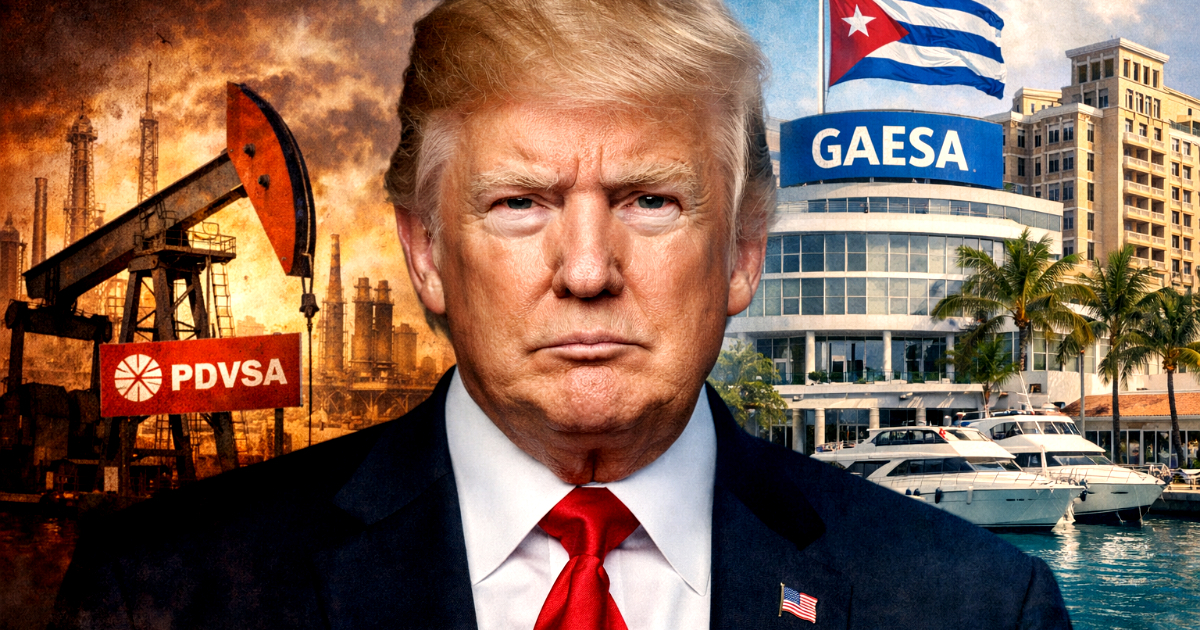
The true power center in Cuba resides in deeper structures: the Communist Party, the state's security apparatus, and the military-business conglomerate that oversees much of the national economy. This economic network is epitomized by GAESA (Grupo de Administración Empresarial S.A.).
GAESA, the military-run conglomerate, dominates key sectors of the Cuban economy, from tourism and ports to retail, remittances, and numerous financial operations. Many of these sectors—like tourism, energy, and port activities—are highlighted in USA Today's reports as potential areas for Washington to ease restrictions or facilitate economic deals.
The Role of GAESA and the Castro Legacy
Analysts estimate that the group, directly controlled by the Castro regime's upper echelon, manages a substantial portion of the country's foreign currency revenue, accounting for nearly 70% of the dollarized economy. In essence, GAESA operates as the financial backbone of Cuba's political system.
Therefore, some observers argue that Díaz-Canel's exit might not necessarily disrupt the real balance of power, especially if the political and economic structures built over decades by the Castro regime remain unchanged. The continued presence of the Castro family adds another layer to the debate. Although Fidel Castro passed away in 2016 and Raúl Castro formally retired from public positions, the institutional legacy and power networks they constructed still exert significant influence within the system.
Lessons from Venezuela and Strategic Implications
This point gains even more significance when considering the Venezuelan precedent. In Venezuela, Washington's strategy did not solely focus on political pressure against Chavismo. The central element was neutralizing the regime's primary funding source: oil.
The logic behind this strategy is clear: as long as an authoritarian regime retains control of its main revenue source, it can continue to finance its political apparatus, maintain its security structure, and uphold the power networks that ensure its survival.
Applied to Cuba, this logic raises another inevitable question. If Venezuela's strategic resource was oil, then in Cuba, that role is fulfilled by GAESA. The military conglomerate controls a significant portion of the country's foreign currency inflows, bridging the gap between political power, the state economy, and emerging business sectors.
Even the expansion of Cuba's private sector in recent years has not completely altered this framework. Many small and medium-sized enterprises depend directly or indirectly on infrastructure, imports, or financial circuits controlled by the state or military-linked entities.
Therefore, some analysts argue that an economic opening that does not disrupt GAESA's control over strategic sectors could inadvertently reinforce the very system it aims to reform.
U.S. Foreign Policy and Regional Dynamics
This issue also connects with the broader framework of U.S. foreign policy in the Western Hemisphere. In recent years, Washington has reemphasized the strategic importance of Latin America and the Caribbean within its national security policy. In this context, several analysts speak of a contemporary reinterpretation of the historic Monroe Doctrine, aimed at reaffirming U.S. influence in the region and limiting the presence of rival powers such as Russia or China.
Cuba holds a unique position within this geopolitical landscape. For decades, the regime has maintained close political and military ties with Moscow, in addition to growing economic relations with Beijing.
From this perspective, a central strategic question arises: if the goal is to reduce hostile influence in the hemisphere, can that be achieved without transforming the power structures that have sustained the Cuban system for over six decades?
The answers are not straightforward. Some experts argue that strengthening Cuba's private sector could generate internal pressures capable of transforming the system from within. Others believe that gradual economic reforms might create opportunities for subsequent political changes.
However, there is also the opposite precedent: regimes that have adapted to economic reforms without losing essential political control.
In this context, the debate initiated by USA Today's reports revolves around a fundamental issue. If change is limited to an economic opening without altering the military conglomerate's control over the main sectors of the economy, the result could be a reorganization of the system rather than its transformation.
And this is where the parallel with Venezuela becomes relevant again. If the strategic principle was a Chavismo without oil, the inevitable question for Cuba would be: can there be a real transition without achieving a Castrismo without GAESA?
Key Questions on Cuba's Economic and Political Future
What role does GAESA play in the Cuban economy?
GAESA is a military-run conglomerate that controls strategic sectors of Cuba's economy, including tourism, ports, retail, and financial operations, effectively serving as the financial backbone of the political system.
Why is Miguel Díaz-Canel's potential departure seen as having limited political impact?
Díaz-Canel has been perceived as a political manager rather than a central power figure, with real control residing in deeper structures like the Communist Party, state security, and GAESA.
How does the situation in Cuba compare to Venezuela's experience?
While Venezuela's regime relied on oil, Cuba's regime relies on GAESA for economic control. Both situations illustrate how controlling a primary revenue source helps maintain an authoritarian regime's power.