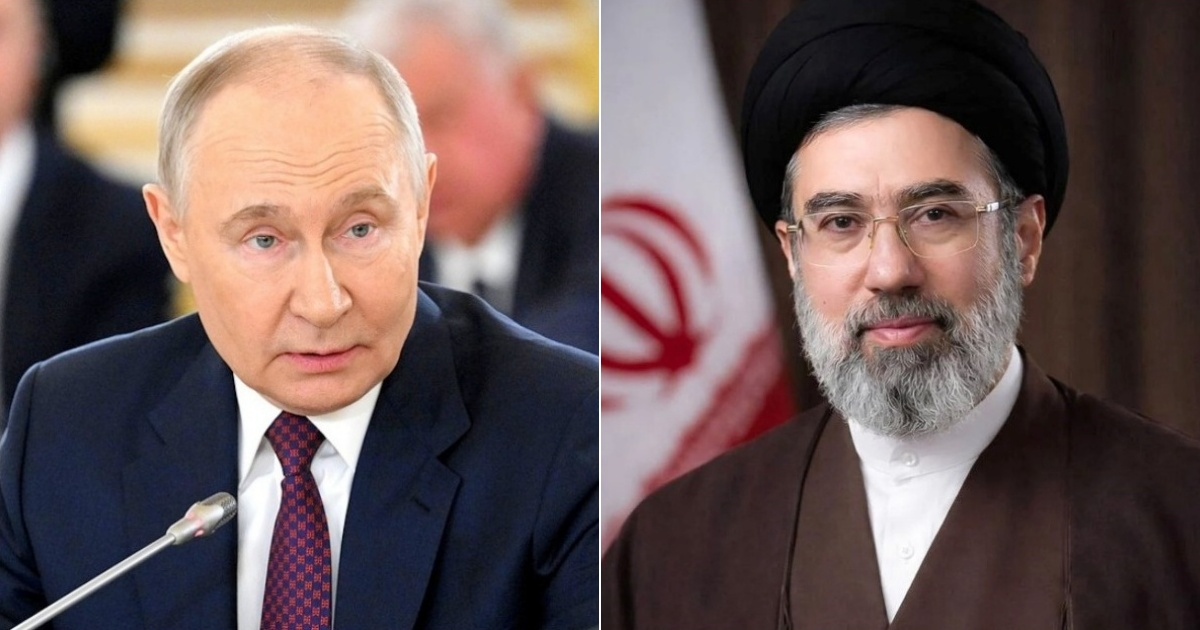
Russian President Vladimir Putin voiced Moscow's "steadfast" support for Iran on Monday, following the appointment of Ayatollah Mojtaba Khamenei as the country's new Supreme Leader. He succeeds his father, Ali Khamenei, who passed away during the initial bombings by the United States and Israel on Iranian territory.
In a message from the Kremlin, the Russian leader congratulated the newly appointed religious head and reaffirmed that the bond between Moscow and Tehran will remain strong despite the ongoing conflict in the Middle East.
"Russia has been and will continue to be a trustworthy partner of the Islamic Republic. I wish you success in the challenging tasks ahead," read the congratulatory note from Putin.
The Kremlin chief also expressed confidence that the new ayatollah will uphold his father's political legacy and maintain the nation's unity amid the crisis.
According to the Russian Presidency, Putin expressed his belief that Mojtaba Khamenei will "carry on his father's work with honor" and unite the Iranian people "in the face of severe trials."
Furthermore, he reiterated his solidarity with Tehran by stating his intent to "confirm unwavering support for Tehran and solidarity with our Iranian friends."
Trump's Stern Warning
While Moscow confirms its backing of Iran's new leadership, U.S. President Donald Trump issued a stern warning regarding the newly appointed ayatollah's future.
"He will need to gain our approval. If he doesn't, he won't last long," Trump told ABC News following the announcement of Ali Khamenei's successor by the Assembly of Experts.
Earlier in the week, the U.S. President had already criticized the religious figure, dismissing him as a "lightweight."
The appointment of the late Supreme Leader's son comes amid the ninth day of conflict involving Iran, the United States, and Israel.
The fighting has included bombings in Tehran and attacks on strategic infrastructure such as oil depots, with the conflict threatening to spread across the region.
The Iranian Health Ministry reports over 1,200 deaths and more than 10,000 civilian injuries since the attacks began, though these figures remain independently unverified.
Selection of the New Leader
The Assembly of Experts of Iran, an 88-member clerical body responsible for choosing the Supreme Leader, selected Mojtaba Khamenei on Sunday as his father's successor. Ali Khamenei died on February 28 during U.S. and Israeli bombings that ignited the current war.
The death of Ali Khamenei, who had led Iran since 1989, marked a turning point in the regional conflict.
His passing occurred during initial attacks on Iranian strategic sites, which have sparked fears of a global energy crisis amid the military escalation spreading across the Middle East.
Iranian state media confirmed the appointment early Monday. Mojtaba Khamenei, aged 56, had long been seen as a strong candidate to succeed his father.
Though he held no formal state position, he was known for his substantial influence behind the scenes and close ties with the Islamic Revolutionary Guard Corps. The United States sanctioned him in 2019.
The new leader's election was endorsed by Iran's political and military elites, with the Armed Forces pledging loyalty to the new leadership and reiterating their commitment to "resolutely counter" U.S. and Israeli aggression.
This appointment aligns with the hardline stance that Iranian leadership has maintained since the war began.
Parliament Speaker Mohammad Baqer Qalibaf recently asserted that Tehran is not seeking a ceasefire and that those responsible for the attacks "must be punished."
"If the enemy attacks us from any country, Tehran will respond decisively," he warned.
Meanwhile, military tensions continue to rise. Israel has already signaled that the new Iranian leader could become "a target," indicating that the conflict is far from over.
Key Questions about Iran's Leadership Change
Who is Mojtaba Khamenei?
Mojtaba Khamenei is the newly appointed Supreme Leader of Iran, succeeding his father, Ali Khamenei. He is known for his influence behind the scenes and close ties with the Islamic Revolutionary Guard Corps.
What was Vladimir Putin's reaction to the new leadership in Iran?
Vladimir Putin expressed unwavering support for Mojtaba Khamenei and reaffirmed the strong relationship between Russia and Iran, despite ongoing Middle Eastern tensions.