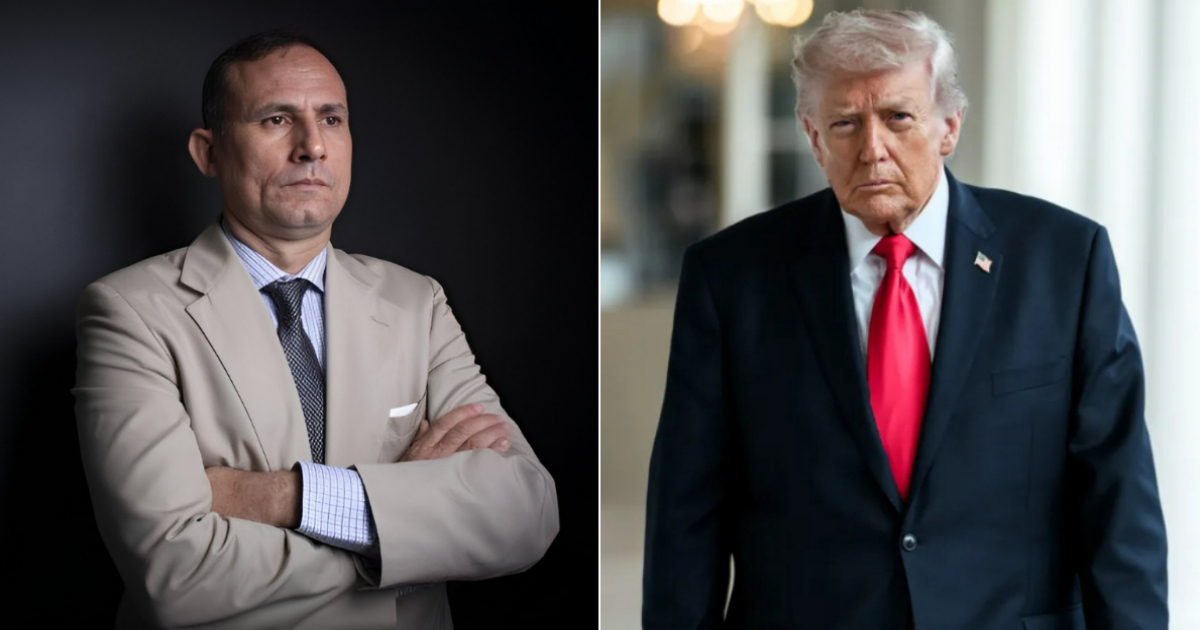
Cuban dissident José Daniel Ferrer has issued a stark warning in response to reports by USA Today regarding a potential economic deal between President Donald Trump's administration and the Cuban regime. This deal is rumored to involve a negotiated exit for Miguel Díaz-Canel while allowing the Castro family to remain on the island.
According to the recent articles published by USA Today, Washington is reportedly considering a strategy that combines economic pressure with selective openness. This could lead to agreements in various sectors such as ports, energy, and tourism, alongside a potential easing of travel restrictions for Americans.
One of the reports even suggests the possibility of a "Cubastroika," a process inspired by the Soviet-era perestroika, aimed at gradually implementing economic reforms within the Cuban system by increasing dependence on the U.S. economy.
However, the leader of the Patriotic Union of Cuba (UNPACU) expressed concern that this strategy might inadvertently solidify the totalitarian regime's power structure instead of bringing about comprehensive political change.
“If after capturing Nicolás Maduro, and eliminating Alí Jamenei along with other senior figures of the Iranian regime, President Trump and Secretary of State Marco Rubio end up making only an economic deal with the Castros, leaving them in Cuba, then once the current administration ends, the U.S. will have to confront dangerous adversaries in the region again,” Ferrer shared on social media platform X.
Ferrer suggested that allowing the Castro power core to remain intact could pose long-term geopolitical risks. In his view, a solution that lets the Castro family continue to wield influence in Cuba's political system might recreate tensions reminiscent of the Cold War era.
“The U.S. would face new October Crises with Russian and Chinese missiles, more Castros, Chávezes, Evos, Correas, and Ortegas,” he asserted.
Ferrer’s warnings align with questions that have been raised following USA Today's revelations, particularly concerning the incentives and assurances that would accompany such a deal.
The reports depict a scenario where Washington seeks to leverage Cuba's deep economic crisis—worsened by the cessation of Venezuelan oil supplies—to drive reforms by strengthening the private sector.
Among the proposed measures is the decision to allow American petroleum products to be sold directly to small businesses on the island—something previously prohibited by the embargo for decades.
The strategy aims to foster a gradual economic dependency of Cuba on the United States and stimulate internal changes within the system. However, some analysts have pointed out that this approach may face significant hurdles. Historically, the Cuban regime has shown a remarkable ability to absorb limited economic reforms without altering its centralized political control, as seen during various periods of partial opening in recent decades.
Another lingering question is how far greater economic interaction with Cuba's private sector can actually lead to structural transformations if the main levers of power—the security apparatus, the Communist Party's control, and the military-business conglomerate—remain unaffected.
Ferrer emphasized that any path toward the island's future must culminate in a complete democratic transition.
“The only solution is a fully democratic Cuba, friendly to the United States and the entire free world,” he stated.
Nonetheless, the dissident expressed hope that Washington's strategy will not fall short of its goals.
“I don’t believe Trump will leave the job half done. It would be disastrous for Cubans, for the United States, and for the planet,” he concluded.
Potential U.S.-Cuba Economic Deal: Key Concerns and Implications
What is the rumored economic deal between the U.S. and Cuba?
The rumored deal involves a negotiated exit for Miguel Díaz-Canel while allowing the Castro family to stay in Cuba. It could include economic agreements in sectors like ports, energy, and tourism, as well as a potential easing of travel restrictions for Americans.
What are Ferrer's concerns about the deal?
Ferrer is worried that the deal might strengthen the regime's power structure without leading to meaningful political change, posing long-term geopolitical risks similar to those during the Cold War.
How might economic dependency on the U.S. impact Cuba?
The strategy seeks to create a gradual dependency of Cuba on the U.S., potentially driving internal changes. However, the Cuban regime has historically managed to absorb economic reforms without altering its centralized political control.