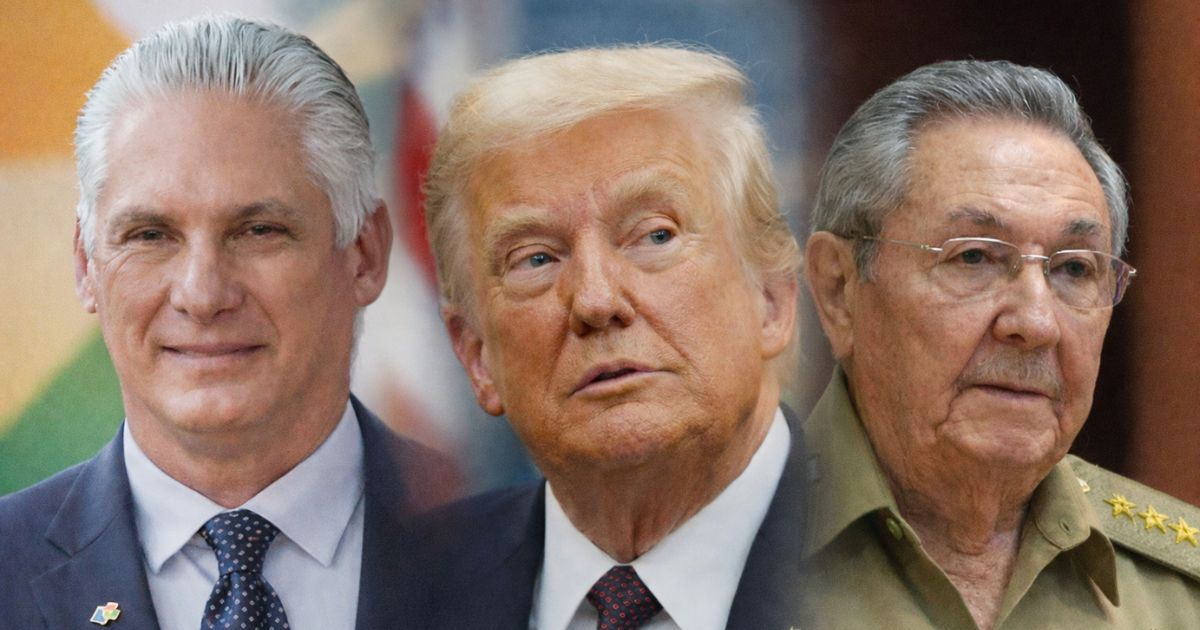
The Trump administration is actively pursuing a potential economic agreement with Cuba, which could involve a negotiated exit for President Miguel Díaz-Canel, while allowing the Castro family to remain on the island. The deal includes plans for collaboration in the ports, energy, and tourism sectors, as reported by USA Today on Sunday.
Amidst an unprecedented energy crisis in Havana, discussions have considered the possibility of the United States easing certain sanctions and increasing the capacity for Americans to travel to Cuba. President Trump would not require Congressional approval to adjust these restrictions. However, the precise details and timeline of the potential agreement remain unknown.
President Donald Trump has made several public statements in recent days. In a CNN interview on Friday, he remarked, "Cuba will fall very soon. They are eager to reach an agreement." During the Shield of the Americas Summit on Saturday at the Trump National Doral in Miami, he was even more direct: "Cuba is at the end of the line. They have no money. They have no oil. They want to negotiate, and they are negotiating with Marco Rubio and me."
According to Axios, confirmed by multiple sources, Secretary of State Marco Rubio has engaged in secret talks with Raúl Guillermo Rodríguez Castro, the 41-year-old grandson of Raúl Castro, nicknamed "El Cangrejo," bypassing Díaz-Canel's official channels. A senior administration official was explicit about the goal: "The U.S. government's position is that the regime has to go."
US Pressure Strategy and Its Impact on Cuba
The maximum pressure strategy—dubbed "Cubastroika" by USA Today—was intensified after the capture of Venezuelan President Nicolás Maduro on January 3, cutting off more than 26,000 barrels of Venezuelan oil per day to Cuba. On January 29, Trump signed Executive Order 14380, declaring a national emergency and invoking the IEEPA to threaten tariffs on any country supplying oil to the island. Mexico, the second-largest supplier, halted its shipments on January 9.
The situation on the ground has been devastating for the Cuban population. On Saturday, power outages affected up to 63% of the country, with an energy deficit of 2,046 MW and only 1,015 MW available against a demand of 3,050 MW. Cuba produces just 40% of its own fuel and relies almost entirely on imported oil for its electricity grid.
Strategic Mineral Reserves as a Bargaining Chip
Analysts suggest that Cuba might offer access to its nickel and cobalt reserves—strategic minerals of interest to Washington—in exchange for sanction relief. As noted by Foreign Policy, "Cuba has significant deposits of nickel and cobalt, which would be attractive to the Trump administration, given its priority of securing access to strategic minerals."
Cuban Deputy Foreign Minister Carlos Fernández de Cossío acknowledged that contacts have occurred but downplayed their significance: "We have exchanged messages, we have embassies, we have had communications, but we cannot say we have had a dialogue table." Cuban state television dismissed Trump's narratives as "stories" promoted by Rubio.
Trump humorously commented on his Secretary of State's negotiating skills on Saturday: "He will take an hour off and finish a deal on Cuba." Anonymous sources cited in media described the regime's collapse as "100% an event of 2026."
Frequently Asked Questions about US-Cuba Relations and Economic Negotiations
What is the potential economic deal with Cuba about?
The potential economic deal involves a negotiated exit for Cuban President Miguel Díaz-Canel, with the Castro family remaining on the island. It includes agreements in ports, energy, and tourism sectors.
How might the US benefit from Cuba's mineral reserves?
Cuba's significant deposits of nickel and cobalt are of strategic interest to the US, which seeks to secure access to such minerals for national priorities.
What has been the impact of US pressure on Cuba's energy sector?
US pressure, including the halt of oil shipments from Venezuela and Mexico, has resulted in significant energy shortages and widespread power outages across Cuba.