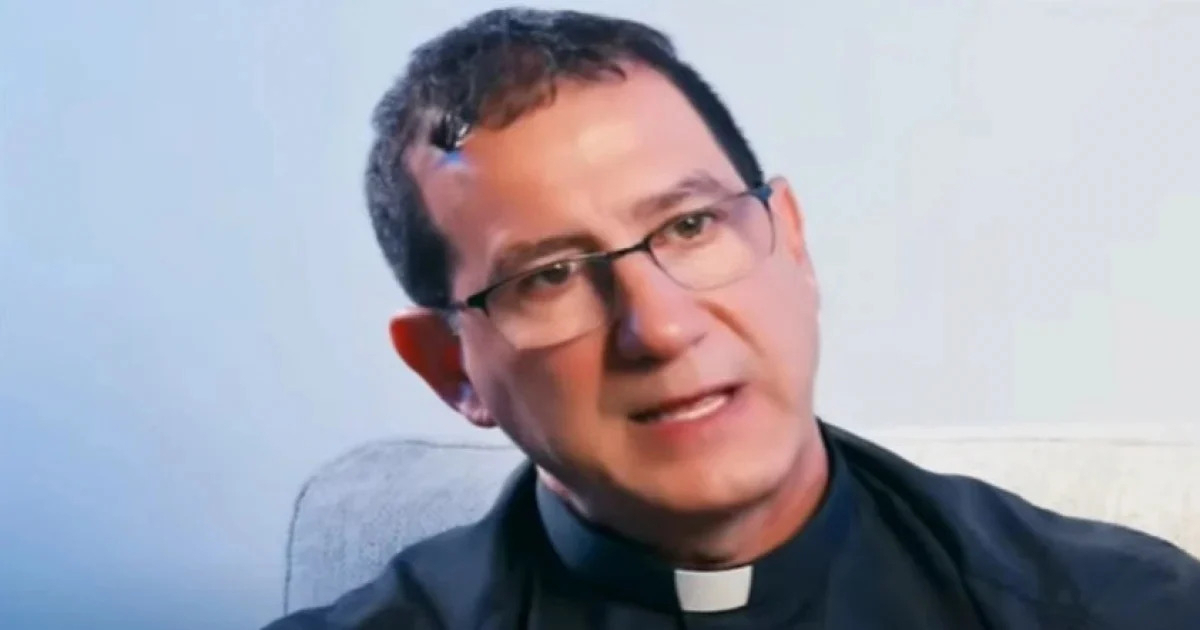
Cuban priest Alberto Reyes recently shared a thought-provoking message on social media, emphasizing that the true catalyst for political change in Cuba lies not solely in external influences or economic turmoil, but in the evolving mindset of the Cuban people. According to Reyes, citizens are starting to shed their fear and assert their rights.
In a comprehensive Facebook post, Reyes argued that the necessity for political change on the Island has become undeniable after decades under a stagnant system. "It is evident that Cuba requires a change in government and political structure," he stated.
Reyes criticized the long-standing political project that has dominated Cuba, declaring it a "spectacular failure" that has left the nation in dire social and economic conditions. He contended that under nearly seven decades of the same regime, the standard of living has deteriorated to an unacceptable level.
"After almost 70 years under a totalitarian regime, life on the Island couldn't be more dismal, and the plight of the Cuban people couldn't be more lamentable," he expressed.
The Pressures Mounting on the System
Reyes highlighted multiple factors suggesting that Cuba is nearing a pivotal moment for political transformation. He pointed to the exacerbated economic crisis, unprecedented in the nation's history, as a key pressure point.
Additionally, he referenced international pressure, particularly from the United States, and noted the fading support from former political and ideological allies like Russia and China. The absence of a new international partner willing to financially sustain the Cuban government, as seen in past decades, further complicates the situation.
The priest also mentioned Cuba's increasing diplomatic isolation and the rejection by various countries of initiatives previously promoted by Havana, such as international medical missions. He observed that as the government struggles to buy time, it finds dwindling external support.
"It seems more doors are closing, fewer people believe in them, and fewer are willing to lose money and credibility by supporting a dictatorial and failed regime," he wrote.
The People's Role in Change
According to Reyes, the crucial factor is not just political or economic pressures, but rather the changing attitude of the Cuban populace. "The most significant key lies in a people who have grown weary, who, for the first time in a long time, believe they deserve freedom and prosperity, and have resolved to pursue it," he asserted.
He cited recent events that mirror this societal shift, such as the San Isidro Movement, the gathering of young people in front of the Ministry of Culture, the July 11 protests, and university students protesting ETECSA's tariff hikes.
Reyes also noted the increasingly outspoken stances of Catholic bishops on the Island, who have publicly addressed the country's situation in recent years.
Emerging Movements and Hopes for Change
The priest highlighted new civil society initiatives, mentioning a group known as "El 4tico," which he described as one of the most profound contributions to recent public discourse. Following the imprisonment of its members, a new phenomenon called "Fuera de la caja" has emerged, driven by young Christians motivated by their faith.
"These young leaders of a different generation are not working alone, as they have the support of their Christian communities, communities that will not hesitate to defend them," he emphasized.
Reyes believes these movements signal the rise of a new generation of social and political leaders within Cuba. To conclude his reflection, he invoked a well-known phrase about the inevitability of social progress: "They can cut all the flowers, but they cannot stop the spring," he wrote.
The priest asserted that this process is already underway in Cuban society and will continue to advance. "This people, beyond their indoctrination, their fear, their insecurity, and helplessness, have said 'Enough!' and have set in motion, and they will not stop until the day we joyfully embrace and can say: 'We are free!'" he concluded.
Understanding Cuba's Political Shift
What is the main factor driving change in Cuba according to Alberto Reyes?
Alberto Reyes believes the main factor driving change in Cuba is the change in attitude among the Cuban people, who are beginning to demand their rights and freedoms.
What pressures are contributing to Cuba's potential political transformation?
The worsening economic crisis, international pressure, particularly from the United States, and the lack of new international allies willing to support the Cuban government are contributing to the potential political transformation in Cuba.
How does Reyes view the role of international support in Cuba's current situation?
Reyes views the dwindling international support as a significant issue for the Cuban government, as more countries are closing their doors to the regime, resulting in increased isolation.