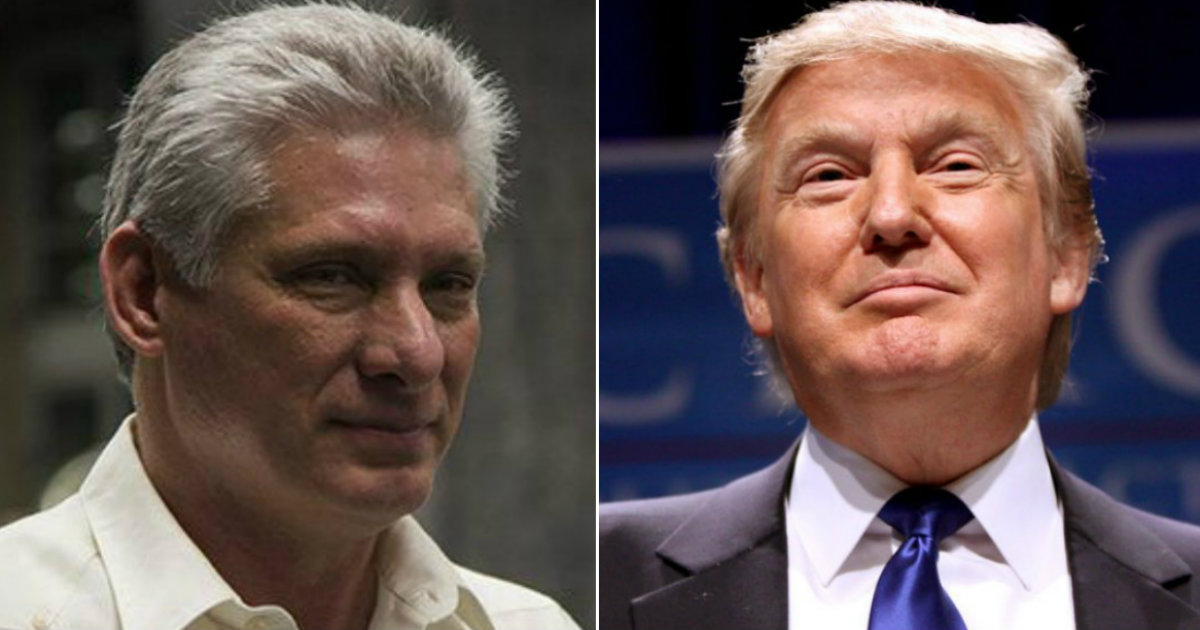
Cuban leader Miguel Díaz-Canel unleashed criticism against the "Shield of the Americas" summit held in Miami, Florida, which took place this past Saturday with the participation of representatives from 12 countries.
In a post on X, Díaz-Canel described the summit as "small," "regressive," and "neocolonial," accusing the United States of coercing right-leaning governments in the region into accepting the lethal use of U.S. military force to handle internal issues within their respective nations.
Díaz-Canel's statement contended that the gathering was "organized by the U.S. with the involvement of right-wing governments in the area" and asserted that this meeting "obligates these governments to approve the lethal use of American military force to address domestic challenges, impacting the order and stability of their countries."
He portrayed this interpretation as a broader regional threat, claiming that the event constitutes "an affront to the Declaration of Latin America and the Caribbean as a Zone of Peace."
Further expanding his critique, he stated that the summit also symbolizes "an assault on regional integration aspirations" and "a demonstration of the willingness to submit to the interests of the powerful northern neighbor under the principles of the Monroe Doctrine."
U.S. Administration's Take on Cuba
During the summit, former President Trump asserted that Cuba seeks to negotiate with his administration. He mentioned that these discussions involve Secretary of State Marco Rubio and himself, suggesting that a potential agreement with Havana could be reached "quite easily."
"They are eager to negotiate. They are engaging in talks with Marco, myself, and a few others. I believe a deal with Cuba could be secured very effortlessly," Trump remarked.
In his comments, Trump depicted Cuba as teetering on the brink of economic and political collapse. He argued that the island is "at the end of the line," lacking both funds and oil, attributing this predicament to what he labeled as "a flawed philosophy" and "a regime that has been ineffective for an extended period."
Trump also pointed out that, historically, Cuba had received resources from Venezuela, but that support appears to have vanished. As a manifestation of the crisis he outlined, Trump claimed that Cuba is so deprived of resources that it cannot even procure enough fuel for aviation operations.
Insights into U.S.-Cuba Relations and Regional Politics
What is the "Shield of the Americas" summit?
The "Shield of the Americas" summit is a gathering that involves multiple countries, focusing on regional security and policy issues, with notable participation from the United States and right-leaning governments.
Why did Díaz-Canel criticize the summit?
Díaz-Canel criticized the summit as being "regressive" and "neocolonial," accusing it of pressuring regional governments into accepting U.S. military intervention in domestic matters, thus threatening regional peace and integration.
What was Trump's stance on Cuba during the summit?
Trump suggested that Cuba is on the verge of collapse and expressed willingness to negotiate a deal with the Cuban government, implying that such a negotiation could be straightforward.