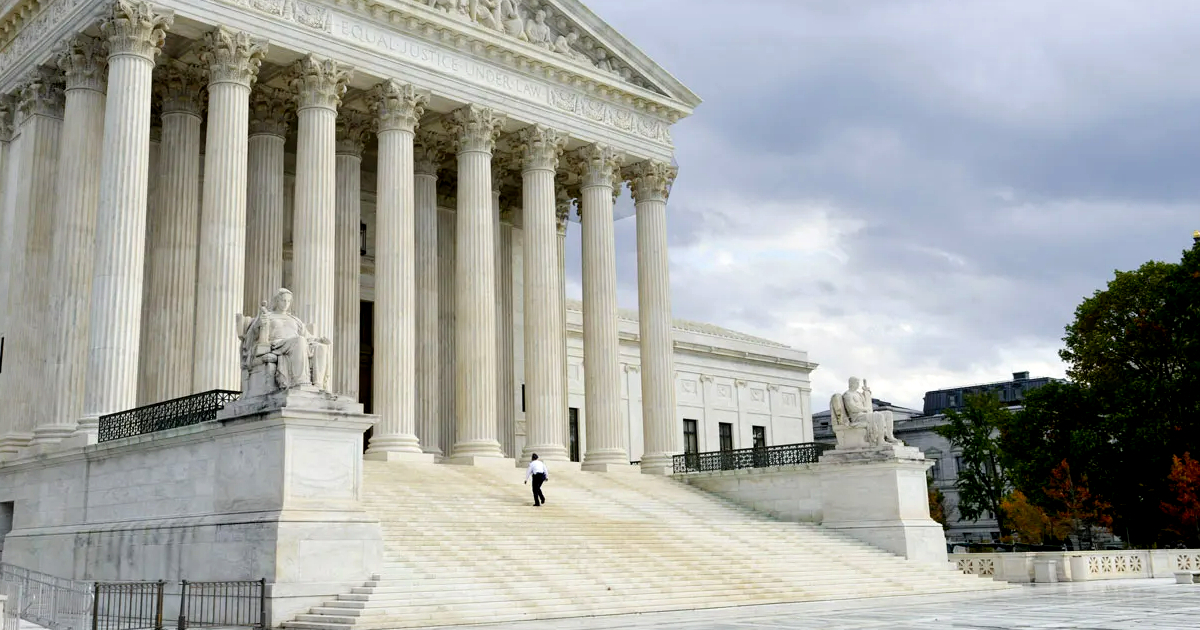
A unanimous decision by the United States Supreme Court may significantly impact thousands of Cubans with active immigration cases, particularly those relying on political asylum as a means to remain in the country.
This ruling narrows the scope of how federal courts can review asylum denials issued by immigration authorities.
Issued on March 4 in the case of Urias-Orellana v. Bondi, the ruling mandates that appellate courts apply a "substantial evidence" standard when reviewing decisions made by immigration judges and the Board of Immigration Appeals (BIA).
In essence, this means that federal courts must uphold immigration authorities' conclusions if there is reasonable evidence to support them, even in cases determining whether an individual has suffered persecution or holds a well-founded fear of persecution in their home country.
Impact on Cuban Asylum Seekers
This decision could affect Cubans seeking protection in the United States, especially those who cannot benefit from the Cuban Adjustment Act and whose main legal recourse is to prove political persecution.
Previously, some federal courts took a broader approach in examining whether the facts presented by an asylum seeker qualified as persecution, sometimes reevaluating the entire case during an appeal.
The Supreme Court's ruling resolves this inconsistency by stating that appellate courts should focus on whether the administrative decision is backed by reasonable evidence.
According to the court, immigration law dictates that administrative findings are conclusive "unless any reasonable adjudicator would be compelled to conclude to the contrary," reflecting a deferential standard of judicial review.
In simpler terms, to overturn an asylum denial, the evidence provided by the applicant must be compelling enough to force any reasonable judge to reach a different conclusion.
The Case Behind the Decision
The case in question involved Douglas Humberto Urias-Orellana, a Salvadoran citizen who applied for asylum after entering the United States in 2021 with his family.
During his immigration proceedings, Urias-Orellana claimed he was threatened by a hitman in his home country. Although the immigration judge found his testimony credible, it was concluded that the incidents described did not meet the legal threshold of persecution required by U.S. asylum law.
The Board of Immigration Appeals upheld the decision, and later, the First Circuit Court of Appeals also affirmed it. The case eventually reached the Supreme Court to clarify the standard of review federal courts should apply.
In an opinion authored by Justice Ketanji Brown Jackson, the court emphasized that Congress designed the immigration system to defer to the conclusions of specialized agencies.
The ruling also highlights that evaluating persecution involves both factual and legal elements, yet it must be reviewed under the same deferential standard.
Potential Consequences for Cuban Migrants
This decision could impact thousands of Cubans currently seeking political asylum in the United States.
In recent years, many migrants from the island have turned to asylum as a pathway to regularize their immigration status, especially those unable to access other legal mechanisms.
Among them are numerous Cubans with the I-220A form, a document granting supervised release to migrants detained at the border who are then freed while their immigration process continues.
This document does not equate to a legal admission or a parole permit, leaving many Cubans in a migratory limbo without direct access to the Cuban Adjustment Act.
For many, political asylum has become one of the few viable options to remain legally in the U.S.
With the new criteria set by the Supreme Court, the chances of overturning an asylum denial in federal courts could be significantly diminished.
A System with Increased Administrative Influence
The ruling also strengthens the role of immigration authorities within the U.S. judicial system.
By requiring federal courts to grant greater deference to administrative decisions, the Supreme Court has reinforced a model where much of an asylum seeker's legal battle is determined in the initial stages of the immigration process.
For thousands of Cubans awaiting resolutions to their cases—including many with I-220A—the decision does not immediately alter their legal status but could affect the success of future appeals in federal courts.
Understanding the Supreme Court's Impact on Cuban Asylum Seekers
What did the Supreme Court's ruling change about asylum appeals?
The ruling restricts federal courts to a "substantial evidence" standard when reviewing asylum denials, meaning they must uphold immigration authorities' decisions if reasonable evidence supports them.
How might this decision affect Cuban asylum seekers?
It could reduce the likelihood of reversing asylum denials in federal courts, particularly for Cubans who rely on proving political persecution as their main legal recourse.
What role do immigration authorities play following this ruling?
The ruling reinforces the authority of immigration officials by requiring federal courts to defer to their decisions, thereby centralizing the legal process within the initial immigration stages.