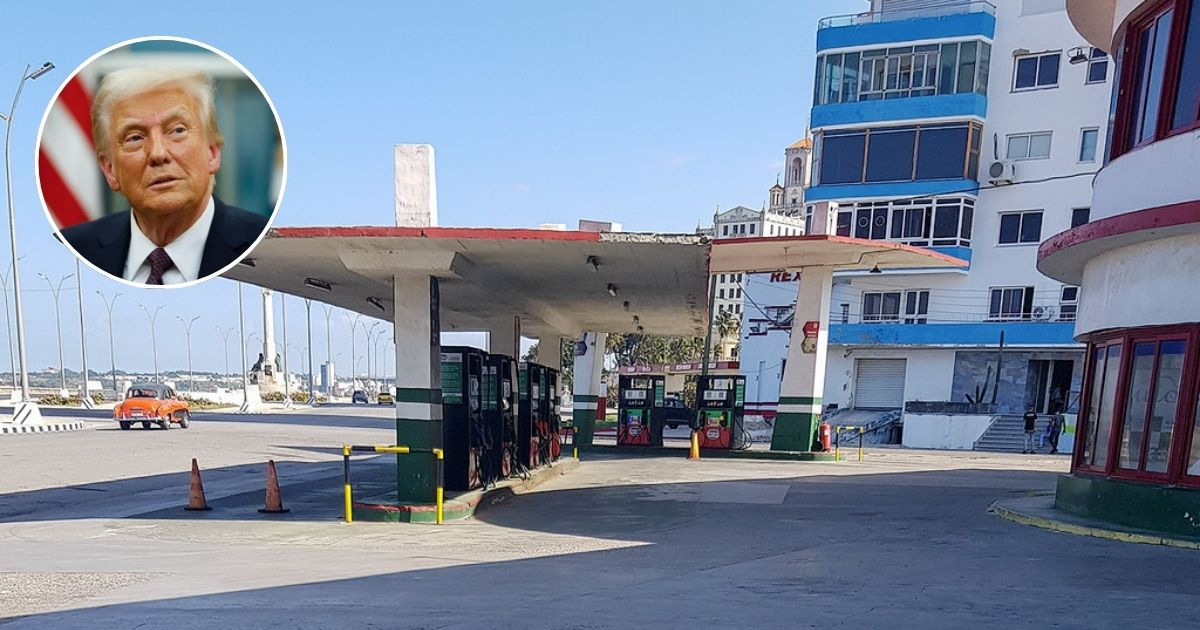
On Saturday, USA Today released an in-depth analysis of the Trump administration's aggressive plan to destabilize the Cuban government by 2026. The initiative, dubbed 'Cubastroika,' aims to instigate a systemic change by cutting off the regime's access to energy while selectively supporting the island's private sector.
The term 'Cubastroika' draws parallels to Gorbachev's Soviet Perestroika, representing Washington's hope that energy constraints, coupled with economic openings for independent Cubans, will lead to a collapse akin to that of Eastern Europe from 1989 to 1991. Trump bluntly stated on CNN, "Cuba is going to fall pretty soon."
There are two main components to this strategy. First, on January 29, Trump signed an executive order declaring a national emergency regarding Cuba, enabling tariffs on any country supplying oil to the Cuban government. This follows the halting of Venezuelan oil supplies—ranging from 27,000 to 35,000 barrels daily—after Nicolás Maduro's capture, and increased pressure on Mexico, which had become a key alternative supplier. On February 13, the Coast Guard intercepted the Ocean Mariner with 84,579 barrels of Colombian fuel oil valued at $6.9 million, 16 miles south of Les Cayes, Haiti.
Simultaneously, in February, the U.S. Treasury and Commerce Departments issued new guidelines allowing American and foreign companies to export fuel directly to Cuban private enterprises without specific licenses or volume restrictions, provided the private sector is the ultimate recipient. Cuban Americans with existing licenses have already started purchasing diesel and sending it to Cuba under this framework.
Yet, on Wednesday, the U.S. banned the use of Cuban banks for these private sector fuel transactions, effective Tuesday, due to concerns over fund diversion and ties to military entities, complicating the selective opening's logistics.
An anonymous source within the Trump administration candidly explained the strategy's rationale: "Energy is the chokehold to kill the regime," considering regime change "100 percent a 2026 event." Trump suggested that "Cuba has no money" and hinted at a potential "friendly takeover of Cuba," with Marco Rubio engaging in high-level talks with Havana.
The conditions for lifting the embargo, as per the Helms-Burton Act of 1996, include the removal of all Castro family members from power, the release of political prisoners, restoration of association and expression freedoms, and the conduct of multiparty elections.
The humanitarian impact is severe. Cuba imports roughly 60% of its oil, and the crisis has resulted in up to 20-hour daily blackouts, fuel shortages for hospitals and waste collection, canceled international flights, and public transportation collapse. UN coordinator Francisco Pichón urged the U.S. for a "humanitarian exception" for fuel shipments. The regime labeled the potential naval blockade an "act of war," while Russia attempted to send a vessel with 200,000 barrels of diesel to Havana in February, defying restrictions.
The Trump administration has funneled $9 million in humanitarian aid to Cuba through Caritas and the Catholic Church, deliberately bypassing the Cuban government, emphasizing a distinction between the Cuban people and the 67-year-old regime.
Frequently Asked Questions about Trump's Cuba Strategy
What is 'Cubastroika'?
'Cubastroika' is a term coined to describe the Trump administration's strategy to induce systemic change in Cuba by cutting off the regime's energy supply while supporting the private sector.
How does the strategy impact Cuba's energy supply?
The strategy involves imposing tariffs on countries supplying oil to Cuba, halting Venezuelan oil supplies, and intercepting shipments, which has resulted in severe fuel shortages and daily blackouts.
What are the humanitarian consequences of this policy?
The policy has led to extensive blackouts, fuel shortages for essential services, and transportation disruptions, prompting calls for a humanitarian exception for fuel shipments.