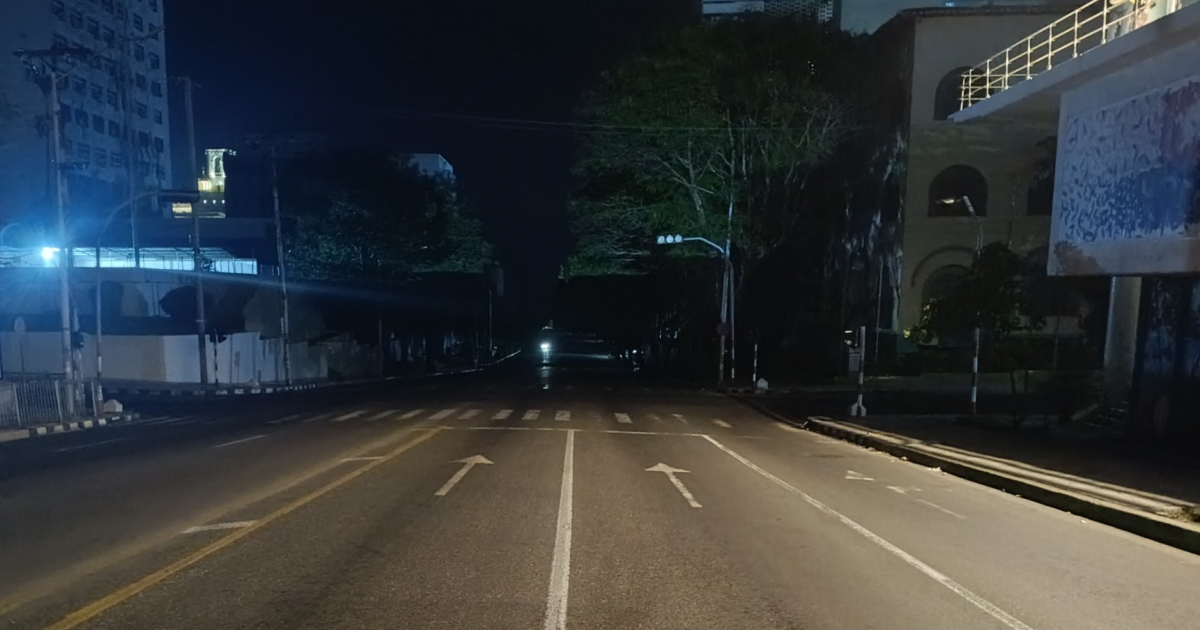
The Electric Union (UNE) has announced additional power outages for the upcoming weekend following the near-total collapse of the National Electric System (SEN) last Wednesday, which left a significant portion of the nation without electricity.
Friday marked a particularly severe day, with the peak power shortage reaching 2,046 MW at 7:10 p.m., sparking protests in areas such as Havana and Matanzas.
As per the UNE's report, by 6:00 a.m. on Saturday, the SEN's available capacity was only 1,000 MW, while the demand stood at 2,223 MW. This resulted in a deficit of 1,266 MW, directly impacting millions of people.
The midday forecast predicted a shortage of 1,250 MW, indicating the ongoing crisis persists beyond peak consumption hours.
Underlying Causes of the Power Shortage
The primary reasons for this substantial deficit are breakdowns and maintenance issues in power-generating units.
Currently, six units are out of commission due to failures at the CTE Mariel, Santa Cruz, Antonio Guiteras, Felton, and Antonio Maceo power plants, in addition to three blocks under maintenance at the Mariel, Nuevitas, and Carlos Manuel de Céspedes stations. Further limitations in thermal production have taken 322 MW offline.
Efforts to Mitigate the Situation
Despite the strained capacity, there are plans to partially boost generation during peak hours. The Santa Cruz unit 3 is expected to add 50 MW, and six fuel engines from Mariel are projected to contribute an additional 106 MW. This will raise availability to 1,156 MW against a projected peak demand of 3,050 MW, leading to a shortfall of 1,894 MW and an estimated impact of 1,924 MW.
The situation reveals the system's vulnerability to any incident, exemplified by the recent disconnection of the Antonio Guiteras thermoelectric plant, which triggered a cascading blackout.
Inadequate Government Response and Public Discontent
The energy crisis is intensifying amid the government's inability to ensure a continuous supply and avoid structural failures in power plants.
Although 51 solar photovoltaic parks contributed 2,732 MWh and a maximum power of 359 MW, their input remains insufficient to counterbalance the decline in thermal generation.
Meanwhile, citizens are experiencing the immediate ramifications of a failing system, with unscheduled interruptions contingent on national infrastructure availability.
On Friday, Havana's Electric Company reported a 24-hour service interruption, with a peak impact of 335 MW at 6:00 p.m. and emergency shutdowns adding 105 MW more.
At the report's conclusion, three blocks remained offline, affecting 122 MW, with no clear timeline for restoration.
The disconnection of the Guiteras unit has left the system in a precarious state, relying on constant adjustments to prevent larger blackouts.
This situation underscores the fragility of Cuba's electric system and the absence of effective policies to maintain the energy infrastructure in optimal condition.
The public's protests illustrate growing dissatisfaction with the inability to maintain a normal lifestyle, as the government continues to show a management deficit that threatens the country's stability and the well-being of millions of citizens.
Key Questions About Cuba's Energy Crisis
What caused the recent power outages in Cuba?
The recent power outages in Cuba were primarily caused by failures and maintenance issues in several power-generating units, compounded by limited thermal production capacity.
How is the government addressing the power shortage?
The government is attempting to partially boost generation during peak hours by bringing additional units online, but the measures have been insufficient to meet the current demand.
What impact does the energy crisis have on Cuban citizens?
Cuban citizens are directly affected by unscheduled power outages, which disrupt daily life and contribute to increasing public dissatisfaction with the government's management of the crisis.