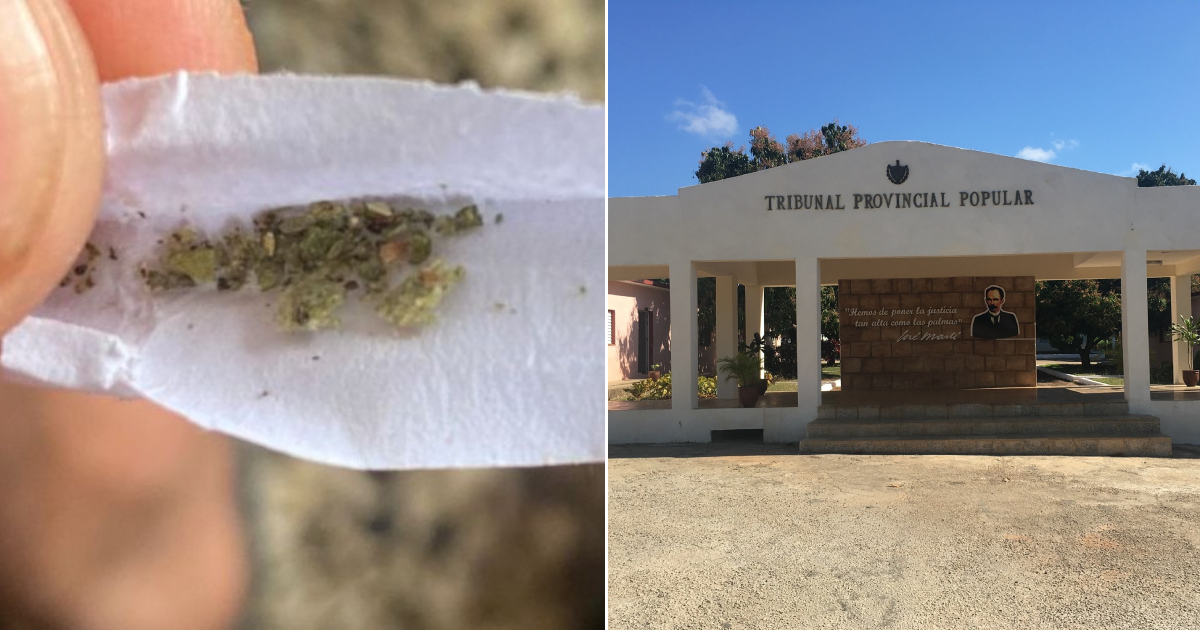
Two Cuban nationals have been sentenced to 15 years in prison after being found guilty of offenses related to illegal drugs in a trial held at the First Criminal Chamber of the Artemisa Provincial People's Tribunal, according to official reports.
The defendants were tried under case number 416 of 2025, a legal proceeding described by authorities as "exemplary." The Cuban regime uses such trials as a deterrent to discourage the populace from engaging in serious crimes, particularly those involving drug trafficking and similar substances, a growing concern within the country.
Details from the Artemisa Provincial Tribunal stated that the accused traveled to Havana aiming to procure synthetic cannabinoids, commonly known as "químico" or "papelito." After obtaining the substance, they were arrested on the street by anti-drug officers. The two were found carrying five paper packets containing the synthetic cannabinoid 5-fluoro ADB, weighing 1.74 grams. This amount could yield at least 2,200 doses, with each dose potentially being used by two to three individuals, as per the official communication.
The authorities indicated that evidence presented in the oral trial confirmed the defendants' involvement in crimes connected to illicit drugs or substances with similar effects. However, the official report did not specify whether they were convicted of possession, trafficking, or both offenses.
The identities of the accused and the date of the incidents were not disclosed.
In addition to the prison sentences, both individuals were subjected to additional restrictions, including the deprivation of certain rights and a travel ban from leaving the country.
The prosecuted individuals, along with the prosecution, retain the right to appeal the verdict through cassation if they are dissatisfied with the ruling, the report noted.
The tribunal asserted that procedural guarantees were upheld during the case investigation and the oral trial, in alignment with the Constitution of the Republic and the Criminal Procedure Law.
The statement highlighted the detrimental impact of narcotic trafficking on society and families, as well as the health risks associated with drug consumption.
"The use of narcotics, such as marijuana and its synthetic cannabinoid derivatives, significantly harms consumers' health, causing various physical and psychological issues, including damage to the cardiorespiratory system and cognitive functions (attention, concentration, memory), depression, psychosis, and anxiety. Children, adolescents, and young people are particularly vulnerable," the statement emphasized.
Drug trafficking and consumption in Cuba have reached unprecedented levels in recent years.
Authorities have acknowledged that at least 40 variants of low-cost, high-profit synthetic cannabinoids are circulating on the island, impacting mainly the youth.
Despite the regime's intensification of police operations and increased severity of criminal penalties—actions part of its "zero tolerance" policy against drugs—both the sale and use of narcotics continue to rise, demonstrating the inadequacy of the government's strategy.
Understanding Drug-Related Sentences in Cuba
What were the charges against the two Cubans in Artemisa?
They were charged with offenses related to illegal drugs, specifically involving the possession of synthetic cannabinoids.
What is the significance of "exemplary" trials in Cuba?
Exemplary trials are intended by the Cuban regime to serve as a deterrent to prevent the public from committing serious crimes, using harsh penalties as a warning.
How has drug trafficking affected Cuban society?
Drug trafficking has a significant negative impact, affecting societal norms, family structures, and the health of individuals, particularly among the youth.