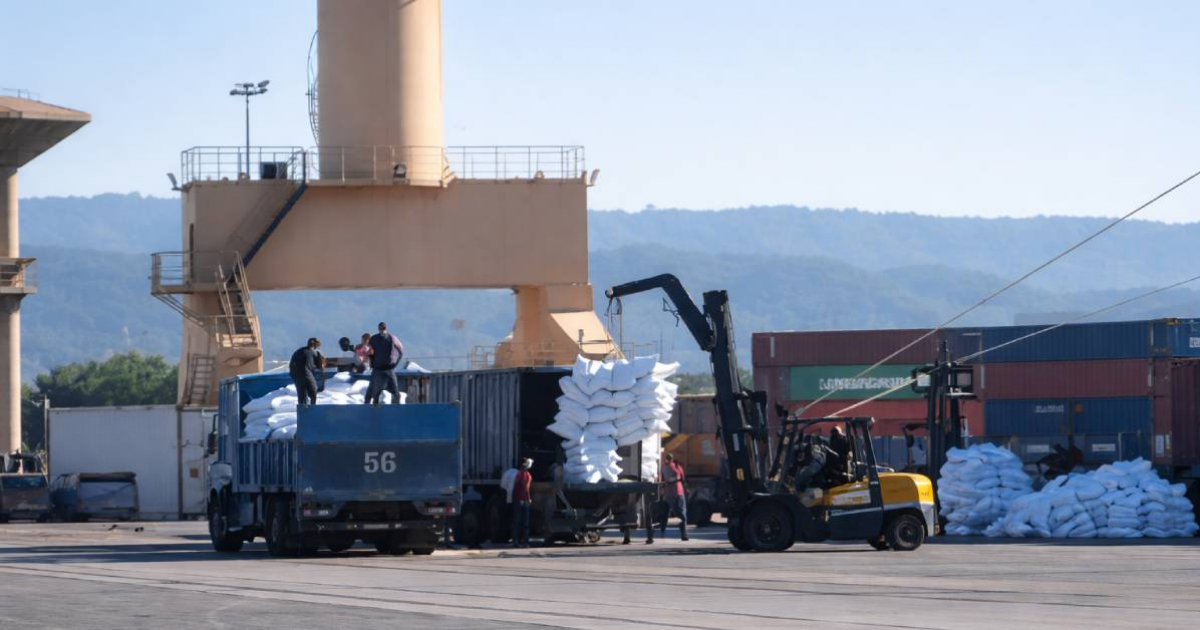
In Santiago de Cuba, the unloading of rice designated for March's state-regulated family basket has commenced at Guillermón Moncada port, as reported by Edelva Marín Medina, the coordinator of Programs and Objectives for the Provincial Government.
According to a social media update by the official radio station CMKW Radio Mambí, the rice is currently being unloaded at the port terminal and is slated for immediate distribution to the area's stores.
Rice holds a critical place in Cuba's already compromised basic food basket, a situation exacerbated by chronic food shortages, delayed deliveries, and increasingly limited rations for the populace.
The announcement has been met with skepticism by many Cubans on social media, who question whether the shipment will suffice for all consumers or if the recurring issues of delays and shortages in stores will persist.
This uncertainty arises at a time when changes are being made to the state's distribution system. Starting in April, the Cuban government has declared that a new approach will be implemented for the state-regulated family basket. Instead of blanket subsidies, financial support will be directly provided to vulnerable individuals.
This policy shift was previewed on February 17 during a meeting of the Municipal Administration Council of Cotorro in Havana. The family basket will now be "differentiated," and items will be sold at prices higher than current rates.
Amid one of the most severe food crises in decades, this announcement heightens the anxiety among many Cuban families regarding their future access to essential staples such as rice.
Key Concerns About Rice Distribution in Cuba
Why is rice so important in Cuba's food basket?
Rice is a staple food in Cuba and a crucial component of the basic food basket that the state provides to citizens. It is essential for daily meals, making its consistent availability critical for the population's sustenance.
What changes are being made to Cuba's food distribution system?
The Cuban government is transitioning to a new system where subsidies will be targeted specifically at vulnerable individuals, rather than being universally applied. This means that the prices of items in the family basket may increase for those not classified as vulnerable.
How are Cubans reacting to the rice delivery announcement?
Cubans have expressed skepticism and concern on social media about whether the rice delivery will meet the needs of all consumers, given past issues with shortages and delays.