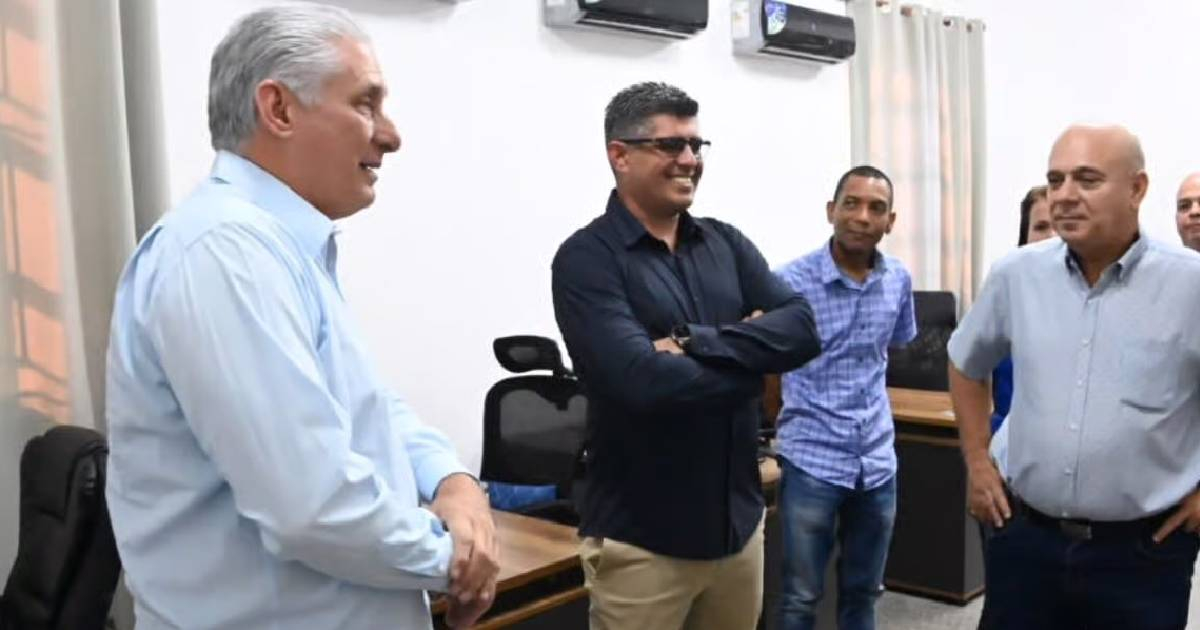
Cuban lawmaker Carlos Miguel Pérez Reyes has reiterated his support for President Miguel Díaz-Canel following reports by CiberCuba which highlighted his recent comments on the need for more effective implementation of economic reforms across the island.
In a recent social media post, Pérez clarified his stance, suggesting that there is an "observer's bias" in the interpretation of his words.
"For some, like CiberCuba, it appears as though I am 'questioning' or 'demanding' something from the President. Yet, for others, I am backing the changes he has identified as urgent and necessary," Pérez stated.
The deputy emphasized that he is "99% sure" of aligning with Díaz-Canel "on the essentials" and mentioned that the President faces "forty political filters" which he himself does not have to deal with. "I stand by my president," he concluded.
This clarification came shortly after CiberCuba released an article titled "Implementation Needed: Cuban Deputy Questions Díaz-Canel’s Consolatory Rhetoric," which included remarks from Pérez urging a transition from rhetoric to the actual execution of the government’s announced reforms.
In his initial comments, Pérez responded to Díaz-Canel’s speech at a Council of Ministers meeting with the query: "A very necessary speech. And what about the implementation?"
Pérez outlined that the country requires "an implementation program with clear priorities, defined responsibilities, deadlines, and public oversight," warning that the main bottleneck is not the diagnosis but the execution itself.
He cited several obstacles such as a shortage of personnel in key state structures, institutional weaknesses in municipalities with unfilled leadership positions, control issues, and a lack of energy and fuel resources.
Additionally, he proposed creating a "leaner but more effective state where it matters," suggesting a reduction in bureaucratic structures, complete digitalization of essential processes, quarterly goals with public accountability, and a review of measures that, according to him, hinder economic growth.
The initial remarks sparked widespread debate on social media. Some users criticized the repeated official promises without tangible results, while others supported the deputy’s technical approach and his call to streamline processes and reduce bureaucratic inefficiencies.
In his latest message, Pérez recalled that he previously chose silence because his statements were being used by "enemies of the Revolution" to attack the country. However, after a conversation with the president, he decided to speak out again, convinced that silence "does more harm than good."
This incident highlights the tensions within the official narrative amid a deepening economic crisis, persistent inflation, and structural challenges affecting everyday life in Cuba.
For many, Pérez’s revised stance may reflect a fear of repercussions from the regime itself, which often suppresses dissenting voices within its ranks.
Understanding the Challenges Facing Cuba's Reforms
What obstacles did Pérez identify in implementing reforms?
Pérez pointed out issues such as a shortage of personnel in key state positions, institutional weaknesses in municipalities, control problems, and a lack of energy and fuel resources as major hindrances to implementing reforms.
How did Pérez propose to improve the state's effectiveness?
He suggested a leaner state structure, complete digitalization of essential processes, setting quarterly goals with public accountability, and reviewing measures that restrain economic growth.
What was the reaction to Pérez's initial statements?
The initial statements sparked widespread debate on social media, with some criticizing the lack of tangible results from official promises, while others supported his technical approach and call to reduce bureaucratic inefficiencies.