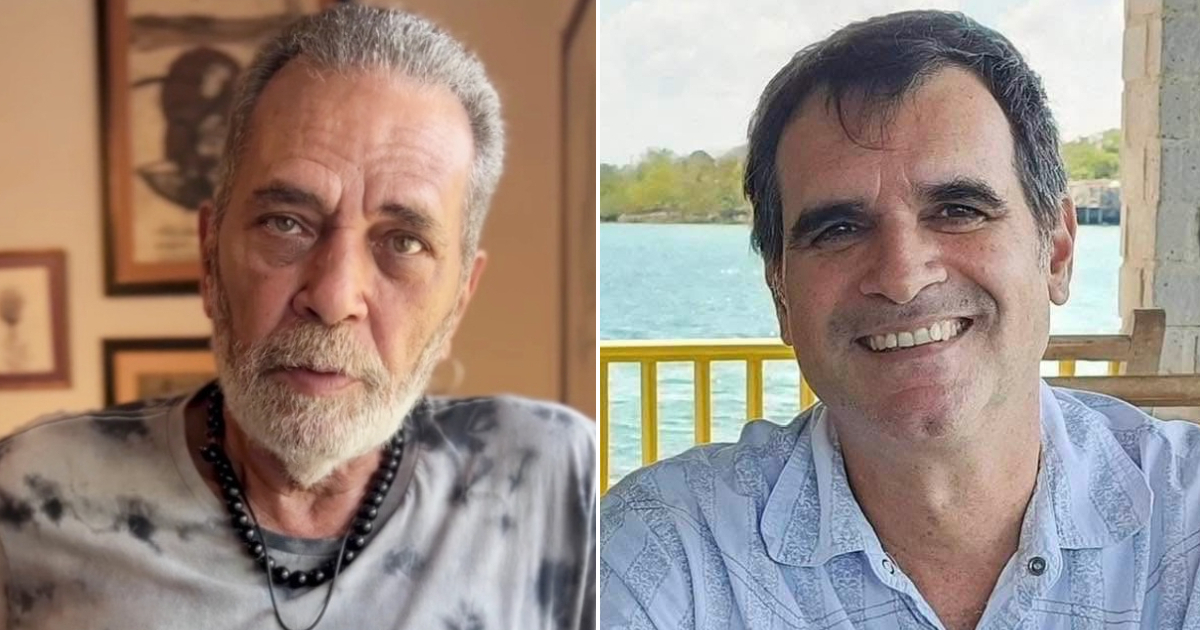
Cuban actor Luis Alberto García Novoa took to Facebook to express his outrage over the dismissal of Professor Abel Ernesto Tablada de la Torre from the José Antonio Echeverría Technological University of Havana (CUJAE). The decision has sparked significant debate both within the academic community and beyond.
In his post, García did not mince words, declaring the situation a “SHAME! SHAME! A THOUSAND TIMES SHAME!”
He fiercely questioned the penalty imposed on the academic and championed the right to voice critical opinions without fearing professional repercussions. “Civility should never be condemned, stigmatized, or persecuted. Never. Ever,” he asserted.
García further emphasized the necessity of public discourse and condemned punitive measures against differing viewpoints. “Ideas in opposition can be countered with alternate ideas. They are not weapons, they don’t shoot bullets. They don’t kill,” he emphasized.
He also stressed, “Debate should be revered, not suppressed with force.” García criticized the legitimacy of punishing publicly and responsibly expressed opinions. He warned, “Confusing decency and truthful public opinions, signed with real names, with acts of betrayal or apostasy, is a monumental mistake.”
Moreover, he addressed the broader implications of such practices on adherence to national laws. “The Constitution loses its stature when it is disrespected, diminishing its essence,” he noted.
Concluding his message, García shared a statement from the Observatory of Academic Freedom regarding Tablada's removal, which highlighted the punitive action as a violation of academic freedom in Cuba and called for solidarity.
Background of the Controversy
The actor’s comments follow the recent termination of architect Abel Ernesto Tablada from his teaching position at CUJAE’s Faculty of Architecture. Tablada’s critical reflections on Cuba’s socio-political landscape, shared on his Facebook profile, reportedly displeased university authorities.
In a message to his students, Tablada explained that his critiques had not been well-received by the university’s administration. Among his notable posts was one titled The University and Resilience, where he detailed the challenges faced by Cuban universities, including power outages, transportation issues, low faculty salaries—ranging from $10 to $15 monthly—and material shortages impacting both teachers and students.
He warned, “Excessive resilience can lead to normalizing conditions that should not be prolonged indefinitely.”
Community and Public Reactions
The professor's expulsion has prompted reactions from within the academic community. Students from the Faculty of Architecture addressed a letter to the university’s rector, expressing their dissatisfaction with the decision not to renew Tablada’s contract. They described the action as disproportionate and contradictory to the values that a higher education institution should uphold.
They emphasized that the decision was unrelated to Tablada’s professional performance or ethical conduct within the classroom.
Notably, Tablada is also the brother of Johana Tablada, a Cuban government diplomat known for denying political repression on the island, which adds an intriguing familial dimension to the case.
The incident has reignited discussions on the boundaries of critical thought within Cuban universities and the actual freedom faculty and researchers have to publicly challenge the country’s status quo.
In his post, García reiterated that expressing divergent opinions should not result in penalties or job loss. “For thinking differently, whether by miles, meters, or millimeters, no human being should end up imprisoned, humiliated, or fired from their job,” he wrote.
Freedom of Expression Under Scrutiny
This is not the first time García has publicly addressed issues related to free speech or the repression of dissenting voices in Cuba. In February, following the arrest of young activist Kamil Zayas Pérez, García declared on social media, “It is terrible to imprison ideas, whatever they may be.”
Days later, he also responded to the detention of historian and activist Alina Bárbara López Hernández in Matanzas, with a message to State Security simply stating: “Stop.”
The actor has also criticized official rhetoric that criminalizes critical thought. In response to a state television official’s claim that “doubting is betraying,” García labeled the statement as “one of the most fascist sentiments I’ve heard in years.”
The expulsion of Professor Abel Tablada, the student protests, and the responses from public figures like Luis Alberto García have brought academic freedom and the right to express critical views within Cuban institutions back to the forefront of public discourse.
Implications of Academic Freedom in Cuba
Why was Professor Abel Tablada expelled from CUJAE?
Professor Abel Tablada was expelled from CUJAE following his critical comments on social media about Cuba’s socio-political situation, which reportedly displeased the university administration.
What was Luis Alberto García's reaction to Tablada's expulsion?
Luis Alberto García condemned the expulsion, calling it a “shame,” and emphasized the importance of civility and public debate without fear of professional reprisals.
How did the academic community react to the expulsion?
The academic community, including students from the Faculty of Architecture, expressed their dissatisfaction, arguing that the decision was disproportionate and undermined academic freedom.