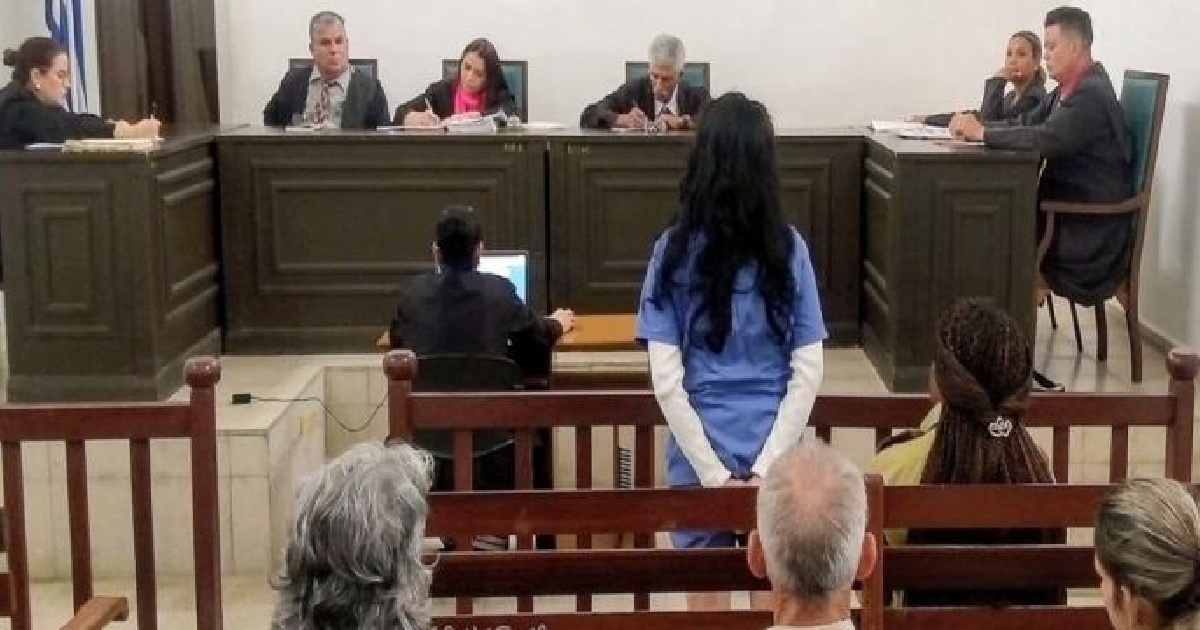
A commercial manager from the state-run company Correos de Cuba has been sentenced to four years in prison for embezzling over 57,000 pesos from pensions and postal money orders in a rural office in the Majagua municipality, located in Ciego de Ávila. This verdict was announced in an official report released this Tuesday.
In addition to the criminal proceedings against the postal worker, the Municipal People's Court of Majagua also held the office director accountable for "failing to protect state assets." Although she did not personally profit or gain from the crime, she was sentenced to one year of corrective labor without imprisonment.
The statement from the Supreme People's Court of Cuba did not disclose the accused individuals' names.
Authorities reported that within a period of three months, the postal manager misappropriated 33,110 pesos intended for pension payments and 23,961 pesos from postal money orders, which were neither issued nor paid to the rightful recipients.
During the trial, affected individuals testified, providing detailed accounts of the events. They described the employee's modus operandi—telling them there was "no cash available at the post office," hence they couldn't receive their pension payments for the month.
This deceitful practice was also employed with senders and recipients of postal money orders, whose funds were similarly withheld for personal gain.
Despite these actions, the postal worker's misconduct went unnoticed for several months until an unrelated investigation into missing fans at the same office exposed the scheme.
The report highlighted how the presence of a provincial commission investigating the missing fans led victims to express their grievances, eventually uncovering irregularities with pension and money order payments.
"The tip of the iceberg began to reveal itself when discrepancies in ID cards, falsified receipts, and other irregularities that could have been detected with stricter control came to light," noted the source. This also implicated the office director in the case.
The report described the postal worker's actions as "shameful," emphasizing the premeditated nature of the embezzlement and her "total lack of empathy (sensitivity, sentiment, values)" towards her victims, who were primarily the elderly, retirees, homemakers, and the most vulnerable members of society.
Although the accused expressed remorse, the report stated this "will not spare her from the 'sanction' she may carry for life, not covered by any law or legal norm: the scorn or indifference with which she will be regarded by those who cannot comprehend how someone can harbor such human insensitivity and exploit it for personal profit against society's most humble and needy segment."
The statement did not clarify whether the stolen funds were returned to the victims.
Based on the evidence, testimonies, and documents presented during the trial, the court sentenced the postal manager to four years in prison according to Article 297.1 of the Penal Code. The office director received a one-year corrective labor sentence without imprisonment under Article 303.1.
Additionally, both individuals faced supplementary penalties including the deprivation of public rights, prohibition from holding public office, and restrictions on leaving the country.
Key Questions About the Postal Embezzlement Case
What were the charges against the postal worker in Ciego de Ávila?
The postal worker was charged with embezzling over 57,000 pesos from pensions and postal money orders, leading to a four-year prison sentence.
Did the office director benefit from the embezzlement?
No, the office director did not profit from the crime but was sentenced for failing to protect state assets, receiving a one-year corrective labor sentence.
How was the embezzlement scheme uncovered?
The scheme was discovered during an investigation into missing fans at the post office, which led to victims voicing their concerns and exposing the irregularities.