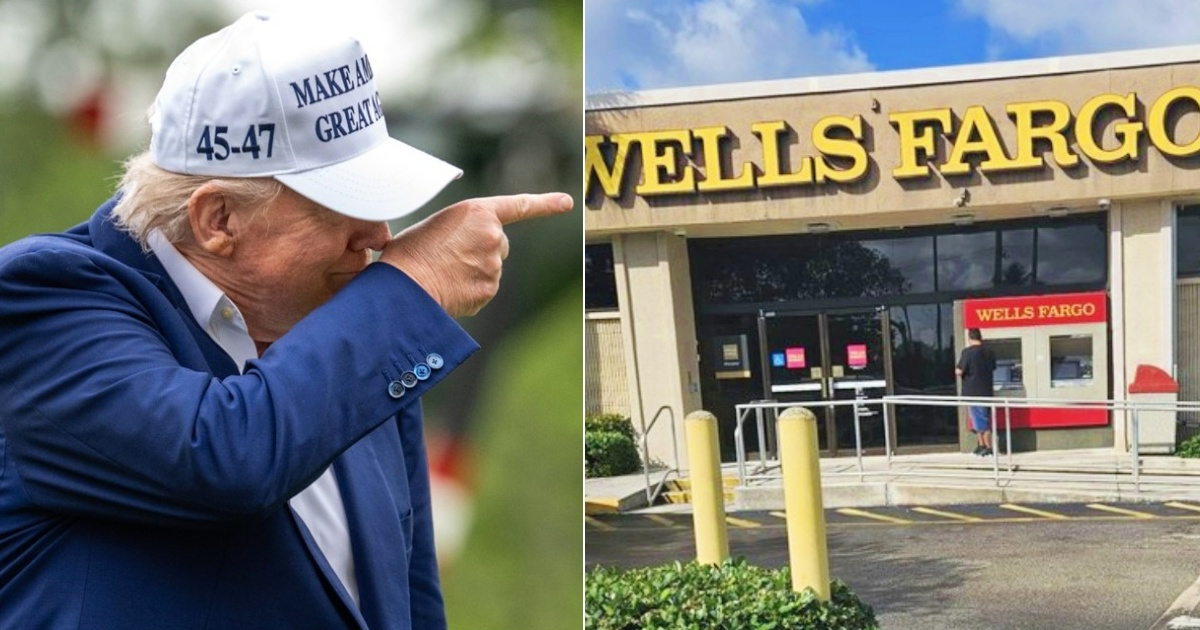
The administration under Donald Trump is contemplating a policy that could significantly alter the dynamic between banks and their millions of clients in the United States, including both documented and undocumented immigrants.
The White House is considering requiring financial institutions to verify the citizenship status of their clients, marking another step in the president's immigration agenda, according to a recent report by The Wall Street Journal.
This potential policy, which might be enacted through an executive order or a directive from the Department of the Treasury, would mandate banks to collect documents such as passports or other proof of U.S. citizenship.
Although not yet officially announced, the mere discussion of this proposal has raised alarms within the financial sector.
White House spokesperson Kush Desai refrained from confirming or denying the plan, stating that "any information about potential policies not officially announced by the White House is purely speculative."
Transforming Banking Regulations
Currently, banks in the U.S. adhere to "know your customer" guidelines and anti-money laundering laws, which involve verifying a client's basic identity details—name, birthdate, address—and reporting suspicious activities to the Financial Crimes Enforcement Network (FinCEN), established under the Bank Secrecy Act.
However, no requirement exists to verify citizenship or immigration status as a condition for opening or maintaining a bank account. There is also no federal law barring non-citizens from accessing the financial system. The proposed order would go far beyond these existing requirements.
The proposal could even apply retroactively, necessitating a review of millions of existing accounts and demanding new documentation from long-standing clients.
"It's a bad idea. We are very alarmed," a financial sector insider told CNN. The source cautioned that "checking the citizenship status of all bank customers would be unfeasible."
Implications for Immigrants
If enacted, this requirement could block access to banking services for thousands—or even millions—of undocumented immigrants, complicating everyday activities like cashing paychecks, paying rent, or sending remittances.
Moreover, there is concern within the financial industry that the order could turn banks into direct instruments of the deportation policy. Executives fear becoming entangled in the government's efforts to identify and deport undocumented immigrants.
Behind these discussions lies the possibility that immigration authorities may access or cross-reference financial information to verify clients' immigration status.
Experts warn that such a measure could trigger a mass withdrawal of deposits by foreign clients or immigrants fearing exposure, potentially affecting the liquidity of financial institutions and their ability to provide local credit.
According to the Deportation Data Project, between January 1, 2025, and October 15, 2025, ICE arrested an average of 746 people per day, more than double the average of the past decade.
Simultaneously, Republican lawmakers have proposed initiatives to restrict access for undocumented immigrants to various services, including banking.
Legal and Operational Feasibility
While the Treasury Department might attempt to change identification requirements under the Bank Secrecy Act's authority, such a sweeping structural change could necessitate a formal rulemaking process, potentially leading to legal challenges.
From an operational standpoint, the banking sector warns that mass citizenship verification would be extremely complex and costly. Additionally, it remains uncertain whether the policy would merely require information collection or mandate the closure of accounts whose holders cannot prove citizenship.
For now, the White House has not confirmed the issuance of any order. Nevertheless, the mere consideration of this measure suggests a looming point of contention between the Trump Administration, the financial system, and immigrant communities.
Potential Impact of Banking Policy on Immigration
What is the Trump administration considering regarding banks and immigration?
The administration is exploring a policy requiring banks to verify the citizenship status of their clients, potentially affecting millions of customers, including immigrants.
How could this policy affect undocumented immigrants?
If implemented, the policy could block undocumented immigrants from accessing banking services, complicating everyday transactions like cashing checks and paying rent.
What are the concerns of the financial sector regarding this policy?
The financial industry is worried that the policy would be unfeasible due to the complexity and cost of mass citizenship verification, and it may also lead to a withdrawal of deposits and reduced liquidity.