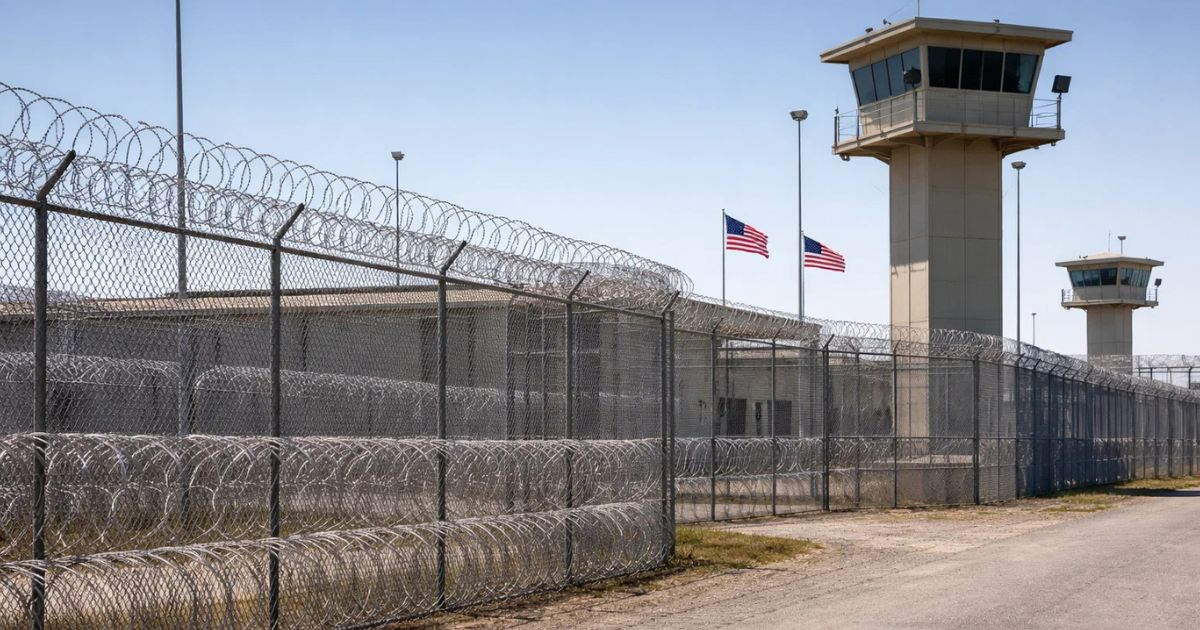
Hundreds of migrant children are being held alongside their parents at the Dilley Immigration Processing Center in southern Texas, amidst reports of poor detention conditions affecting their physical and mental health.
An extensive report by Associated Press (AP) presents accounts from several families who describe constant lighting in sleeping areas, contaminated food, limited medical care, and stays that far exceed the three-week limit for detaining minors, as stipulated by existing judicial agreements.
Andrea Armero, a Colombian mother deported in February with her daughters, shared that her 13-year-old experienced a severe emotional decline after nearly two months at the facility.
The teenager, who was already being treated for anxiety and depression before detention, stopped eating after discovering a worm in her meal. According to her mother, the girl suffered a crisis and self-harmed with a plastic knife from the cafeteria.
Discharge documents from the center, cited by AP, mention previous issues of post-traumatic stress disorder, anxiety, and a self-harm attempt.
The Department of Homeland Security acknowledged an incident of self-harm within the facility but did not provide further details on staff response.
Another account from AP is that of Kheilin Valero Marcano, a Venezuelan detained with her husband and young daughter for almost two months.
The mother reported that her child developed a high fever, vomiting, and weight loss, and despite repeated visits to the medical area, was only given painkillers. The girl was later taken to hospitals where, according to the family, she was diagnosed with COVID-19, bronchitis, pneumonia, and a stomach virus.
Immigration authorities disputed this version, asserting in a statement that the child received appropriate care at all times and was promptly referred to hospitals when necessary.
The private company managing the center under contract with Immigration and Customs Enforcement stated that no child has been denied medical treatment or experienced delays in clinical evaluations.
Data analyzed by AP from the University of California at Berkeley's Deportation Data Project indicates that over 3,800 children were placed in immigration detention centers during the first nine months of President Donald Trump's current term.
On average, more than 220 minors were in custody daily, with most exceeding 24 hours being sent to Dilley.
During this period, nearly two-thirds of detained minors were eventually deported, and about one in ten left the country voluntarily with their parents.
Approximately a quarter were released in the United States with the condition of periodically reporting to authorities as their immigration process progresses.
Organizations monitoring the system report that Dilley's population has steadily increased since last fall, with the number of detainees surpassing 1,300 by late January.
Child rights attorneys claim to have documented dozens of cases where minors were held for over 100 days.
Families describe shared rooms among multiple family units, tightly-packed bunk beds, limited privacy, and constant tensions.
According to testimonies collected by AP, lights remain on 24 hours a day, hindering rest. Some parents report that the water tastes bad and their children have lost weight or suffer from skin rashes and stomach pains.
Emotional impacts are also noted. Children interviewed by the agency expressed confusion over their detention and concern for their family's future. In some instances, they reported anxiety, frequent crying, and involuntary nervous movements.
The Department of Homeland Security and Immigration and Customs Enforcement defended the center's conditions.
In statements sent to AP, they claimed Dilley is a facility specifically designed to house families in a safe environment, with access to medical evaluations, recreational spaces, and educational support.
Republican lawmakers who have visited the site stated that criticisms do not reflect the reality observed during their tours. In contrast, mental health specialists and civil rights attorneys argue that prolonged detention can exacerbate existing traumas and cause new psychological harm to minors.
The debate over family detention is reigniting as judicial processes continue to regulate the length of time children remain in immigration custody.
For many families released in February, returning to their communities means resuming work and school amidst the uncertainty of ongoing immigration cases. Others, like Armero's family, were deported and are now trying to rebuild their lives in their home countries.
Key Issues in Texas Migrant Detention Centers
What are the main complaints about the Dilley Immigration Processing Center?
Families have reported significant issues such as constant lighting disrupting sleep, poor food quality, limited medical care, and excessively long detention periods exceeding judicially agreed limits for minors.
How have authorities responded to allegations regarding detention conditions?
Homeland Security and Immigration and Customs Enforcement have defended the conditions at Dilley, stating that the facility is designed to safely house families and provide necessary care and support.
What is the impact of prolonged detention on children?
Experts argue that prolonged detention can worsen existing mental health issues and create new psychological harm, with children showing signs of anxiety, depression, and emotional distress.