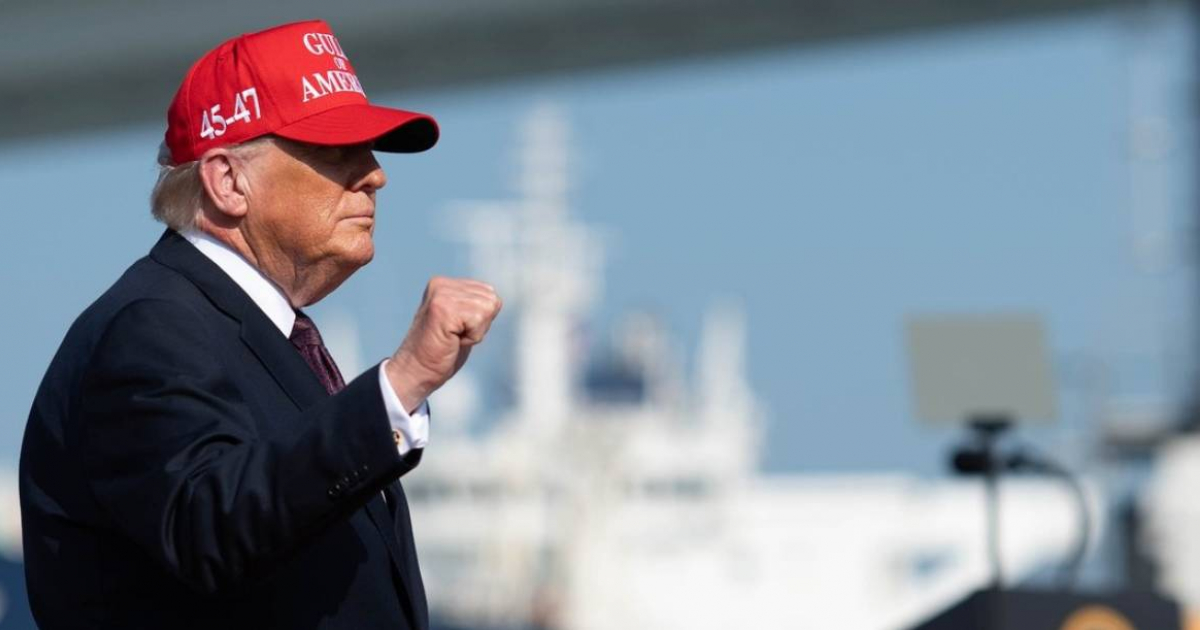
On Sunday, President Donald Trump issued a stern warning to Iran, pledging to unleash "unprecedented force" if Tehran follows through on its vow to launch a "historic offensive" against the United States and Israel in retaliation for the death of Ayatollah Ali Khamenei.
According to EFE, the Iranian regime confirmed the demise of its supreme leader following a joint military operation conducted by U.S. and Israeli forces targeting strategic sites in Tehran and other key cities.
Trump Cautions Tehran
Using his social media platform, Truth Social, Trump responded to the threats made by Iranian officials in recent hours.
"Iran has just stated it plans to strike with great force, more than ever before. However, they would be wise not to do so, as we will retaliate with an unprecedented force," Trump wrote.
In a separate post on Saturday, following the confirmation of Khamenei's death, Trump remarked, "Khamenei, one of the most evil figures in history, is gone. This is justice not just for the Iranian people, but for all great Americans and individuals from many nations who have been killed or harmed by Khamenei and his brutal henchmen."
The U.S. president also urged the Iranian populace to "reclaim" their country after enduring decades under the ayatollahs' regime.
Iran Vows Retaliation and Launches Attacks
In response, the Islamic Revolutionary Guard Corps (IRGC) announced strikes on 27 U.S. military bases across the Middle East and targets within Israel, including Tel Aviv. This offensive aims to avenge their supreme leader's death.
Explosions were reported in Doha, Kuwait, and Dubai, with Qatar's Defense Ministry declaring it intercepted up to 18 ballistic missiles aimed at its territory.
Mohammad Bagher Ghalibaf, the Iranian Parliament Speaker, proclaimed, "We will avenge the Americans and Israelis." He warned that they would inflict blows "so terrible that they will beg for mercy."
Impact of the U.S. and Israeli Military Operation
The joint military operation on Saturday targeted strategic facilities in Tehran, Tabriz, and Isfahan.
In addition to Khamenei, Iran confirmed the deaths of Chief of Staff Abdorrahim Mousavi, Defense Minister Aziz Nasirzadeh, Revolutionary Guard Commander Mohammad Pakpour, and senior advisor Ali Shamkhani.
The attacks resulted in over 200 casualties, as reported by the Red Crescent, and led to the temporary closure of airspace in several Persian Gulf countries, disrupting major international airport hubs.
Questions About the U.S.-Iran Conflict
What led to the recent escalation between the U.S. and Iran?
The escalation was triggered by a joint U.S. and Israeli military operation that resulted in the death of Iran's supreme leader, Ayatollah Ali Khamenei, prompting threats of retaliation from Iran.
How has Iran responded to the death of Khamenei?
Iran has vowed revenge and has launched attacks on U.S. military bases in the Middle East and targets in Israel, including Tel Aviv, as part of its retaliation strategy.
What impact did the joint military operation have on Iran?
The operation targeted strategic sites and resulted in the deaths of several key Iranian military figures, causing over 200 casualties and temporarily affecting airspace in the region.