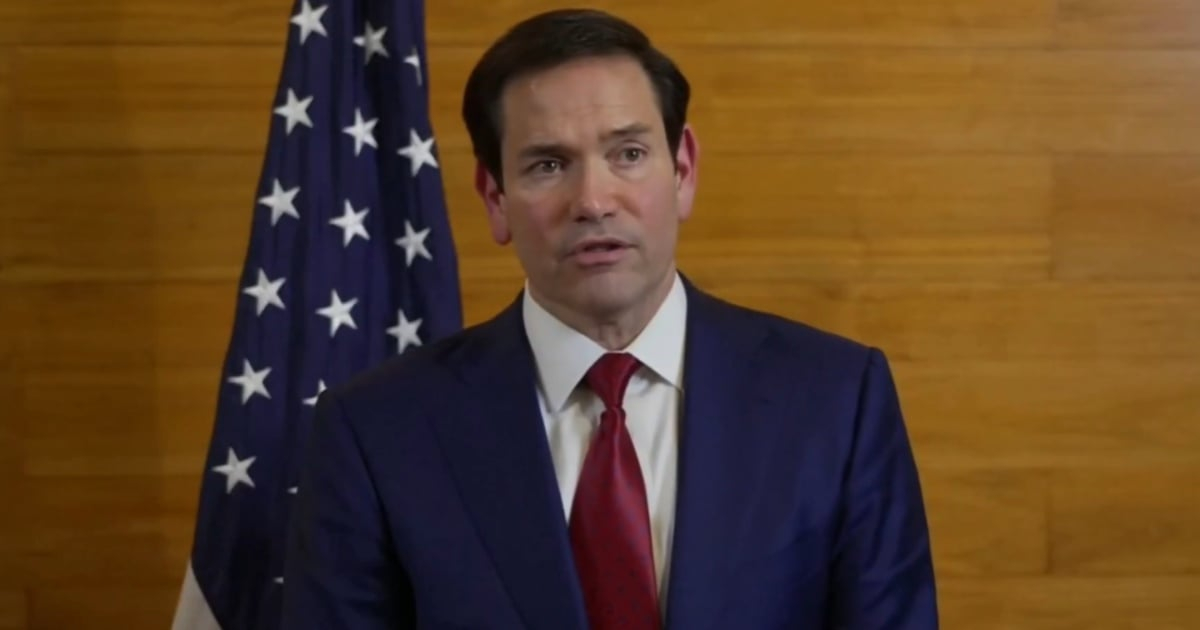
The U.S. Secretary of State, Marco Rubio, defended on Wednesday the shipment and sale of Venezuelan oil to Cuba's private sector, asserting it does not signify a policy shift but rather an extension of existing licenses under U.S. regulations. His remarks were made during a meeting with CARICOM leaders in Saint Kitts and Nevis and shared with the press.
Rubio addressed questions about a U.S. Treasury Department announcement involving humanitarian sales to private companies on the island. "No, it has always been legal to sell to the private sector in Cuba," Rubio stated, emphasizing that these sales would not involve the government or GAESA, a military-owned conglomerate.
He explained that these transactions would target a "very small private sector" in Cuba, expanding the number of licensed individuals to engage in such sales. Despite this, Rubio cautioned that the private sector's limited capacity cannot tackle the "scale and scope" of the nation's challenges on its own.
Rubio attributed the suffering of the Cuban people to the actions of the Cuban authorities, which have created the worst economic climate the country has faced "perhaps in history since 1959." He cited Cuba's dependency on subsidies for decades, first from the Soviet Union and later from Hugo Chávez.
Following Chávez, the regime of Nicolás Maduro supplied oil, with a portion refined for local use and "a large percentage" sold in open markets to generate cash for the regime and military enterprises. Rubio stressed that the crisis presents an opportunity to import fuel "in small quantities" via the private sector and warned that any diversion to the regime or military entities would result in revoked licenses.
He further suggested that fostering a truly independent private sector, separate from government and military control, could offer a solution. Rubio assured that the Cuban people's hunger and suffering are not due to a lack of willingness to help from the U.S., but rather due to the regime and Communist Party standing in the way.
As an example, Rubio noted that U.S. humanitarian aid following a hurricane was routed "through the Catholic Church, not the government," and mentioned that Washington is prepared to take a similar approach with fuel through the private sector. However, he acknowledged that this alone will not solve Cuba's issues, which he attributed to decades of mismanagement and incompetence.
During the CARICOM context in Saint Kitts and Nevis, Rubio also asserted that Cuba's future improvements hinge on adopting an economic model different from the current, dysfunctional one.
Understanding the Impacts of Venezuelan Oil Sales to Cuba
What is the significance of selling Venezuelan oil to Cuba's private sector?
Selling Venezuelan oil to Cuba's private sector is seen as a way to provide humanitarian aid without directly supporting the Cuban government or military-controlled entities, allowing for economic stimulus within a limited segment of the Cuban economy.
How does Marco Rubio view the Cuban government's role in the country's current economic situation?
Marco Rubio holds the Cuban government responsible for the dire economic conditions, citing decades of poor management and decisions that have left the country vulnerable to crises.
What conditions has Rubio set for maintaining oil sale licenses to Cuba?
Rubio has stated that licenses for oil sales will be revoked if it's found that oil is being diverted to the Cuban regime or military enterprises, ensuring the focus remains on aiding the private sector.