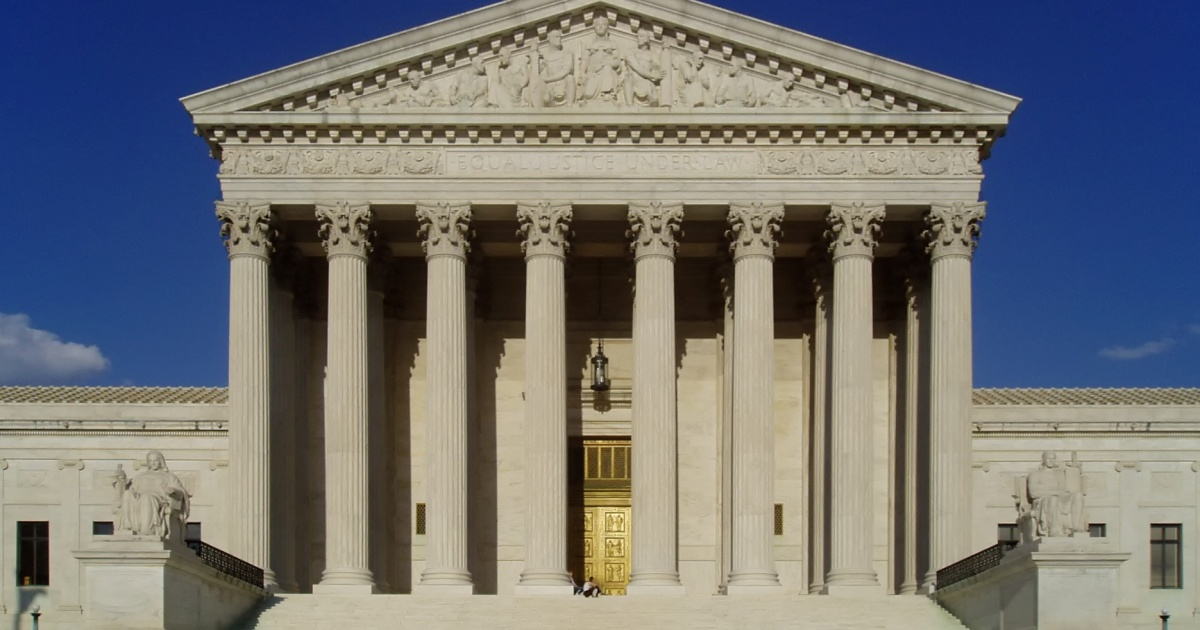
This Monday, the U.S. Supreme Court held a significant hearing focused on two lawsuits connected to properties seized by Fidel Castro's regime in 1960. This marks the first instance where the highest court is addressing litigation related to Title III of the Helms-Burton Act.
For several hours, extended beyond the scheduled time due to numerous questions from the justices, the court delved into arguments in the cases of Havana Docks Corporation vs. Royal Caribbean Cruises and Exxon Mobil vs. CIMEX Corporation. These cases hold the potential to redefine the scope of the law enacted in 1996 and fully activated in 2019.
According to El Nuevo Herald, it remains uncertain which direction the court is leaning. However, the intensity of the questioning highlighted the legal and political significance of the matter at hand: whether the Helms-Burton Act can overcome procedural barriers that have previously limited claims, or if its application should be interpreted more narrowly.
The Trump administration openly supported both lawsuits and allowed representatives from the Solicitor General’s office to present arguments before the Court. The State Department emphasized the importance of the moment, noting, “Today, the U.S. Supreme Court considers lawsuits filed by American citizens whose properties were confiscated by the Cuban regime,” as stated by the Western Hemisphere Affairs Office on X.
In a brief submitted to the Supreme Court, the administration argued, “The U.S. has significant foreign policy interests in promoting democracy in Cuba, ensuring accountability for the Cuban government's illicit confiscations through lawsuits under Title III, and supporting compensation for American victims of Castro-era illegal expropriations.”
A decision expected before the end of June could set a precedent for dozens, if not hundreds, of similar claims.
The Havana Docks Case: Cruise Lines Under Scrutiny
The first case pits Havana Docks Corporation, the former wharf concessionaire at the Port of Havana, against four major cruise lines: Royal Caribbean, Norwegian Cruise Line, Carnival, and MSC. The company claims that the cruise lines “trafficked” in confiscated property by using the cruise terminal between 2016 and 2019, during the thaw in relations promoted by the Obama administration.
In 2022, a federal judge in Miami ruled in favor of Havana Docks, ordering the companies to pay more than $400 million. However, in 2024, the Eleventh Circuit Court of Appeals overturned the verdict, arguing that the original concession had expired in 2004, before the cruise lines operated on the island.
The key issue now before the Supreme Court is whether the right to sue depends on the claimant maintaining a current interest at the time of the alleged “trafficking,” or if it is sufficient that the property was confiscated without compensation in 1960.
Constitutional lawyer Joseph Malouf, speaking with Telemundo 51, summarized the dilemma: “They didn't necessarily have to operate in 2016 because they wouldn't have been under that contract, which is why there's no guarantee they can recover those damages.”
During the hearing, attorneys for Havana Docks argued that the cruise lines acted in coordination with the Cuban state, paying around $130 million to entities linked to the security forces to exploit the terminal. The federal government’s representatives emphasized a broader principle: “A stolen property remains stolen until the claim is resolved, the property is returned, or adequate compensation is paid.”
The cruise lines’ defense countered that Cuba was the effective owner of the docks and that what was originally confiscated was a temporary interest that was no longer in effect.
Exxon vs. CIMEX: Sovereign Immunity at the Core
The second case could have even deeper implications. Exxon Mobil seeks more than $1 billion for oil assets confiscated in 1960, including refineries and over a hundred service stations now allegedly linked to CIMEX and CUPET, Cuban state entities.
The debate centers around the Foreign Sovereign Immunities Act (FSIA), which usually protects states and state entities from being sued in U.S. courts. In 2024, a lower court ruled that Cuban state companies could invoke that immunity.
Exxon argues that Title III of the Helms-Burton Act was specifically designed to create an exception to that protection, allowing victims of confiscations to access the courts. If the Supreme Court determines that the Helms-Burton Act overrides the FSIA in this context, it would remove one of the main barriers that have stalled lawsuits against Cuban state entities for years.
A Contentious Law That Was Frozen for Decades
Formally named the Cuban Liberty and Democratic Solidarity (LIBERTAD) Act, the Helms-Burton Act was passed in 1996. However, Title III—which allows lawsuits against those who “traffic” in confiscated properties—was suspended by all presidents until Donald Trump fully activated it in 2019.
Since then, approximately 45 to 50 lawsuits have been filed in federal courts, according to various estimates. Litigating under this law has proven to be complex and costly.
Nicolás Gutiérrez, president of the National Association of Cuban Landowners, explained, “Since May 2019, there have been nearly 50 lawsuits under this title, these lawsuits are complex, they are costly, we have managed to win two of these lawsuits at the first district level, then they lost at the second level of appeal, and now they have requested, and the U.S. Supreme Court has granted them a hearing.”
The law imposes strict requirements: the claimant must have been a U.S. citizen at the time of enactment in 1996, the property must have significant value and involve commercial (or residential properties used for commercial purposes), and it must be demonstrated that a company is currently benefiting from that property in association with the Cuban state.
Up until 2024, the Foreign Claims Settlement Commission of the Department of Justice had certified about 6,000 claims for confiscations in Cuba, with an approximate value of $2 billion, excluding accumulated interest and potential tripled damages as provided by the law.
A recent precedent was the ruling against Expedia in Miami, where a jury ordered the company to pay $29.8 million to the descendants of the original owners of land in Cayo Coco.
Is a Wave of Lawsuits on the Horizon?
Beyond the intricacies, the overarching question is whether the Supreme Court will choose to broadly interpret Title III. A favorable ruling for Havana Docks and Exxon could:
- Weaken the sovereign immunity shield of Cuban state companies.
- Expand the concept of “trafficking” in confiscated goods.
- Encourage new lawsuits related to ports, hotels, refineries, sugar mills, and other assets nationalized after 1959.
- For international companies, the message would be clear: operating in Cuba could entail significant legal risks in U.S. courts.
For Cuba’s regime, already grappling with a severe economic crisis and facing increased energy and commercial restrictions, an adverse decision would add financial pressure and could further deter foreign investment.
The Supreme Court has until the summer to issue its decision. Whatever it decides, the ruling will not only resolve two landmark lawsuits but could also define the true reach of one of the most controversial legal tools in U.S. policy toward Cuba and determine if the “can of worms” of claims over confiscated assets will be definitively opened.
Frequently Asked Questions about the Supreme Court Case on Confiscated Cuban Properties
What is the significance of the Helms-Burton Act in these cases?
The Helms-Burton Act, specifically Title III, allows U.S. citizens to file lawsuits against entities trafficking in properties confiscated by the Cuban government. This case could redefine its scope and impact.
How might the Supreme Court's decision affect international businesses?
A decision favoring the plaintiffs could increase legal risks for international businesses operating in Cuba, as it may broaden the definition of trafficking and reduce the protections of sovereign immunity.
Why is the issue of sovereign immunity important in the Exxon vs. CIMEX case?
Sovereign immunity typically protects states from lawsuits, but Exxon argues that the Helms-Burton Act should provide an exception, allowing them to sue Cuban entities for confiscated property.