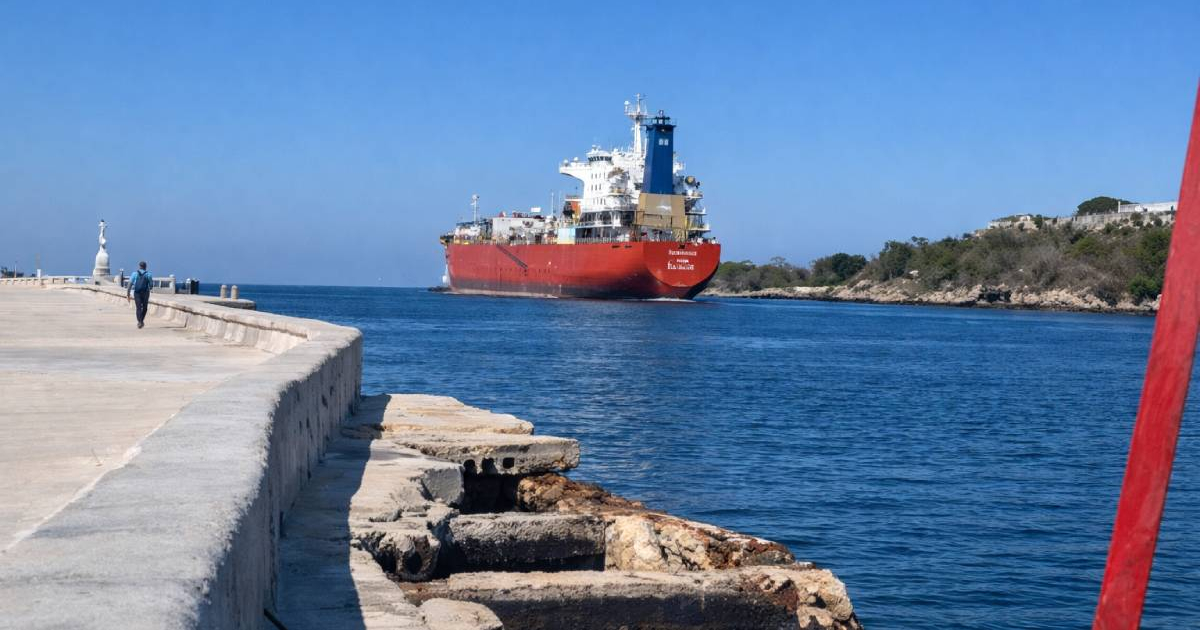
The Caribbean Port Authority Association (Asoportuaria) has refuted claims that the tanker Ocean Mariner, recently stopped by the United States Coast Guard in Caribbean waters, was headed for Cuba.
Representatives from the association have clarified that the operation from Barranquilla was legitimate, and the cargo was not intended for the island nation.
On February 13, the vessel was halted approximately 16 miles south of Les Cayes, Haiti, by a U.S. Coast Guard cutter, according to maritime tracking information from VesselFinder. As of now, no official statement has been issued detailing the specifics of the inspection.
Denial of Cuban Destination
Lucas Ariza, the executive director of Asoportuaria, informed Colombian media that the Ocean Mariner was carrying a load of fibroil and had all necessary documentation for a delivery to a Dominican Republic port at the time of departure.
The transaction was conducted under Free On Board (FOB) terms, meaning that the seller's obligation ended when the goods were delivered at the port of shipment, leaving transportation risks and costs to the buyer.
Asoportuaria emphasized that the port of origin bears no responsibility for any subsequent route alterations. They also highlighted the absence of any documentation proving the fuel was bound for Cuba.
The tanker eventually arrived in Haiti, undermining any speculation of a detour to Cuban territory.
Ship's History and Caribbean Maneuver
The Ocean Mariner (IMO: 9328340) is classified as a Chemical/Oil Products Tanker and sails under the Liberian flag. Built in 2007, the vessel measures 127 meters in length, 20 meters in width, and has a deadweight of 12,983 tons.
Departing Barranquilla on February 5 at 19:28 UTC, its stated destination was "Caribbean for order," with an estimated arrival on February 15 at 01:00. By February 13, at 09:32 UTC, it was traveling at 6.2 knots on a course of 107° with a draft of 8.3 meters.
Trajectory data indicates a northeast route that entered the maritime corridor between Cuba and Haiti, known as the Windward Passage. It changed course in this area, heading south towards Haiti, where the interception took place. Operating in the same corridor was the cutter CG STONE, which had departed Ponce, Puerto Rico, on February 10.
The Ocean Mariner was also the last vessel to deliver oil to Cuba, arriving in Havana on January 9 with 86,000 barrels of fuel from Mexico amid widespread power outages on the island, lasting up to 20 hours daily.
In its January and February 2026 itineraries, the vessel made stops not only in Colombia but also in Havana and Matanzas, as well as Pajaritos and Coatzacoalcos, Mexico.
Cuba's reliance on imported fuel has intensified following the decline of Venezuelan supplies. This interception occurs against a backdrop of heightened U.S. scrutiny over energy routes leading to the island.
Understanding Ocean Mariner's Voyage and Implications
Why was the Ocean Mariner tanker intercepted by the U.S. Coast Guard?
The Ocean Mariner was intercepted as part of a routine inspection approximately 16 miles south of Les Cayes, Haiti, although no official details on the nature of the inspection have been released.
What was the intended destination of the Ocean Mariner?
According to Asoportuaria, the intended destination of the Ocean Mariner was a port in the Dominican Republic, not Cuba, as suggested by some reports.
How does the FOB transaction impact the responsibility of the vessel's route?
Under Free On Board (FOB) terms, the seller's responsibility ends with the delivery of goods at the shipment port, and the buyer assumes all transportation risks and costs thereafter, absolving the port of origin from any route changes.