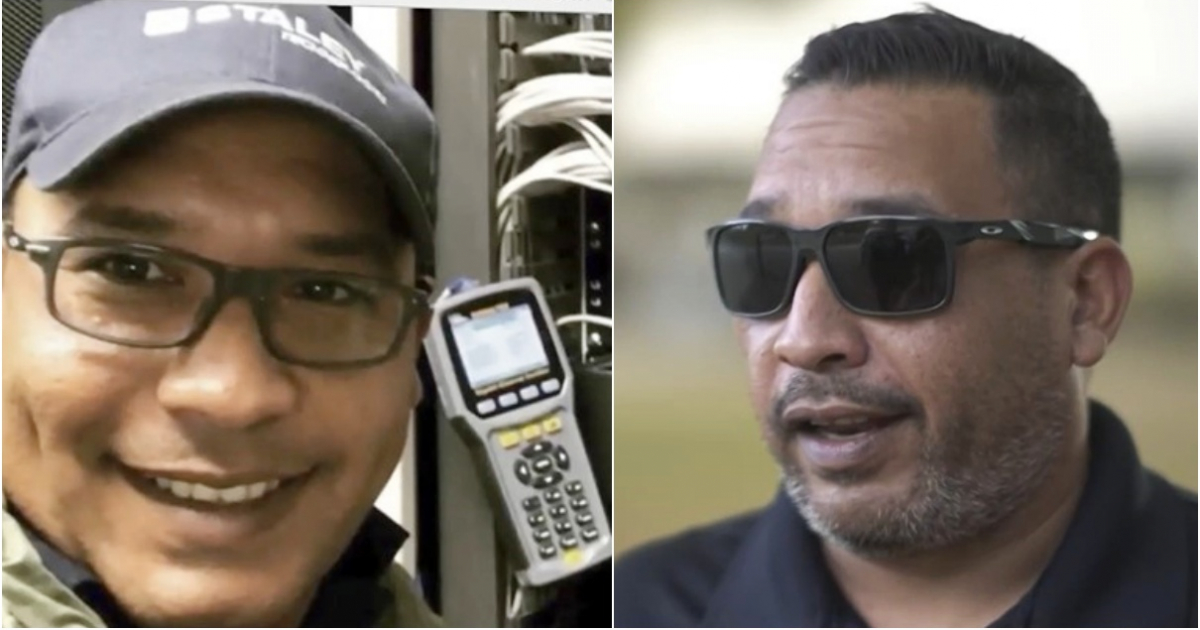
A Venezuelan engineer was contracted for a technical job at a Border Patrol station in Florida, only to face an unexpected turn of events.
After a security clearance, his entry was authorized ahead of time. Yet, upon arriving to fulfill his duties, instead of receiving the expected tools, he was met with handcuffs and detained for a month at the immigration detention center infamously dubbed "Alligator Alcatraz."
From Job Offer to Detention Nightmare
Ángel Camacho, a systems engineer with a master's in telecommunications and a project manager, was summoned to the Border Patrol station in Dania Beach to evaluate a new intercom system. According to reports from NBC, his employer had sent his driver's license for security clearance, and on January 5, a Customs and Border Protection (CBP) employee confirmed via email that he was "approved" to enter the facility.
"We just need to know what time you'll arrive, so we can be ready," the message read. However, when Camacho arrived the next day, he was indeed expected, but not in the way he anticipated.
"I said, 'Good morning. I'm Ángel.' And they replied, 'Oh yes, we've been waiting for you,'" he recounted to NBC6 Investigates. "Then they told me, 'I have to detain you.' I thought they were joking," he explained.
It turned out to be no joke. Camacho was arrested at the very location he was supposed to work as a contractor.
No Criminal Record, Yet Detained
Camacho entered the United States in 2016 on a tourist visa. He is an asylum seeker with Temporary Protected Status (TPS) and has applied for permanent residency through marriage to a U.S. citizen, raising children born in the country. Despite having no criminal record, a work permit, a Social Security number, a driver's license, and paying taxes annually, his lack of permanent residency or citizenship led to his detention amid the Trump administration's stringent immigration policies.
After spending a night in a Border Patrol holding area, he was transferred to the Everglades detention facility, known as "Alligator Alcatraz," where he spent 30 days. "It's the worst nightmare I've ever been through," Camacho said about the facility, which he described as housing individuals with criminal backgrounds. "That is not a place for anyone, especially if you've never committed a crime," he added.
The facility, which opened in July, was initially touted by the president as a holding site for "some of the most threatening migrants, some of the most violent people on the planet." However, ICE data reviewed by NBC Investigates showed that only 25% of the detainees there had criminal convictions, and just 7% had been convicted of violent crimes. Presently, ICE custody numbers have reached a record high of around 70,000 people, with federal detention centers increasingly housing migrants without criminal backgrounds.
Judicial Intervention Secures Release
Camacho's release was not the result of an internal case review or an ICE administrative decision. It was achieved through judicial intervention. His attorneys filed a habeas corpus petition in federal court, a legal process that challenges the legality of a detention and requires the government to justify a person's imprisonment before a judge.
The defense argued that Camacho had no criminal record, held a valid work permit under TPS, was applying for permanent residency through marriage, and posed no danger or flight risk. Ultimately, a federal judge ordered his release after approximately 30 days of detention.
Camacho's ordeal is part of a broader surge in immigration litigation in Florida. According to NBC6 Investigates, while there were an average of five habeas corpus petitions filed monthly in the federal courts of Florida's Southern and Middle Districts last year, that number soared to nearly 400 last month alone.
Attorneys Liliana Gómez and Deliane Quiles have been at the forefront of many of these petitions, highlighting how the administration began abruptly denying bond hearings to detainees, even those without criminal records, last summer. "The law has been the same for the last 30 years, and suddenly the government decided to change it, leading to this wave of litigation," Gómez stated.
The case of Camacho presents a stark image: previously "approved" by a federal agency to enter an official facility as a contractor, he ended up spending a month in one of the nation's most controversial detention centers. What began as a routine work assignment spiraled into a federal legal battle to reclaim his freedom.
Key Questions About Immigration Detentions in the U.S.
Why was Ángel Camacho detained despite having legal status to work in the U.S.?
Camacho was detained due to the lack of permanent residency or citizenship, which under the tightened immigration policies, was enough to justify his detention despite his legal work status and lack of criminal record.
What is the significance of a habeas corpus petition in immigration cases?
A habeas corpus petition is a legal tool used to challenge the legality of a detention, compelling the government to present a valid justification for detaining an individual before a judge, and has been crucial in securing the release of individuals like Camacho.
What are the conditions like in "Alligator Alcatraz" detention center?
The detention center, known for housing individuals with criminal backgrounds, is criticized for its harsh conditions, which many argue are unsuitable for detainees without criminal records, like Camacho.