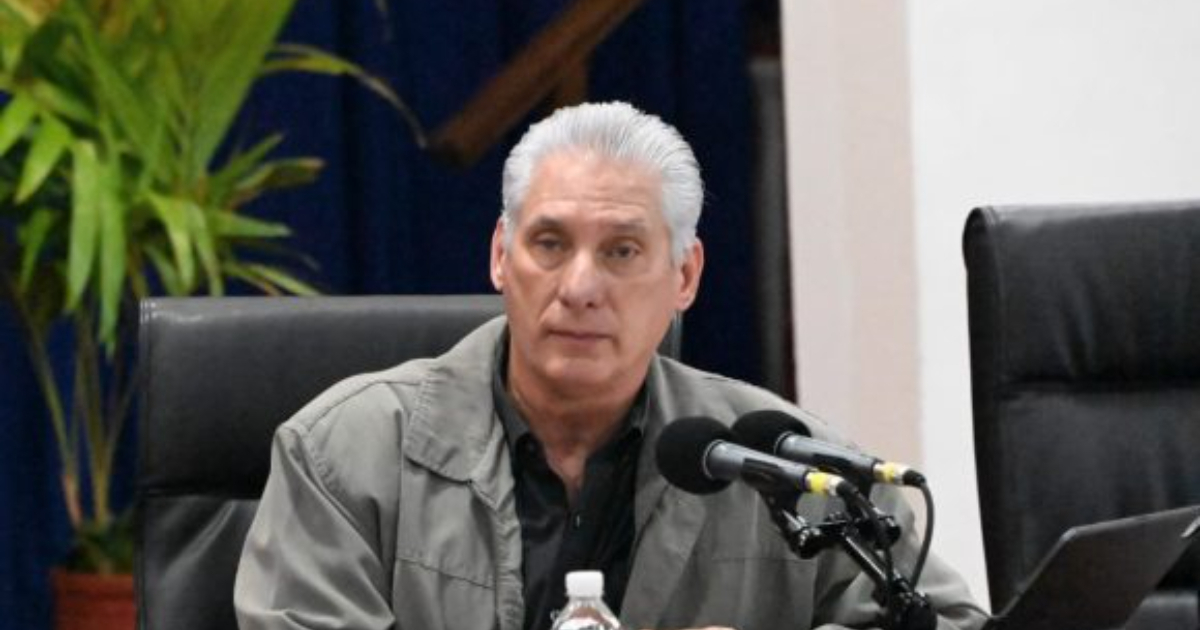
Social media platforms ignited once again following a post by Cuban leader Miguel Díaz-Canel on his official Facebook page, where he discussed a phone conversation with Barbados' Prime Minister, Mia Amor Mottley, amid Cuba's severe energy crisis.
In his post, Díaz-Canel expressed, “I had a warm telephone conversation with the Prime Minister of #Barbados, our dear friend Mia Amor Mottley. I updated her on the situation in #Cuba, worsened by the United States' energy blockade. As always, I received her solidarity and support for the Cuban people, for which I expressed our gratitude. I reaffirmed the commitment to deepen the historic ties with Barbados and other Caribbean nations.”
The post triggered hundreds of comments, many characterized by sarcasm, outrage, and direct challenges to the official narrative.
Public Skepticism on Solidarity's Practical Impact
Numerous users questioned the practical impact of the “solidarity and support” mentioned by the president. “Solidarity and support solve everything,” wrote one user. Another asked, “Can you eat solidarity?” Similarly, a comment quipped, “I need to know when they start distributing solidarity and support through the ration book.”
Criticism also targeted the frequent reference to the U.S. embargo as the main cause of the crisis. “Now the blockade is energetic,” noted one user, while another stated, “The communist blockade on economic development.” A further comment pointed out, “Blockade, that record is scratched.”
Dependence on External Aid and Calls for Reform
Accusations that the government relies on donations and external aid were also present. “Begging for alms,” wrote one profile. Another commented, “Begging as usual!” Similarly, a user remarked, “How long will we live off the charity of other countries?”
Some messages directly addressed the scarcity and hunger affecting the population. “Mr. President, the people you count on to fight against the U.S. are hungry. This way, we won't even win the meringue war,” one user expressed. Another posted, “I'm so hungry.” In another comment, someone questioned, “And how does that change things, sir?”
Critics also called for internal changes. “You should seriously consider implementing economic reforms in Cuba to escape this misery, instead of continuing to receive donations and handouts from insignificant Caribbean islands,” wrote one user. Another suggested, “Let go of power.”
Official Narrative vs. Public Reality
The virtual conversation once again highlighted the strong reactions generated by official messages in a context of power outages, food shortages, and social unrest. While the president continues to denounce the “energy blockade by the United States” and emphasize international solidarity, many citizens question the effectiveness of these gestures amid the daily crises they face.
The leader's message prompted responses beyond his official page. From her Facebook profile, journalist Mónica Baró Sánchez commented, “He makes more phone calls than I did at 12 when we got a landline in my area. He must have no one left to call.”
Community Reactions to Diaz-Canel's Social Media Post
What was the public's reaction to Díaz-Canel's social media post?
The public's reaction was marked by sarcasm, outrage, and skepticism towards the effectiveness of the solidarity and support mentioned by Díaz-Canel. Many questioned the practicality of these gestures in addressing the daily challenges faced by Cubans.
Why are citizens critical of the U.S. embargo narrative?
Citizens are critical of the U.S. embargo narrative because they see it as a repetitive excuse that fails to address the internal issues contributing to the country's economic and social challenges. Many believe that relying solely on the embargo as a scapegoat overlooks the need for internal reforms.
What suggestions were made for improving Cuba's situation?
Some suggestions include implementing economic reforms and reducing reliance on external aid. Citizens called for serious consideration of internal changes to address the country's systemic issues rather than depending on international solidarity.