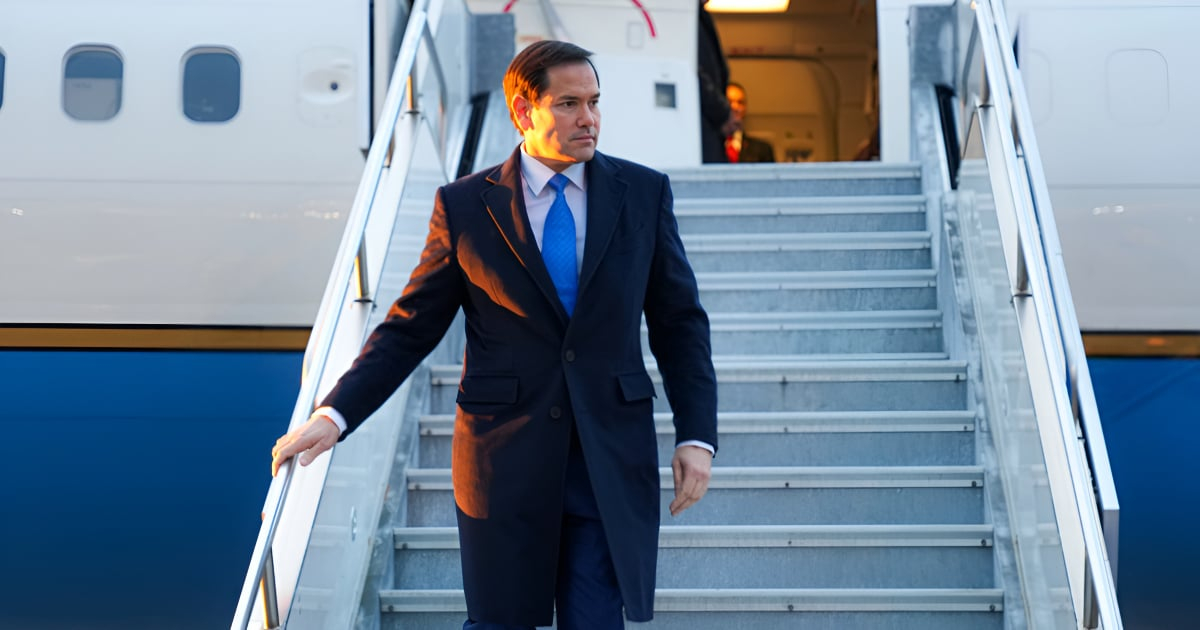
On February 25, U.S. Secretary of State Marco Rubio will attend the 50th Regular Meeting of the Conference of Heads of Government of the Caribbean Community (CARICOM), taking place in Saint Kitts and Nevis.
The announcement from the Department of State highlighted that Rubio will engage with Caribbean leaders to advance "shared priorities," encompassing the enhancement of regional security, cooperation against illegal immigration and trafficking, as well as the promotion of economic growth, health, and energy security.
Principal Deputy Spokesperson Tommy Pigott mentioned that the visit underscores Washington's commitment to collaborating with CARICOM member states to "enhance stability and prosperity in the hemisphere."
Regional Integration and Political Influence
Established on July 4, 1973, through the Treaty of Chaguaramas, CARICOM aims to foster economic cooperation, coordinate foreign policies, and advance human development and security among Caribbean nations.
The bloc comprises 15 full member states, predominantly English-speaking countries such as Jamaica, Barbados, Trinidad and Tobago, Guyana, Bahamas, and Antigua and Barbuda, among others.
Over the decades, CARICOM has played a significant diplomatic role in the Caribbean, often adopting unified stances on sensitive hemispheric issues.
Historical Ties with Cuba
Although Cuba is not a full member, it holds observer status and shares a long-standing relationship with the organization.
In 1972, four Caribbean nations established diplomatic relations with Havana, challenging U.S. efforts to isolate the island during the Cold War. This event is celebrated annually on December 8 as CARICOM–Cuba Day.
Since then, the bloc has provided political space for Cuba in various forums and summits, becoming one of the few regional mechanisms consistently offering diplomatic support to the island.
A New Regional Balance?
Marco Rubio's attendance at the summit signifies a pivotal moment in Caribbean geopolitical dynamics. Traditionally seen as a venue where Cuba has enjoyed a privileged dialogue, CARICOM now welcomes high-level participation from the U.S. government.
The agenda set forth by Washington aligns with current U.S. foreign policy priorities, especially concerning migration, security, and energy—areas of increasing strategic interest in the region.
Rubio's involvement could be perceived as an effort by the United States to bolster its influence in the Caribbean amidst geopolitical competition and the reconfiguration of regional alliances.
Meanwhile, CARICOM continues to assert itself as a crucial player in the hemisphere's diplomatic balance, maintaining connections with both Washington and Havana.
Understanding CARICOM's Geopolitical Role
What is the main purpose of CARICOM?
CARICOM is primarily aimed at fostering economic cooperation, coordinating foreign policies, and advancing human development and security among Caribbean countries.
Why is Marco Rubio’s participation in the CARICOM summit significant?
Marco Rubio’s attendance is significant as it marks a strategic moment in U.S.-Caribbean relations, showcasing a direct high-level engagement from the U.S. in a region historically aligned with Cuba.
How does CARICOM maintain its diplomatic balance?
CARICOM maintains its diplomatic balance by engaging with both Washington and Havana, positioning itself as a key player in regional stability and cooperation.