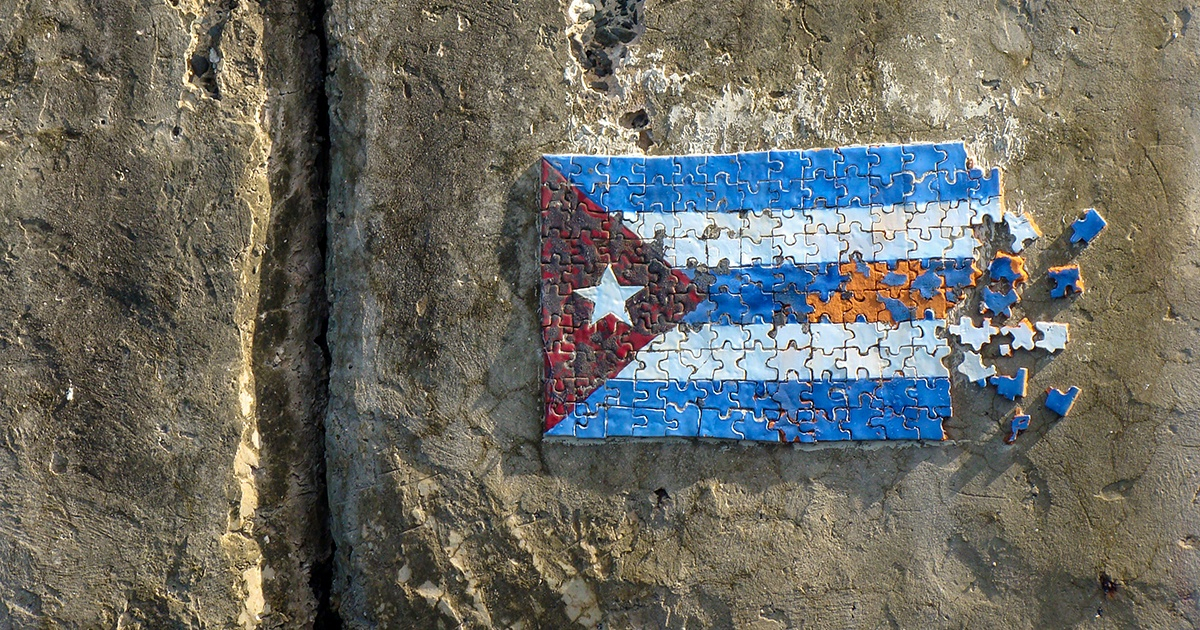
As Cuba grapples with prolonged blackouts, halted transportation, and deteriorating public services, Washington's focus appears to have shifted from merely pressuring the regime to planning for the aftermath of a potential collapse of the current system.
U.S. Chargé d'Affaires in Havana, Mike Hammer, stated that the United States has long been developing scenarios for a transition in Cuba, with concrete plans in place to manage the subsequent process.
"We've been contemplating a transition to a free Cuba for quite some time. We have various strategies to carry it out in the least chaotic manner, aiming to rebuild a country whose economy is in disarray," Hammer shared in an interview with ABC News.
Examining an Unsustainable Model
Hammer emphasized that internal conditions in Cuba have dramatically changed, leading to an unsustainable situation.
"This situation cannot continue," he remarked, describing the conditions as plagued by accumulated garbage, health outbreaks, and a crisis in basic services.
He outlined the need for a comprehensive overhaul of Cuba's energy infrastructure, healthcare, water, transportation, and communication systems, all suffering from decades of centralization and lack of strategic investment.
Economic Mismanagement and the Need for Change
The diplomat criticized the current economic model, pointing out that revenues from tourism have not been used to strengthen the productive economy or improve public services.
"The money from tourism wasn't reinvested into the economy. Instead, it was used to build more hotels," he said, specifically referencing the military conglomerate GAESA.
This critique suggests that any potential transition would necessitate not only political change but also a shift in economic power.
Aiming for a Peaceful Transition
Hammer underscored that Washington's goal is not to incite a violent collapse.
"We are seeking a peaceful solution without bloodshed, allowing the people to live in peace," he affirmed.
His emphasis on a "less chaotic" transition aims to prevent a power vacuum that could lead to institutional or migratory crises.
Hammer hinted that there may be individuals within the Cuban system who recognize the current project's end and might be interested in necessary changes.
While he did not name these individuals, he suggested that Washington is considering scenarios where internal sectors could aid in a gradual opening.
Rebuilding and Cuba's Economic Potential
Hammer expressed optimism about the country's recovery potential should structural changes occur.
"I see the potential of the Cuban people; they can solve anything. They have a strong entrepreneurial spirit," he remarked.
He emphasized that the Cuban diaspora and international investment would play crucial roles in the country's revitalization.
"Imagine a government eager to invest in the economy, where tourism benefits the Cuban people rather than a select group. That would be wonderful," he added.
Though he avoided setting a timeline, Hammer left a hopeful note about the rapidity of the change: "I believe it will happen in an unexpectedly swift manner."
Pressure as a Prelude to "The Day After"
These discussions on planning arise amid a broader strategy by the Trump administration that combines energy pressure, financial isolation, and discreet diplomacy.
According to ABC sources in Washington, the plan involves restricting energy supplies to limit the regime's operational capacity while exploring dialogue with internal actors and opposition sectors.
An executive order signed by Trump threatens sanctions against countries and entities supplying oil to Cuba, extending pressure to shipping companies, insurers, and financial intermediaries.
With a daily demand of around 100,000 barrels of oil and derivatives, and insufficient domestic production, the island faces prolonged power outages and partial economic paralysis.
Simultaneously, Washington has reportedly initiated discreet contacts with figures associated with the real power structure and opposition actors, aiming for a negotiated transition to avoid a sudden collapse.
In this context, Hammer's words gain significance: pressure is not an end but a means to catalyze a scenario where institutional and economic reconstruction is already being considered.
"Let's see if through this pressure, they realize another path is necessary," he stated.
The question is no longer if change will occur, but how and under what conditions the transition will be managed when the current model reaches its inevitable end.
Understanding the Transition Plans for Cuba
What is the focus of the U.S. plans for Cuba's transition?
The U.S. plans focus on facilitating a peaceful transition in Cuba, aiming to rebuild the country's economy and infrastructure while avoiding chaos and violence.
How does Washington intend to pressure the current Cuban regime?
Washington's strategy includes restricting energy supplies, financial isolation, and diplomatic efforts to engage with internal and opposition actors, aiming to limit the regime's operational capacity.
What role does the Cuban diaspora play in the transition plans?
The Cuban diaspora is expected to play a key role in the country's recovery, bringing investment and entrepreneurial spirit to help rebuild the economy.