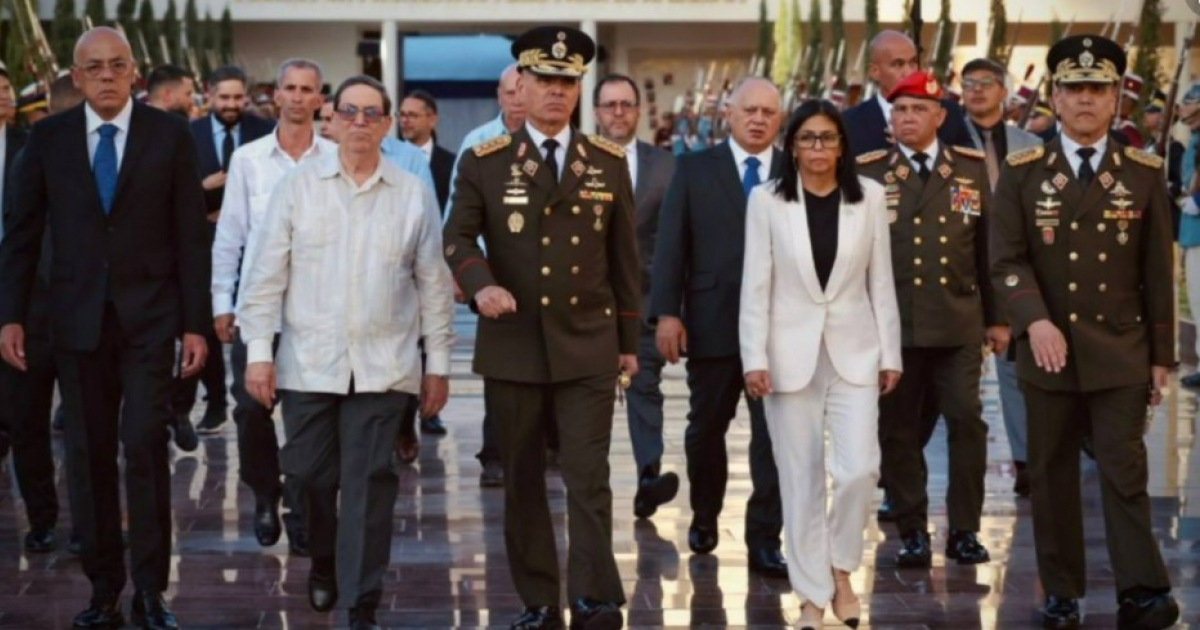
Shortly after reports emerged about the withdrawal of Cuban personnel from Venezuela, Cuban Foreign Minister Bruno Rodríguez emphasized that his government does not meddle in the internal matters of other countries.
"Cuba poses no threat to any nation. Our foreign policy is peaceful, based on solidarity, and dedicated to peace, friendship, and cooperation. It adheres to International Law and the UN Charter. We do not attack, threaten, or interfere in the affairs of other states," Rodríguez expressed on X.
He further criticized, "It is unimaginable that the world's largest and most aggressive economic, military, and technological power could use the baseless claim of feeling threatened by a nation as small as Cuba."
Rodríguez's statements came shortly after a Reuters report on the gradual withdrawal of Cuban advisors and security forces from Venezuela. This move potentially signals the dismantling of a military and intelligence control infrastructure that Havana helped establish since 2008 to protect the Chavista regime from internal plots and military dissension.
The withdrawal, confirmed by Reuters, gains significance when contrasted with years of official denials by the Cuban regime about its direct involvement in security and repression activities in the South American country.
The report indicated that Cuban advisors have been removed from significant positions within the General Directorate of Military Counterintelligence (DGCIM), the body known for its pivotal role in monitoring, persecuting, and imprisoning officers suspected of disloyalty.
Additionally, interim president Delcy Rodríguez is reported to have replaced Cuban bodyguards with Venezuelan ones, breaking with the long-standing practice established by Hugo Chávez and continued by Nicolás Maduro, who entrusted their personal security to elite forces sent from Havana.
The immediate trigger for these events was the U.S. military operation on January 3, resulting in Maduro's capture and the death of 32 Cuban operatives. Havana acknowledged the casualties, honoring them as "internationalist heroes," a stark contrast to its years of categorical denials about Cuban military presence in Venezuela.
Amid mounting pressure from Trump, Rodríguez has been traveling in recent weeks seeking support for Havana's beleaguered regime.
Last Wednesday, he was welcomed in the Kremlin by Vladimir Putin, who reaffirmed that Russia will "always" support Havana against what he described as the "energy blockade" by the United States.
During their meeting, Putin stated that Russia has "always" stood "by Cuba in its struggle for independence and the right to follow its own path," adding that this is a "special period, with new sanctions," which Moscow does not accept "anything of the sort."
Rodríguez expressed gratitude for the "Russian solidarity" conveyed by the president and the Russian government "firmly and continuously," according to the text.
Cuba's Role in International Affairs
What is Cuba's stance on international interference?
Cuba maintains that its foreign policy is peaceful and does not interfere in the internal matters of other nations.
Why is the withdrawal of Cuban personnel from Venezuela significant?
The withdrawal signifies potential changes in the military and intelligence support structure that Cuba provided to Venezuela, contrasting years of official denials about such involvement.
How has Russia expressed its support for Cuba?
Russia, through President Putin, has reaffirmed its solidarity with Cuba, pledging continuous support against U.S. sanctions and describing them as an "energy blockade".