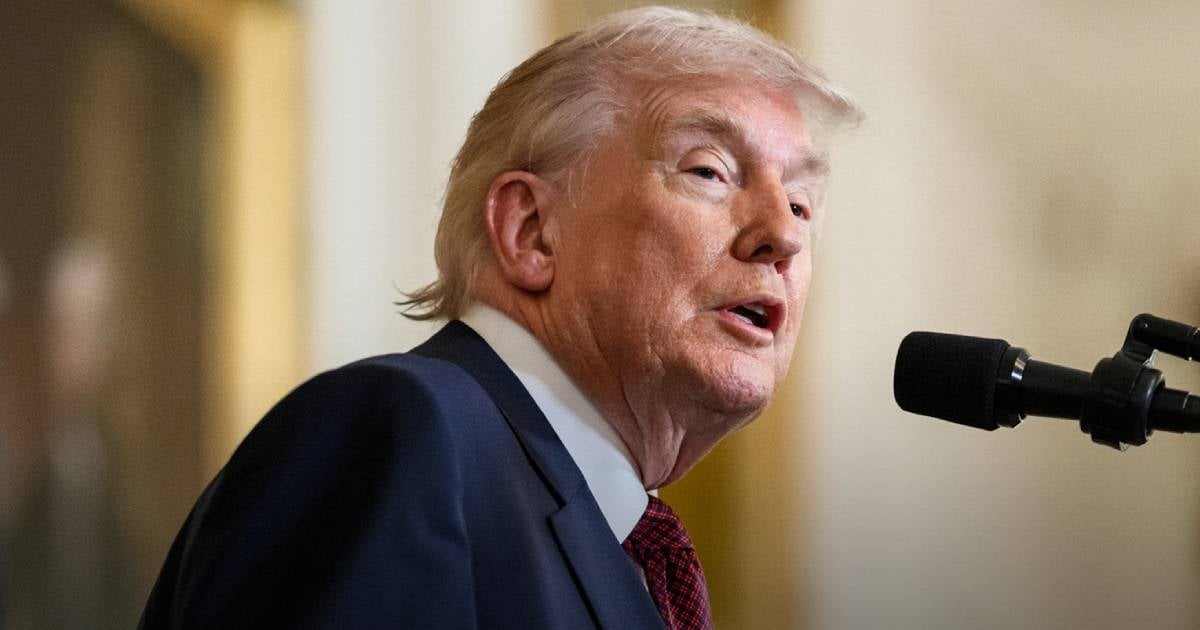
Just hours after the United States Supreme Court ruled that most global tariffs imposed under emergency powers were illegal, President Donald Trump responded with a bold announcement that could further disrupt international trade: an immediate 15% global tariff with a warning that it could be raised.
In a post on his social media platform, Truth Social, Trump declared that the tariff would target countries he claimed have been "cheating the U.S. for decades," and he hinted at the possibility of further hikes in the coming months. "The Administration will determine and implement the new tariffs within legal bounds," he stated, adopting a defiant tone following the judicial setback.
Supreme Court's Decision Sparks Controversy
The Supreme Court's decision was unequivocal: the president cannot impose tariffs under the International Emergency Economic Powers Act (IEEPA) as it does not explicitly authorize tax creation. With a vote of six to three, the Court retroactively nullified much of the "reciprocal" tariffs Trump had placed on numerous countries, including tariffs as high as 34% on China and general rates of 10% on most imports.
The financial repercussions are significant: over $150 billion collected in the past year could be subject to refund claims. Importing companies have already begun legal actions, opening a complex economic and budgetary front.
Trump's Alternative Strategy
Undeterred, the president announced he would utilize Section 122 of the Trade Act of 1974, allowing tariffs of up to 15% for a maximum of 150 days. "The Supreme Court did not strike down the tariffs themselves, just a specific use of the law," Trump told the press. He explained that tariffs imposed for national security reasons—such as those on steel and aluminum—would remain in place.
Trump also mentioned other legal avenues, including Section 232 of the Trade Expansion Act of 1962, signed by John F. Kennedy, and even referred to the historical Smoot-Hawley Tariff Act of 1930, a symbol of extreme protectionism during the Great Depression.
Political and Fiscal Tensions Rise
This announcement comes at a particularly sensitive time. Trump had proposed using tariff revenue to fund $2,000 checks for middle-class families and increase military spending. The court ruling now puts that funding source in jeopardy.
The projected federal deficit for 2025 could approach two trillion dollars, with public debt nearing 100% of the GDP. The potential necessity to refund billions to companies adds pressure to the budget debate in Congress.
Impact of Trump's Tariff Policies
What was the Supreme Court's ruling on Trump's tariffs?
The Supreme Court ruled that the president cannot impose tariffs under the International Emergency Economic Powers Act (IEEPA) as it does not explicitly authorize tax creation. This decision retroactively nullified many of the tariffs Trump had imposed.
How does Trump plan to impose new tariffs?
Trump intends to use Section 122 of the Trade Act of 1974, which allows tariffs of up to 15% for a maximum of 150 days.
What are the economic implications of the tariff ruling?
The ruling could lead to over $150 billion in tariff revenue being subject to refund claims, creating economic and budgetary challenges.