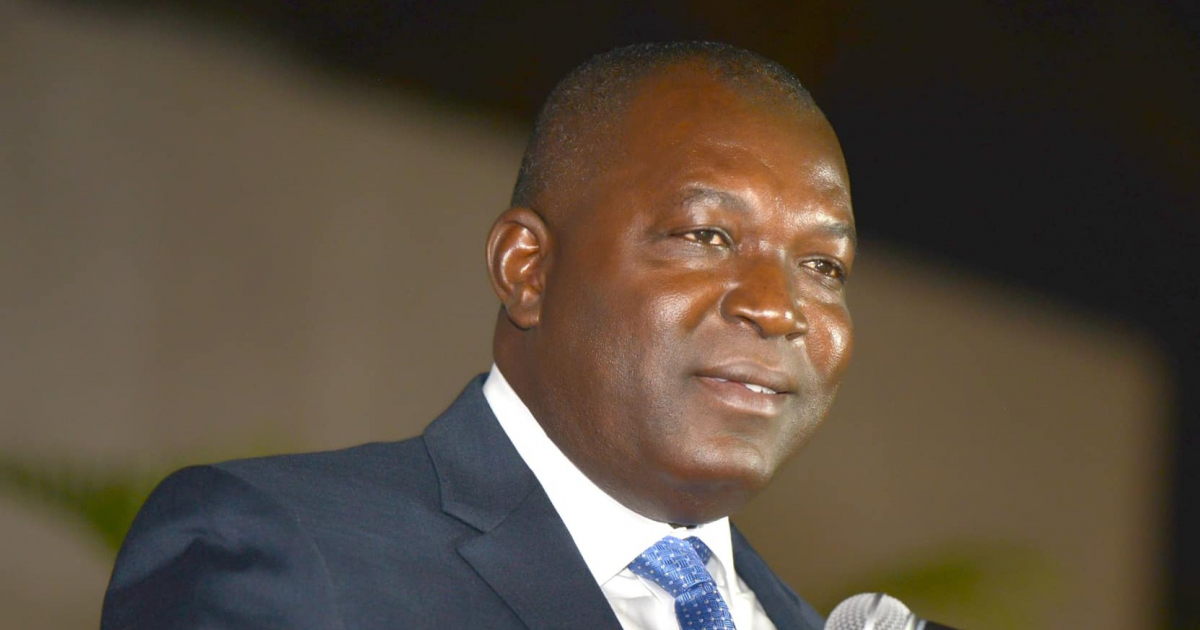
Philippe Bien-Aime, a former mayor of North Miami, is currently embroiled in a civil denaturalization process after being accused of using dual identities to secure immigration benefits and subsequently, U.S. citizenship.
This action was initiated this week at the United States District Court in Miami, following a joint investigation conducted by the U.S. Citizenship and Immigration Services (USCIS) and the Department of Justice.
According to USCIS, the official, who also went by the name Jean Philippe Janvier and hails from Haiti, initially entered the United States using a fraudulent passport with an altered photograph.
The complaint alleges that after deportation proceedings under that identity led to a final removal order in 2001, he appealed the decision but later withdrew the appeal, claiming he had returned to Haiti.
However, authorities assert that he remained in the U.S. and later utilized a different name and birth date to continue his immigration process.
The investigation, which formed the basis for the lawsuit, relied on fingerprint comparisons submitted under both identities, as part of a federal historical review of biometric records. This verification confirmed they were the same individual.
The civil complaint filed by the federal government argues that Bien-Aime was not legally eligible for naturalization because of the outstanding deportation order, which—if proven—would have precluded both permanent residency and subsequent citizenship.
Furthermore, authorities claim the former mayor entered into a marriage with a U.S. citizen to adjust his immigration status while still married to a Haitian citizen, invalidating the marriage presented to immigration authorities.
The file also accuses him of providing false information under oath during immigration interviews, including details about previous addresses and family information.
USCIS emphasized in its statement that it maintains "zero tolerance for immigration fraud" and will pursue denaturalization processes "regardless of who is involved."
Nonetheless, the agency reminded that these accusations are allegations that must be proven in court.
Bien-Aime was elected mayor in 2019 and resigned in 2022 to run for a seat on the Miami-Dade County Commission, a race he ultimately lost.
If denaturalization proceeds, it could have legal implications regarding his past eligibility to hold public office, given that North Miami's municipal code requires candidates to be registered U.S. citizens eligible to vote.
His attorney, Peterson St. Philippe, told NBC Miami that they are examining the complaint and will respond to the charges "through the appropriate legal channels."
On the other hand, federal prosecutor Jason A. Reding Quiñones stated in a press release: "U.S. citizenship is a privilege based on honesty and loyalty to this country." He added that, if the facts are verified, the government will ask the court to revoke a status that "was never legally obtained."
This case arises amid a federal administration push to tighten the review and revocation processes for citizenship in cases where irregularities are found.
Legal experts consulted by U.S. media highlight that denaturalization is a complex and lengthy procedure, potentially extending over several years before reaching a final resolution.
Beyond the judicial process itself, the case highlights the significance of transparency in immigration proceedings and the potential consequences when authorities believe citizenship was obtained through deceit.
The judicial future of Bien-Aime now hinges on the federal court in Miami, where the government must prove that his citizenship was acquired illegally or through the concealment of essential facts.
Key Questions on Immigration Fraud and Denaturalization
What is the basis for the denaturalization case against Philippe Bien-Aime?
The case is based on allegations of using dual identities for immigration benefits, fraudulent documentation, and providing false information under oath during immigration procedures.
How might this denaturalization case impact Bien-Aime's past public office eligibility?
If denaturalization is successful, it could have implications for his past eligibility to hold public office, as local laws require candidates to be registered U.S. citizens.
What role does USCIS play in cases of immigration fraud?
USCIS is responsible for investigating immigration fraud and can initiate denaturalization processes if evidence of fraud is found.