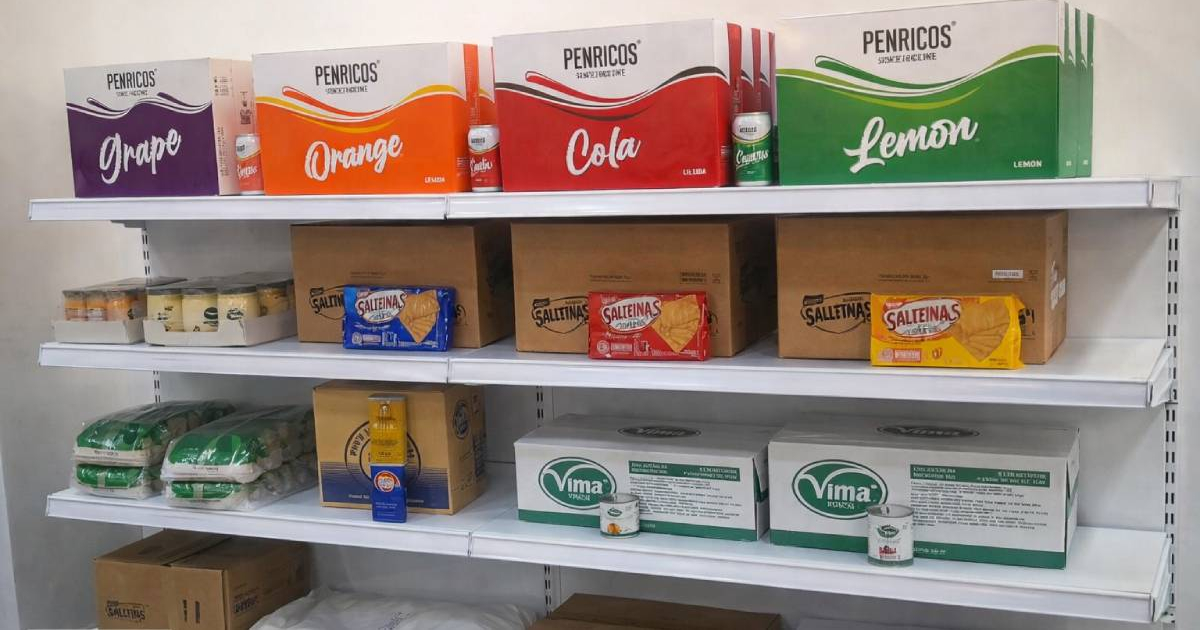
The state-run chain Tiendas Caribe has introduced a wholesale service at the Infanta y Santa Marta Shopping Center in Centro Habana, sparking widespread debate across social media platforms.
The Cuban government claims this sales model will allow customers to purchase goods in bulk with discounts compared to retail prices. However, the announcement has stirred discontent due to a lack of price transparency and the requirement to pay in U.S. dollars (USD).
The Havana West Division stated that their offerings include bulk sales of soft drinks, grains, pasta, canned goods, mayonnaise, and boxes of chicken thighs and breasts. Payments are accepted only in "USD cash and classic cards."
The state entity asserts that this initiative aims to "diversify offerings and provide practical solutions to customers," yet many commenters demanded essential details that were omitted from the announcement.
Criticism Over Pricing and Dollar Payments
A key complaint is the absence of pricing information and specifics on discounts. "What is the cost of a box of chicken?" was a recurring question among commenters.
The exclusive use of dollars for transactions further fueled the controversy. "Who gets paid in USD in Cuba? How are we supposed to get USD if we don't have family abroad to support our business?" one user questioned.
This sentiment highlights the divide between those who receive remittances and those who rely solely on salaries paid in Cuban pesos.
In the informal market, a U.S. dollar is estimated to be worth around 500 Cuban pesos (CUP), a steep rate for most state workers, whose monthly wages fall short of covering the cost of a single package of imported chicken.
The Problem of Capped Prices
Beyond restricted access to foreign currency, this new sales strategy presents an additional challenge for those who intend to resell these goods in their businesses.
One comment encapsulated the issue: "I assume the chicken is sold with a capped price, because it's state-supplied and they strive to prevent private sellers from raising prices on what they call capped products."
The government itself enforces controls and maximum prices for certain foods. Yet, it requires these goods to be purchased in dollars and subsequently penalizes or seizes merchandise from those who resell above the set prices in Cuban pesos.
This situation poses a dilemma for small businesses and self-employed workers: adhering to state-imposed capped prices means they won't recoup their investment made in dollars; adjusting prices to match the real exchange rate in the informal market risks fines and confiscations.
The lack of publicly available pricing and the exclusive requirement of USD payments reinforce the perception that this is a mechanism to gather hard currency amid widespread shortages, where supplies in the national currency are insufficient or nonexistent.
Key Questions About Tiendas Caribe's Dollar-Only Wholesale
How does Tiendas Caribe’s new wholesale service work?
Tiendas Caribe's new service allows customers to purchase products in bulk at a discount, but it requires payment in U.S. dollars, either in cash or using classic cards.
Why is there controversy over the payment requirement?
The controversy arises because the service mandates payment in U.S. dollars, which are not commonly earned by most Cubans. This excludes those without access to remittances or foreign currency.
What challenges do small businesses face with this service?
Small businesses face the dilemma of not being able to recover their dollar investment if they comply with state-imposed capped prices, or risking penalties if they adjust prices to reflect the informal market rate.