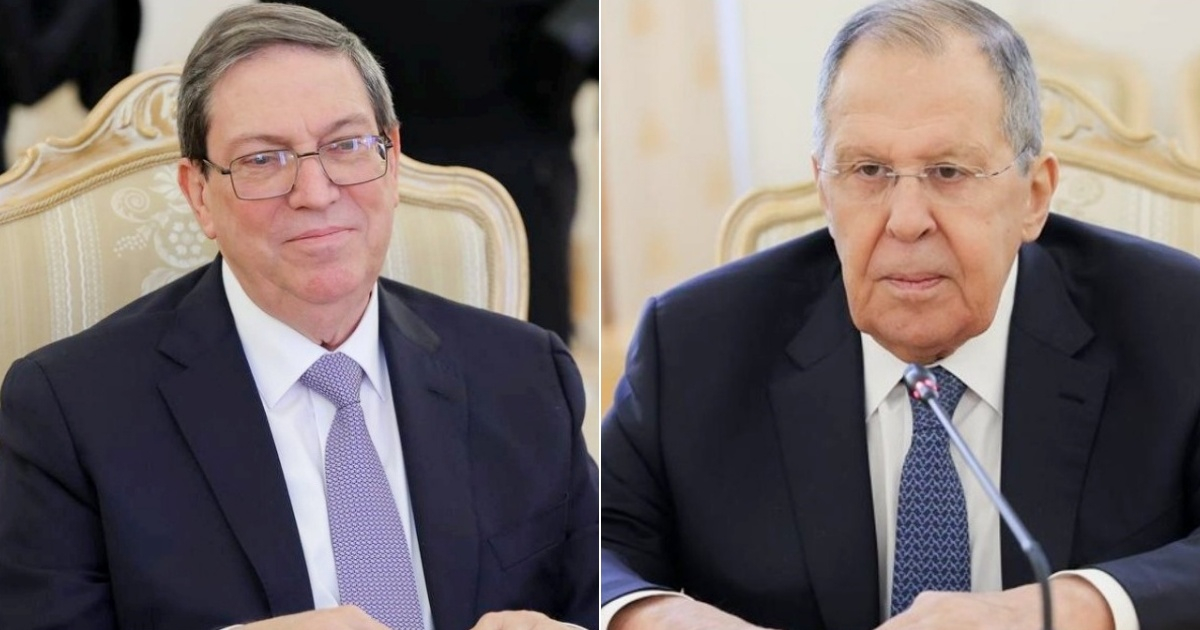
On Wednesday, the Russian government intensified its rhetoric towards Washington, urging the United States to employ "common sense" and put an end to the oil blockade exacerbating Cuba's already severe energy crisis.
Speaking from Moscow, Russian Foreign Minister Serguei Lavrov condemned any attempts to impose a naval embargo on the island as "unacceptable" and vehemently denied U.S. allegations that Russian-Cuban cooperation poses a threat to the United States.
These remarks were made during the official visit to Russia by Cuban Foreign Minister Bruno Rodríguez Parrilla, amidst Cuba's ongoing struggles with extended blackouts and a critical fuel shortage, worsened by restrictions on importing crude oil.
During the bilateral talks, Lavrov stated that "alongside the majority of the international community," Russia calls for the U.S. to "demonstrate common sense, adopt a responsible approach, and abandon any plans for a naval blockade."
Lavrov emphasized Russia's commitment to "steadfastly" supporting Cuba in protecting its "sovereignty and security."
Russian Support but Will Oil Be Sent?
Bruno Rodríguez, in turn, criticized the tightening of the embargo and asserted that Cuba will continue "steadfastly advancing in the defense of its independence and sovereignty." Nonetheless, he left the door open for dialogue with Washington by stating that Cuba is "always ready for respectful dialogue on equal terms with any country."
The Russian backing comes as Cuba faces one of its most severe energy crises in decades. Difficulties in importing oil have disrupted the operation of power plants and refineries, directly impacting the daily lives of millions of Cubans, who endure frequent blackouts and partial economic shutdowns.
Kremlin spokesman Dmitri Peskov reiterated that “Russia, like many other countries, has consistently spoken out against the blockade of the island.” He also highlighted the importance of the relationship with Havana: "We value our relationship with Cuba highly, and we intend to continue developing it, providing appropriate assistance to our friends in challenging times."
When asked if a potential shipment of Russian fuel might impact the recent thaw in Moscow-Washington relations, Peskov replied, “We do not believe these issues are connected.”
Simultaneously, Russian media have reported that Moscow is considering sending a humanitarian shipment of fuel to Havana in the near future. Russian Ambassador to Cuba, Viktor Koronelli, mentioned that the Kremlin is examining the details to organize this aid, although no specific dates or volumes have been disclosed.
The diplomatic tension backdrop includes warnings from U.S. President Donald Trump about imposing tariffs on any country that sells oil to Cuba. Following these threats, Mexico suspended shipments in January, and Venezuela—one of the island's leading historical crude suppliers—also stopped oil sales to Havana.
The fuel crisis has even affected the tourism sector. Russian agencies ceased offering travel packages to Cuba after the Cuban government announced it would not guarantee fuel supplies to planes landing on the island.
While Moscow promises political backing and potential energy assistance, the Cuban population continues to face the immediate consequences of scarcity: blackouts, production halts, and worsening living conditions, set against a backdrop of geopolitical tensions where the island once again becomes a point of contention between global powers.
Understanding the Impact of U.S. Policies on Cuba
What is the current state of Cuba's energy crisis?
Cuba is experiencing one of its worst energy crises in decades, characterized by prolonged blackouts and severe fuel shortages impacting daily life and economic activities.
How has the U.S. oil blockade affected Cuba?
The U.S. oil blockade has exacerbated Cuba's energy crisis by limiting the island's ability to import crude oil, leading to significant disruptions in power supply and economic activities.
Will Russia provide fuel assistance to Cuba?
While there are discussions about Russia sending humanitarian fuel shipments to Cuba, no specific details on timing or volume have been confirmed.