Recent revelations by Axios have shed light on what had previously been a mix of conflicting statements: the United States is engaging in discreet communications with those closest to Raúl Castro.
Sources familiar with the situation have openly confirmed to the American news outlet that the Trump administration's aim is a regime change in Cuba. However, the method to bring about this transformation remains undetermined.
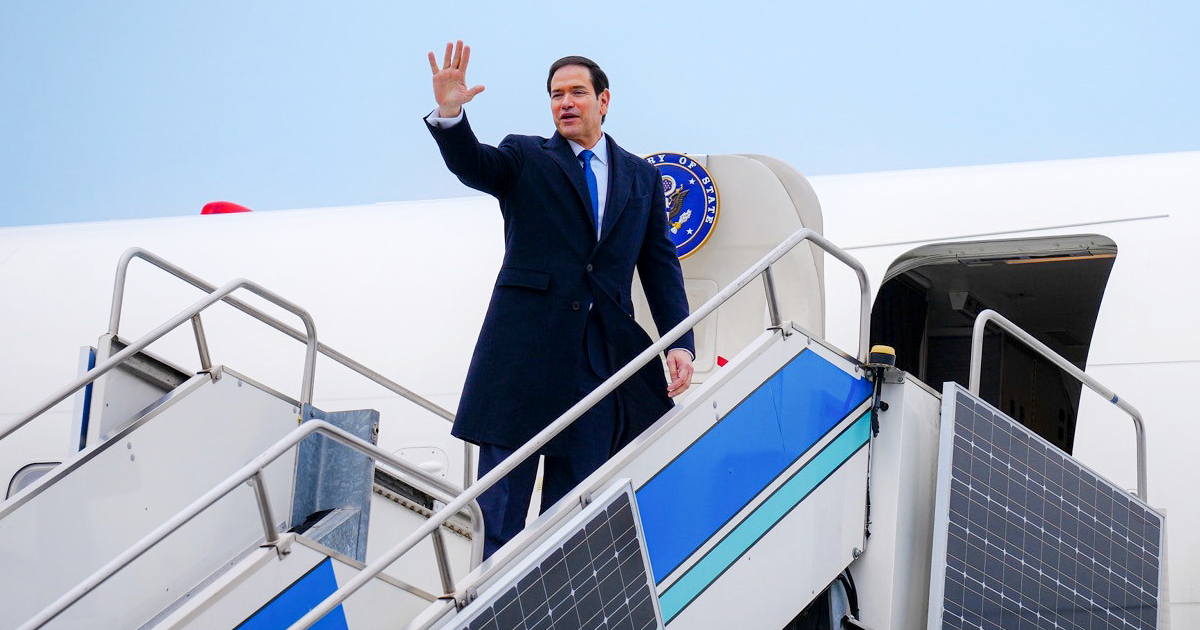
According to Axios, Secretary of State Marco Rubio has been holding secretive discussions with Raúl Guillermo Rodríguez Castro, a trusted confidant and grandson of the historical figure of Castroism. This strategic move intentionally bypasses the official channels of Miguel Díaz-Canel's government.
Supporting these claims, a high-ranking official within President Donald Trump's administration made it clear where Washington stands:
“Our position—the position of the United States government—is that the regime has to go,” stated the official. “But what that looks like... that's up to President Trump, and he hasn't decided yet. Rubio continues talks with the grandson.”
This marks a pivotal moment. For the first time, an official source unambiguously acknowledges that current U.S. policy towards Cuba aims at dismantling the totalitarian system that has held power for over six decades.
Nonetheless, there is no definitive strategy in place, and the ultimate decision rests with President Trump.
Unofficial Channels and Conversations
Axios reports that these dialogues do not involve Miguel Díaz-Canel or other visible leaders of the Communist Party, whom Washington views as mere apparatchiks lacking real capacity to negotiate substantial changes.
Instead, Rubio's discussions focus on Raúl Castro's inner circle, particularly with his grandson, known as “Raulito” or “El Cangrejo.”
Sources describe these interactions as “surprisingly cordial” and future-oriented, avoiding past grievances.
The State Department has not denied these contacts, though it refrained from public comment.
Discrepancies with Havana
The revelations stand in stark contrast to recent statements by Cuban Deputy Foreign Minister Carlos Fernández de Cossío, who assured EFE that there is no high-level dialogue with Washington, only “message exchanges.”
Cuba's official communique echoed this, denying any ongoing negotiations. However, Axios suggests these discussions occur outside formal channels, targeting those the U.S. sees as true centers of power on the island.
Regional Context and Strategy
The regional context offers insight into the strategy under consideration. Following Nicolás Maduro's capture on January 3, Washington pursued a phased process in Venezuela, allowing temporary roles for figures like Delcy Rodríguez while overseeing a transition.
Axios sources claim Rubio's team is searching for the next “Delcy” in Cuba, someone within the system capable of steering change without causing immediate institutional collapse.
The Cuban scenario, however, presents greater challenges: a more deteriorated economy, lack of strong opposition, and a deeply centralized state structure.
Defining a Strategy
The most significant aspect of these revelations is not just the existence of contacts but the admission that the White House has yet to determine how to achieve its historically demonized goal by Havana: regime change.
Trump, according to sources, is focused on other international issues, like Iran and Ukraine, while tasking his Secretary of State with developing options. Simultaneously, he's increased energy and financial pressure on Havana, recently labeling Cuba “a failed nation.”
In this context, talks with Raúl Castro's circle could be part of an exploratory strategy: gauging internal divisions, identifying viable interlocutors, and assessing how much the hardline Cuban power core is willing to concede.
What's no longer in doubt is Washington's stated goal: the regime, as it exists today, is unacceptable.
The question remains how— and with what degree of disruption or continuity— this transformation will unfold.
Understanding U.S. Policy Toward Cuba
What is the United States' current objective in Cuba?
The United States' current objective in Cuba is to bring about a regime change, aiming to dismantle the totalitarian system in place for over 60 years.
Who is involved in the secretive discussions with Raúl Castro's circle?
Secretary of State Marco Rubio is reportedly engaged in secretive talks with Raúl Guillermo Rodríguez Castro, Raúl Castro's grandson and trusted advisor.
How does the Cuban government respond to the allegations of high-level talks?
The Cuban government, through Deputy Foreign Minister Carlos Fernández de Cossío, denies any high-level talks with the U.S., stating that there are only message exchanges.