"When will this municipality's transfer issues be resolved? For heaven's sake, the government or whoever is responsible needs to take action... this is just pouring water on a drowned rat," expressed an exasperated Yaimi Llorente Peña in the Facebook group "From MOA to the World." Her sentiments were quickly echoed by dozens of commenters.
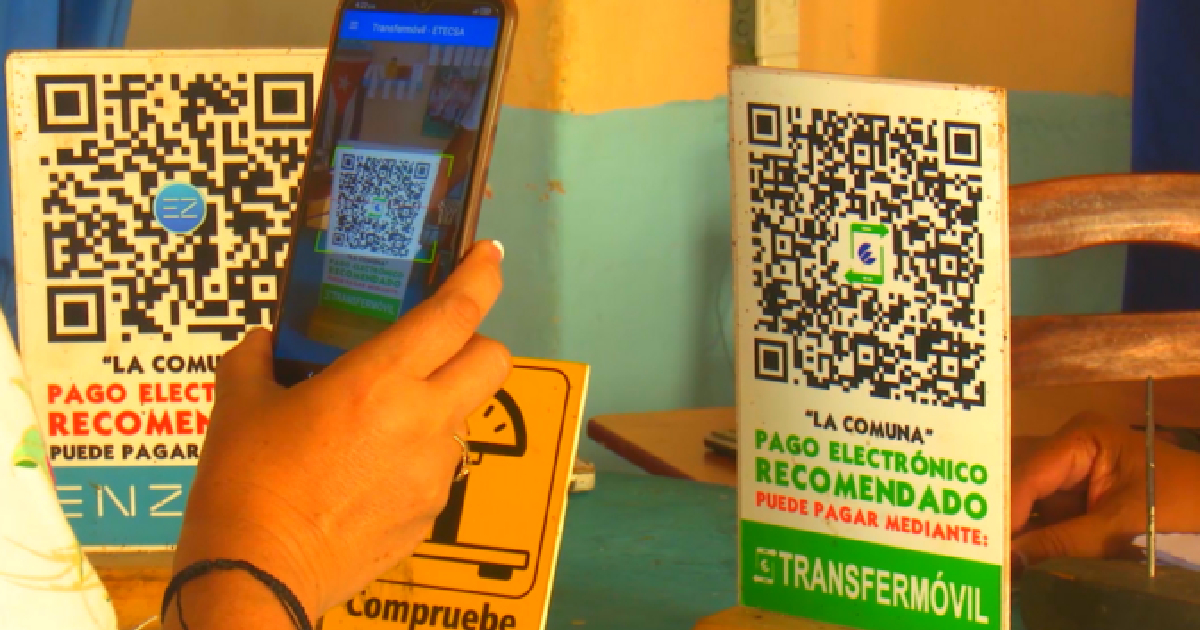
Llorente questioned why workers receive their salaries in electronic accounts, yet businesses refuse to accept digital payments. This conundrum has become a persistent issue across Cuba since the government implemented a "banking" measure to promote virtual commerce, amidst numerous hindrances.
Adding to the frustration, product prices are increasingly exorbitant, and some businesses either do not accept transfers or charge high fees, sometimes upwards of 15 percent, on transactions, as several forum participants noted.
"The blame lies with the government and the administration," remarked a user known as Bussiness Sa, highlighting the dilemma faced by private microenterprises needing cash for purchases and imports. He questioned, "What are they supposed to do with all these transfers?" referring to the difficulty in converting digital money into cash due to limited availability and banking restrictions in Cuba.
This issue has been a frequent topic in both state and independent media, as well as on social media, due to the significant impact it has on daily life in Cuba. Users often warn about businesses pretending to trade via QR codes to appease inspectors while only accepting transfers when it suits them or when extra money is offered.
Further complications undermining the success of digital banking include poor phone coverage and malfunctioning digital platforms in certain areas, problems that have worsened with the current intensified energy crisis. Under these conditions, transactions can only be made with cash; but where is it? And at what cost?
Scenes of chaos outside banks, like those reported in November in Marianao, Havana, with long lines forming before dawn just to withdraw a small portion of one's own money, protests, and frustration over broken or empty ATMs, have become part of the harsh daily reality in Cuba.
In December, Guantánamo's Bank of Credit and Commerce (Bandec) branch 8572 attempted to manage the situation by implementing a digital waiting room for cash withdrawals due to critical issues with long lines, the illegal resale of spots, priced up to 400 pesos, and health hazards from the crowds.
This method barely met the needs of a few dozen people each day, while hundreds remained on the electronic waiting list. Observers noted that without cash to distribute, even a well-organized waiting system fails to address the root problem.
The Cuban banks, according to government claims, are prepared to operate even without electricity amidst the fuel and power shortages plaguing the island. However, the daily struggles of their customers reduce such assurances to mere empty propaganda.
Many analysts argue that these economic absurdities, like the more "virtual" than electronic trade, cannot be separated from the country's multifaceted crisis. "They're looking in the wrong place. The only solution is a change in system, an end to the dictatorship," concluded Radimir Galán Rodríguez in the Moa Facebook group.
Understanding Cuba's E-commerce Crisis
Why don't Cuban businesses accept electronic transfers?
Many businesses in Cuba refuse electronic transfers due to difficulties in converting digital funds into cash, compounded by banking restrictions and limited cash availability.
What challenges are associated with digital payments in Cuba?
Challenges include poor digital infrastructure, high transaction fees, unreliable network coverage, and a worsening energy crisis, making digital payments difficult to implement effectively.
How has the energy crisis affected banking in Cuba?
The energy crisis has exacerbated issues with digital platforms and phone coverage, further complicating banking operations and increasing reliance on cash transactions.
What are the broader implications of Cuba's banking issues?
The banking issues reflect deeper systemic problems within Cuba's economy and governance, contributing to public frustration and calls for systemic change.