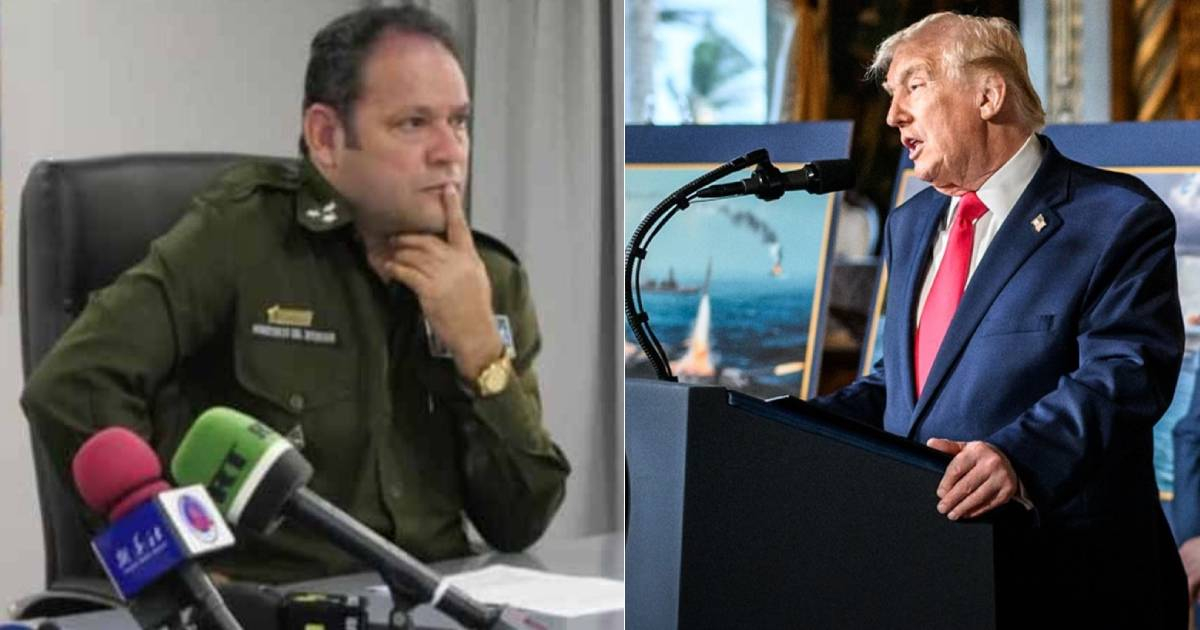
Amid escalating tensions between Havana and Washington, a senior Cuban military officer has openly responded to President Donald Trump's accusations, which labeled Cuba as an "extraordinary threat" to U.S. national security.
"We reaffirm that Cuba poses no threat to the United States," stated Colonel Juan Carlos Poey, head of the Anti-Drug Directorate of the Ministry of the Interior, during a press briefing in Havana.
He further emphasized that the island serves as a "maritime barrier" against drug trafficking moving from South America towards U.S. soil, as reported by AFP.
The official argued that if Cuba’s anti-drug efforts were hindered by the so-called "energy blockade," the United States would be the one to worry. "Even under current circumstances, we continue to shield the United States from the scourge of drugs," Poey declared.
These comments arise amidst intense pressure from Washington. Trump has rationalized the tightening of measures against the island by citing its alleged ties with Russia, China, and Iran. However, Cuban authorities maintain that the nation neither produces nor stores drugs and poses no threat to U.S. security.
Also present at the conference were Justice Minister Rosabel Gamón Verde and First Colonel Ivey Daniel Carballo, chief of the Border Guard Troops General Staff, who cautioned that energy constraints might impact bilateral agreements like maritime rescue operations.
Carballo reminded that vessels and cruise ships, many American, frequently navigate 150 kilometers off the Cuban coast and rely on assistance during emergencies.
According to data provided by Poey and reported by AFP, Cuba seized 1.9 tons of drugs in 2025. The island's strategic location in the Caribbean places it along maritime routes utilized by speedboats, which, when threatened, dump their cargo into the sea, later washing ashore.
Cuba is experiencing a severe fuel shortage amidst intensified sanctions. On the ground, this scarcity results in collapsed transportation, hospitals facing constraints, and homes enduring prolonged power outages.
Havana's message seeks to convey responsibility and cooperation in combating drug trafficking, even amid political friction. Yet, for many Cubans, both on the island and abroad, the pressing question remains: how can a nation claiming to protect the United States from drug flow fail to shield its own people from the economic and energy collapse that defines daily life?
The verbal clash with Washington thus returns to the forefront of discourse, while the internal crisis continues to heavily impact the population.
Cuba's Role in U.S. Drug Security: Key Questions Answered
How does Cuba contribute to U.S. drug security?
Cuba acts as a "maritime barrier" against drug trafficking routes from South America to the United States, helping to intercept illegal substances before they reach U.S. shores.
What are the implications of the U.S. sanctions on Cuba's anti-drug efforts?
Cuban officials warn that U.S. sanctions, particularly energy restrictions, could hinder their ability to effectively combat drug trafficking, which might negatively impact U.S. security.
What is the current situation in Cuba regarding fuel shortages?
Cuba is undergoing a severe fuel shortage, leading to disrupted transportation, limited hospital operations, and prolonged power outages in homes.