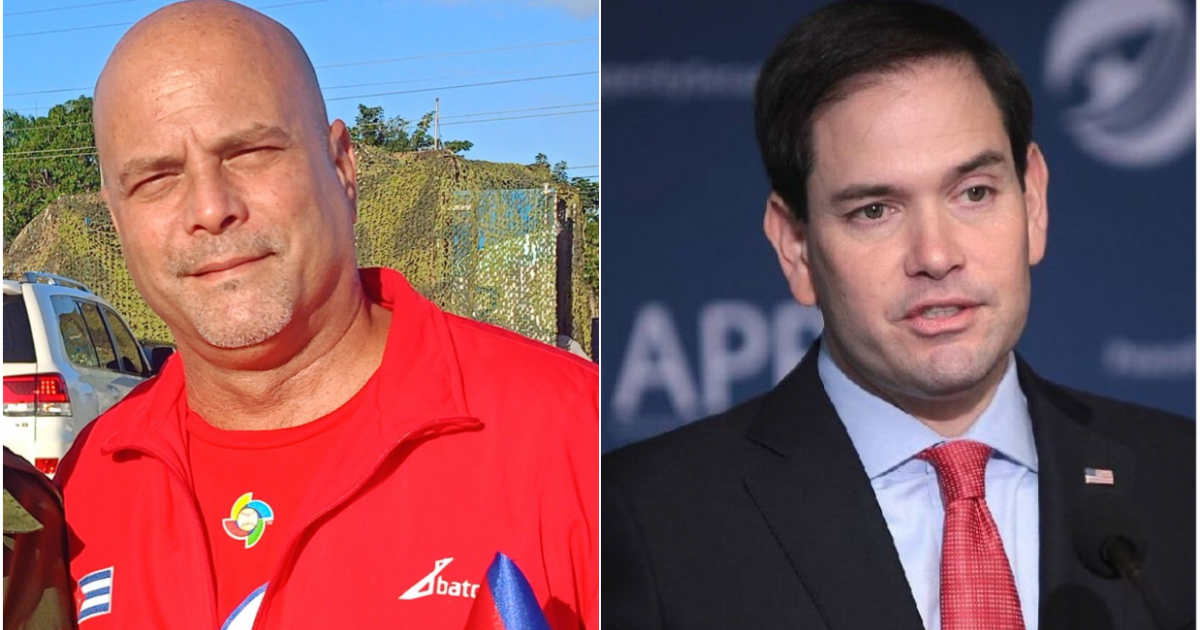
In a recent Facebook post, Gerardo Hernández Nordelo, the national coordinator of the Committees for the Defense of the Revolution (CDR), sparked controversy by sarcastically "thanking" U.S. Secretary of State Marco Rubio for the mounting pressure on Cuba. His post reignited debates over the island's economic struggles and the ongoing embargo.
Hernández wrote, “Suddenly, there was no need for more signs, t-shirts, or programs to explain it: Everyone who claimed the blockade didn't exist, or that it was just against 'the regime,' fell silent.” He added a photo caption: “For a long time, there hasn't been as much talk in Cuba's streets about the damages caused by the #USA blockade to Cubans. Thank you, Marco Rubio!”
Far from supporting his narrative, the post drew a wave of criticism on his own page. Many users perceived his words as an implicit admission that the official discourse required a new event to uphold the "blockade" thesis.
Public Reaction and Criticism
Comments on his post included: “67 years blaming the blockade, and a week of partial blockage leaves you desperate, destroyed," and “Now there is a blockade. After years of lying about it, it finally arrives. Enjoy the blockade.”
Some were even more direct: “In Cuba, there isn't a blockade; there’s a dictatorship,” “The only blockade is the communist party to the Cuban people,” and “The real suffocation comes from the government that doesn’t even allow you to think.”
Critics also pointed out the disparity between the government elite and the populace: “I don’t see a blockade in the hotels or in the lifestyle of the dictators,” and “The blockade is you preventing Cubans from enjoying natural resources for sustenance.”
Historical Context and Ongoing Controversies
The debate also revived past incidents, such as the 1996 shootdown of the Brothers to the Rescue planes. One comment stated, “We talk daily about the four members of the unarmed civilian plane of Brothers to the Rescue who were only rescuing Cubans fleeing the regime at sea, and you shot them down.. so who is more guilty?”
This issue resurfaced following U.S. efforts to investigate potential charges against Raúl Castro for the February 24, 1996 incident, where Carlos Costa, Pablo Morales, Mario Manuel de la Peña, and Armando Alejandre were killed. The discussion was renewed after the 2025 arrest of former Cuban pilot Luis Raúl González-Pardo for immigration fraud and new public statements by survivors demanding accountability. Reports from the International Civil Aviation Organization indicated the aircraft were shot down outside Cuban airspace, a crucial aspect in the legal debate. Days earlier, Hernández had mocked attempts to prosecute Raúl Castro.
Social Media Backlash and Internal Responsibility
The CiberCuba Noticias Facebook post sharing Hernández’s message echoed the critical tone, highlighting the regime's internal accountability. One user commented, “I will believe in the leaders when they live like the people, like Uruguay's President Pepe Mujica who was humble and not surrounded by luxury.” Another wrote, “Our harsh reality began 67 years ago; that is the real blockade.”
Other comments pointed out, “Long before Donald Trump and Marco Rubio, you had already blocked the country,” “Your ideology before the misery and desperation of the people,” and “Always justifying the unjustifiable.”
Further messages questioned the disconnect between power and the people: “It’s obvious you lack nothing, you’re not the people” and “You destroyed Cuba, no one else.”
This controversy adds to other recent incidents where Hernández faced criticism. In late January, he was at the center of a digital offensive after a satirical post led to a series of social media attacks. This episode highlighted his defensive stance with a flurry of messages against the media and its readers. Days later, he quoted Fidel Castro on his social media amid political tensions, attempting to revive past slogans as the context shifted, reminiscent of reviving Castro's rhetoric during a crisis. He also sparked strong reactions after criticizing Cuban-American politicians and blaming the exile community for the economic situation, which led to citizen backlash as his posts were widely questioned online.
During the intensifying policies towards Havana under President Donald Trump and Secretary of State Marco Rubio, Hernández's attempt to bolster the “blockade” narrative backfired, opening a space where many citizens directly blamed the internal power structure for the economic collapse, blackouts, chronic shortages, and lack of freedoms over six decades. Instead of reinforcing the official discourse, his publication highlighted the worn-out rhetoric that increasingly fails to resonate with those suffering from the island's crisis.
Understanding the Cuban Blockade Debate
What was Gerardo Hernández's intention with his Facebook post?
Gerardo Hernández used sarcasm to criticize U.S. policies, indirectly highlighting the Cuban government's narrative that the embargo is responsible for the country's economic issues.
How did social media users react to Hernández's post?
The post received significant criticism, with many users interpreting it as an admission that the official discourse about the blockade needed reinforcement and blaming the Cuban government for the country's problems.
Why was the 1996 Brothers to the Rescue incident mentioned in the reactions?
The incident was brought up to highlight past grievances and ongoing legal debates, as U.S. efforts continue to assess possible charges against Raúl Castro for the shootdown.