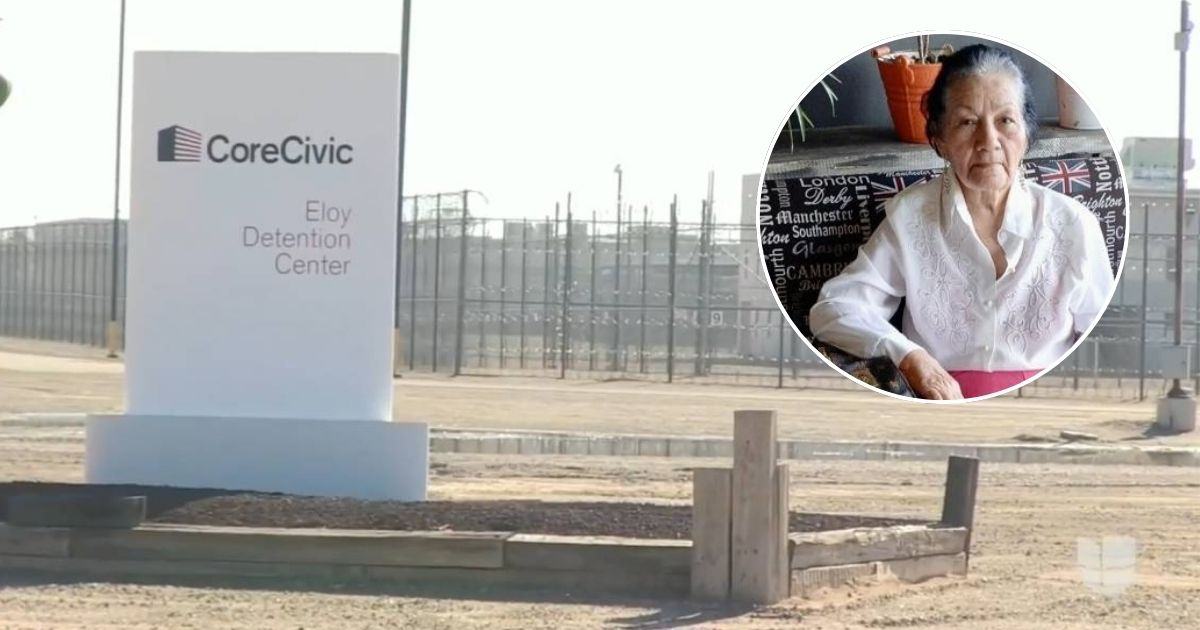
At 79 years old, Julia Benítez often finds herself confused about her surroundings. During video calls, she sometimes smiles at her daughter's face, while other times she mistakes her for her own mother and acts as if she's still in Cuba. Yet, one question remains constant within the walls of the Eloy Detention Center in Arizona: when will she be set free?
This harrowing tale, highlighted by the Arizona Daily Star, depicts the plight of a Cuban asylum seeker held for nine months by the Immigration and Customs Enforcement (ICE), as her early-stage dementia worsens in what her family describes as a bewildering and hostile environment.
Julia crossed the southern border near Lukeville, Arizona, last year seeking asylum. According to her daughter, Dayana Cosme Benítez, a legal resident in Miami, Julia only had occasional memory lapses when she surrendered to authorities. Now, after months of detention, she’s unaware of her whereabouts.
"Most of the time, she just asks when she will be released," Dayana tearfully recounted to the American newspaper.
Known as “the grandmother” inside the detention center, Julia spends much of her time in a wheelchair, something she never needed before her arrest. Fellow detainees assist her with meals, restroom visits, and video calls to her family. “She has received kindness from them, but each one is dealing with their own case,” her daughter shared.
The decline is not only mental. Her diabetes has become unmanageable, and stress has exacerbated her hypertension. Recently, she had to be isolated due to a severe flu. "Her best medicine right now is the love she can receive from her loved ones," Dayana pleaded.
The Painful Past Behind Bars
However, the story behind her detention stretches back decades, explaining why Julia fled Cuba.
In 1991, her husband, Daniel Cosme Ramos, was killed by Cuban border guards while trying to escape the country by sea. For years, the family was left in the dark about his fate. They searched for him for five years until, according to Archivo Cuba, a guard member disclosed they had been captured and executed for attempting to flee. The case was documented as a forced disappearance by the State.
After publicly denouncing the murder, Julia and her daughter claim they were subjected to surveillance, harassment, and discrimination on the island for years. In her asylum application, Julia stated she was a “direct victim of persecution and intimidation by the communist regime simply for thinking differently.”
Dayana remembers her mother as a joyful, protective woman who sewed birthday dresses and later helped raise her grandchildren. “Since my father died, she was both mother and father to me,” she said.
Julia intended to apply for asylum through official channels when she decided to travel to the United States. But as her daughter explained, the program she planned to use was canceled while she was in Mexico, leading her to cross the border outside an official entry point.
Now, she faces mandatory detention and has been denied a bond hearing. According to the report, ICE has not clarified why it does not exercise its discretion to grant her humanitarian parole. In a response to the media, the agency stated that detainees receive appropriate medical care.
Meanwhile, data reviewed by the Arizona Daily Star indicates an increase in ICE arrests of older individuals under the current administration, with discretionary releases plummeting significantly.
For Dayana, the statistics pale in comparison to the image of her mother behind a screen.
"I have always trusted the laws of this country," she stated. “It’s not right that in a country that defends human rights, my mother is in this situation. Her only offense was crossing the border.”
Every night, when the video calls end, Julia returns to the same question. She longs to embrace her grandchildren. She wants to leave. She wants to comprehend why, after surviving persecution in Cuba and her husband’s murder for trying to flee, her days are spent behind bars, waiting for an answer that never comes.
Understanding the ICE Detention Process and Humanitarian Concerns
What conditions does Julia Benítez face in detention?
Julia Benítez is experiencing worsening dementia in a disorienting environment, coupled with unmanageable diabetes and stress-induced hypertension. She is also isolated due to a severe flu, relying on fellow detainees for daily assistance.
Why was Julia Benítez detained by ICE?
Julia Benítez was detained after crossing the border near Lukeville, Arizona, seeking asylum. She was subject to mandatory detention and denied a bond hearing, with ICE not clarifying why humanitarian parole was not granted.
What background led to Julia Benítez's asylum request?
Julia Benítez fled Cuba after her husband was murdered by Cuban border guards during an escape attempt. She and her daughter faced years of surveillance and harassment after denouncing the murder, prompting her asylum application.