On January 9, 2026, the tanker Ocean Mariner docked in Havana with 85,000 barrels of oil from Mexico. Unbeknownst to many, this would be the last oil shipment Cuba would receive. Just over a month later, the island is plunged into darkness: airports run out of jet fuel, cities endure blackouts exceeding 18 hours daily, and a Bloomberg analysis using satellite imagery shows a 50% reduction in nighttime illumination in Santiago de Cuba and Holguín compared to historical averages.
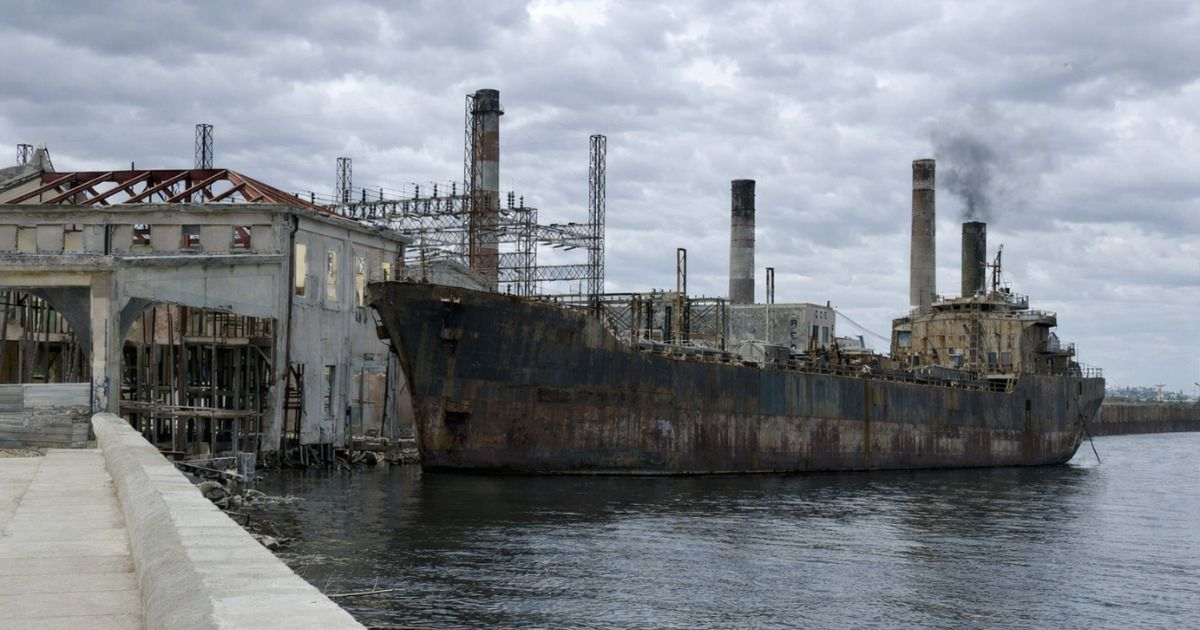
The roots of this disaster trace back years, involving a fleet of aging tankers controlled by GAESA, the military conglomerate that acted as the lifeline of Cuba's dictatorship, transporting Venezuelan, Mexican, and Russian crude. Now, these vessels lie dormant in Matanzas Bay, serving as floating storage for the regime's dwindling reserves.
The Military Conglomerate Behind Cuba's Oil
The Grupo de Administración Empresarial S.A. (GAESA) is a conglomerate under the Revolutionary Armed Forces that dominates strategic sectors of the Cuban economy, including tourism, transportation, logistics, and crucially, fuel imports through Cubametales. A Miami Herald investigation revealed that between January and March 2024, Gaviota, a GAESA entity, achieved a net margin of 42%—nearly four times the global hotel industry average—amassing $554 million in profits while paying its workers just $11 a month. This very conglomerate constructed and operated the oil fleet, registering ships under shell companies in Cyprus, Panama, and Liberia.
The Regime's Fleet
At least nine tankers operated by GAESA or its affiliates have been identified, totaling a capacity of 423,584 deadweight tons (DWT) and averaging 22.6 years in age. The largest vessels—Lourdes, Sandino, and Petion—managed the Venezuela-Cuba route, loading at ports in José, Bajo Grande, and El Palito, and unloading at Matanzas, Havana, Cienfuegos, and Bahía de Nipe. Despite being sanctioned by the OFAC since 2019, the Sandino continued operations between Venezuela, Mexico, and Cuba. Smaller ships like María Cristina and Ocean Integrity were used for coastal transport and floating storage in ship-to-ship transfers.
Shell Companies to Bypass Sanctions
The fleet operated through a network of shell companies: Caroil Transport Marine Ltd. (Cyprus) managed the Sandino, Petion, and formerly Carlota C (now María Cristina). Petion and Sandino were listed under Trocana World Inc. and Tovase Development Corp. (both from Panama), respectively. Bluelane Overseas (Panama) operated the Giralt on the Cuba-Venezuela route. Other sanctioned entities include Jennifer Navigation, Lima Shipping, and Large Range (Liberia), as well as the Italian PB Tankers S.P.A. Cuba adopted a corporate cascade model similar to Iran and Russia, but lacks the financial power to replace sanctioned firms swiftly.
Cuba's Three Oil Arteries
According to S&P Global, in 2025, Cuba imported 13.7 million barrels: Venezuela (61%), Mexico (25%), Russia (10%), and Algeria (4%). Cuba requires around 100,000 barrels daily for basic services but produces only 40,000, leaving a chronic deficit of 60,000 barrels. Venezuela supplied between 27,000 and 35,000 barrels daily in exchange for medical, intelligence, and military advisors. Since 2019, shipments became opaque: in June 2024, the Neptune 6 was discovered conducting ship-to-ship transfers with the Esperanza in Bahía de Nipe while its AIS transmitted a false position north of Curacao. PDVSA also employed "co-loading," where mixed shipments discharged part in Cuba and proceeded to Asia.
From the administration of López Obrador, Mexico sent 17,200 barrels daily (acknowledged by Pemex to the SEC). Expert Jorge Piñón disclosed that Mexico wasn't sending its heavy Maya crude but more valuable varieties—Olmeca and Istmo—as Cuba's outdated refineries couldn't process heavy crude.
Russia dispatched Urals crude from Ust-Luga using tankers like the Akademik Gubkin (sanctioned by OFAC), although volumes fell from 600,000 tons in 2022 to 100,000 in 2024.
Evasion Tactics of the Dark Fleet
Cuba's fleet employed the same tactics as the global shadow fleet: AIS spoofing (false positions), signal blackouts (the M/T Sophia went five months without a transponder before capture), ship-to-ship transfers at sea, name and flag changes (María Cristina was formerly Carlota C; dark fleet ships rotate between flags of Panama, Cameroon, Guyana, and Timor-Leste), and co-loading of mixed cargoes Cuba-Asia.
The End of the Dark Fleet in the Caribbean
Everything changed on January 3, 2026, with Maduro's capture in Caracas. However, the offensive against tankers began earlier: on December 10, 2025, the US seized the Skipper, a VLCC with 1.8 million barrels bound for Cuba, flying a false Guyana flag. A subsequent escalation followed. On December 20, during an attempt to board the Bella 1, the crew fled towards the North Atlantic, inciting an 18-day pursuit. During the chase, they painted a Russian flag on the hull and renamed the vessel "Marinera." Moscow registered it and dispatched a submarine and warship as escorts. The US remained undeterred: on January 7, Navy SEALs captured the Marinera in the North Atlantic, and simultaneously, the Southern Command seized the M/T Sophia in the Caribbean.
Mexico's Last Stand: A Closed Artery
With Venezuela neutralized, Mexico was Cuba's last hope. Yet, on January 29, following an executive order from Trump threatening tariffs, Sheinbaum confirmed shipments were "paused." On February 12, two Mexican Navy ships docked in Havana with 800 tons of supplies—food, not oil. The contrast speaks volumes.
From Transporting Oil to Storing the Last Drops
In early January, maritime trackers documented six GAESA ships converging in Matanzas—Sandino, Ocean Integrity, Alicia, Marlin Ammolite, Pastorita, and María Cristina—with the Primula en route as the seventh. Their role had shifted from transporting oil to serving as floating storage for the remaining reserves. Economist Emilio Morales from Havana Consulting Group summarized: Cuba's economy is exhausted, without credit or allies; the crisis is structural, and collapse seems weeks away.
By February 10, Cuba awoke to no petroleum movement. Only the Esperanza sailed towards Cienfuegos, redistributing the last loads internally.
Failed Attempts: Not Even Gas Purchases Succeed
Desperation is evident in ships returning empty. In early February, the tanker Emilia traveled to Kingston (Jamaica) to load propane at the Petrojam refinery, historically selling gas to Cuba on cash terms. It returned empty. On February 14, the Eugenia Gas returned empty to Santiago de Cuba following another failed attempt in Jamaica—the second failure in two weeks. According to Jorge Piñón, the maneuver cost the ship its remaining operational fuel.
The Gas Exelero departed Cienfuegos on February 10 towards the Caribbean, possibly heading to Curacao. The Ocean Mariner was intercepted south of Haiti by the USCG STONE 758 but continued after its manifest was verified.
Cuba in Darkness
Massive blackouts ensue. On February 4, Guantánamo, Santiago de Cuba, Holguín, and Granma experienced total blackouts. The Electric Union reported 1,389 MW available against a 3,100 MW demand—a deficit of 1,700 MW—plus 1,000 MW of distributed generation paralyzed due to a lack of diesel. Six out of 16 thermoelectric plants are out of service. On February 3, Cuba recorded its lowest temperature in history (0°C in Matanzas), exacerbating the emergency with the blackouts.
Airports without jet fuel. On February 9, a NOTAM alert confirmed by the FAA verified the complete absence of Jet A-1 at the nine international airports, a situation expected until March 11. Air Canada canceled all flights and repatriated 3,000 tourists.
Emergency measures. A four-day workweek, closed resorts, gasoline only in dollars, public transport cuts, school restrictions, hospitals with reduced staff. Nicaragua canceled visa-free entry for Cubans, closing one of the main migration routes.
Fire at Ñico López. On February 13, a warehouse at the Ñico López refinery, the country's main one, caught fire. The black smoke columns over Havana became a symbolic image of the crisis.
The UN warns. On February 5, the UN Secretary-General's spokesperson warned of a potential "humanitarian collapse" if Cuba's energy needs are not met.
Global Dark Fleet: A Perspective
In August 2025, Windward estimated about 1,942 tankers in the global dark fleet (884 sanctioned). Kpler estimates 3,300 vessels carried 3.6 billion barrels in 2025—representing 6% to 7% of global flows. S&P Global calculates one in five tankers worldwide smuggles sanctioned crude.
However, for Cuba, this ecosystem no longer functions. The fall of Venezuela, Operation Southern Spear, pressure on Mexico, and key ship seizures have created an unbreakable blockade for the island. With an aging fleet, no Western insurance, no credit, and under constant Southern Command surveillance, the dictatorship's ability to import oil via the dark fleet is virtually nullified.
"Zero Hour"
Jorge Piñón, a researcher at the University of Texas Energy Institute, born in Cárdenas (Cuba) in 1946, with three decades at Shell, Amoco, and BP, monitors every tanker approaching the island. His diagnosis: if no tanker appears on the horizon by mid-March, Cuba will reach "zero hour." The island has never had strategic reserves and has always lived hand-to-mouth.
Sixty percent of thermoelectric plants are non-operational due to lack of maintenance. The solar parks pushed by the government only work when the sun shines and lack capital for expansion. The crisis, Piñón concludes, results from a structural dependence on ideological oil allies: first the USSR, then Venezuela. Cuba never let go of its centralized model.
Secretary of State Marco Rubio, from the Munich Security Conference, was blunt: the dictatorship needs to grant political and economic freedom if it wants the US to ease pressure. Cuba is in a desperate situation because it receives no subsidies from any country.
Today, February 16, 2026, we are a month away from that "zero hour." The dark fleet of GAESA remains anchored, empty. No tankers are on the horizon. The question is no longer if the dark fleet can save Cuba. It can't. The question is what comes next.
Cuba's Energy and Economic Crisis: Key Questions
What led to Cuba's current energy crisis?
Cuba's energy crisis stems from the collapse of its aging oil tanker fleet, the loss of oil imports from key allies like Venezuela and Mexico, and the inability to replace these imports due to international sanctions and a lack of financial resources.
How has the international community reacted to Cuba's oil crisis?
The international community, including the United States, has increased pressure by capturing tankers and imposing sanctions, effectively cutting off Cuba's oil supply. The United Nations has warned of potential humanitarian collapse if energy needs are not addressed.
What measures has Cuba implemented in response to the crisis?
Cuba has enacted emergency measures such as reducing the workweek, closing resorts, rationing gasoline in foreign currency, and limiting public services. These actions highlight the severity of the crisis and the government's struggle to cope.