The recent U.S. military operations in the Caribbean have reportedly come with a hefty price tag, reaching approximately $3 billion.
Bloomberg estimates that at the height of activity, the operational expenses for naval vessels positioned near Venezuela amounted to $20 million daily. This was particularly evident from mid-November to mid-January, leading up to the extraction of Nicolás Maduro.
The overall cost is further inflated by combat operations, which encompass factors such as flight hours, fired ammunition, and additional compensations.
For its calculations, Bloomberg relied on Pentagon data regarding operational costs, ship tracking information, satellite imagery, and public deployment announcements.
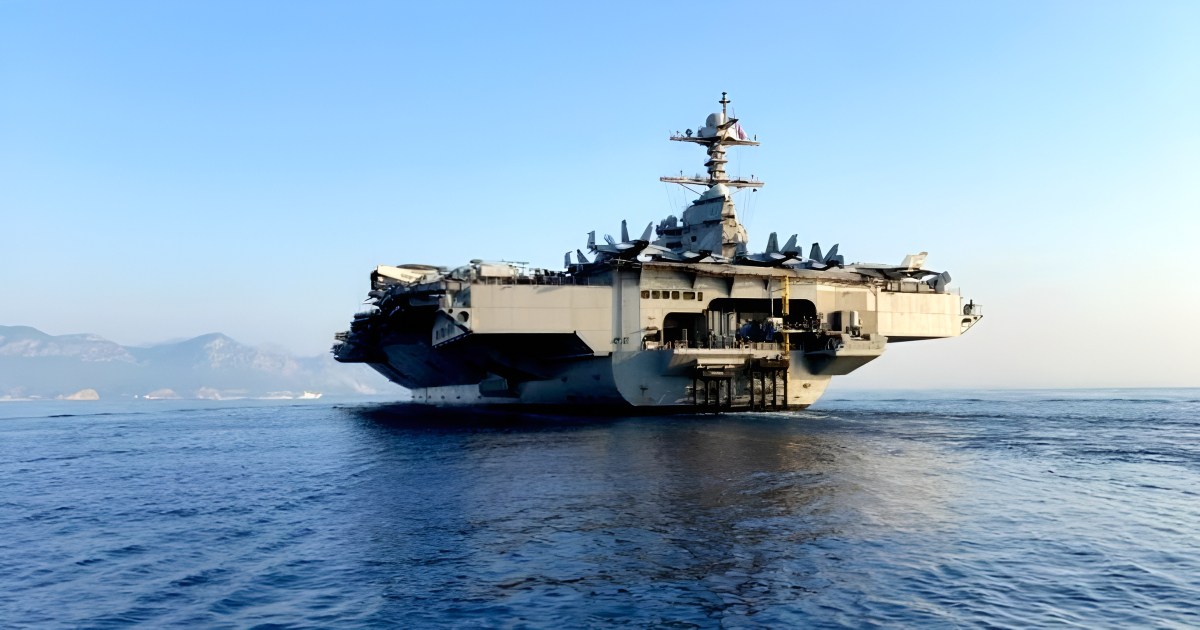
For instance, the deployment of the world's largest aircraft carrier, the Gerald R. Ford, is estimated to cost $11.4 million per day, accounting for its accompanying destroyers, submarines, and guided missile cruisers.
Additionally, the USS Iwo Jima, which held Maduro and Flores following their capture, along with the USS Fort Lauderdale, the USS San Antonio, and the 22nd Marine Expeditionary Unit, incurred daily expenses of $8.59 million.
Elaine McCusker, a former Pentagon comptroller and current senior fellow at the American Enterprise Institute, shared with Bloomberg that "Operation Southern Spear, including Operation Absolute Resolve, has likely cost around $2 billion since August 2025."
Mark Cancian from the Center for Strategic and International Studies, a bipartisan think tank, noted that these expenses exceed the fiscal year 2026 budget projections. "There is no contingency fund in the Defense Department's budget for unforeseen operations. Conflicts come with additional costs," he added.
Continued Naval Presence and Its Implications
The U.S. Navy's presence in the Caribbean remains strong, with at least two major naval units still deployed in the region as of February 12. This occurs amid heightened geopolitical tensions and increasing strategic pressure on Cuba.
Of particular interest to Havana is the ongoing presence of the USS Gerald R. Ford (CVN-78) in the Caribbean, operating under the 4th Fleet. This advanced aircraft carrier is the lead ship of a new class designed to project air, naval, and electronic power globally.
The U.S. Navy's deployment map explicitly labels the USS Gerald R. Ford as "Caribbean, 4th Fleet," indicating that its presence is part of a structured regional operation rather than an isolated occurrence.
The other significant element in the Caribbean is the USS Iwo Jima (LHD-7), marked on the map as part of the amphibious group under SOUTHCOM and also linked to the 4th Fleet.
The USS Iwo Jima is an amphibious assault ship capable of transporting Marines, vehicles, helicopters, and vertical take-off aircraft, designed for operations requiring rapid deployment and assault.
This deployment coincides with heightened maritime interdictions against the so-called “dark fleet,” which was transporting sanctioned oil from Venezuela to Cuba, alongside the recent shifts in the regional political landscape following Nicolás Maduro's capture.
Understanding the Financial Implications of U.S. Military Deployments
What factors contributed to the $3 billion cost of the U.S. military deployment in the Caribbean?
The $3 billion cost includes operational expenses for naval vessels, combat operations such as flight hours and ammunition, and the deployment of advanced naval units like the USS Gerald R. Ford and USS Iwo Jima.
Why is the USS Gerald R. Ford's presence in the Caribbean significant?
The USS Gerald R. Ford's presence is significant because it represents a strategic projection of U.S. military power in the region, indicating a structured operation under the 4th Fleet rather than a temporary deployment.
How does the U.S. military deployment affect the geopolitical landscape in the Caribbean?
The deployment heightens geopolitical tensions and strategic pressure, particularly on Cuba, while facilitating maritime interdictions against sanctioned activities, influencing the regional political dynamics.