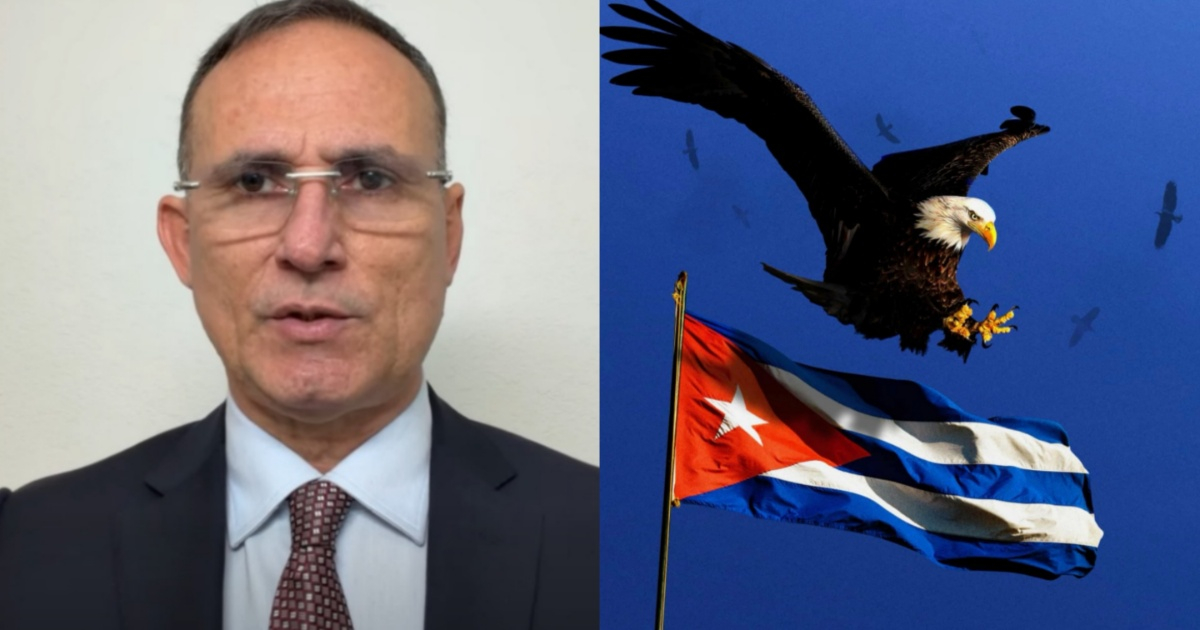
Cuban opposition leader José Daniel Ferrer has openly criticized the British newspaper The Guardian for its stance against the maximum pressure policy directed at the Cuban regime. Ferrer believes it's a mistake to denounce these measures.
Ferrer stated on X, "The Guardian is mistaken, as are the diplomats from countries considered 'allies' of the United States who oppose the maximum pressure strategy against the Castro-communist tyranny and the solidarity shown towards the oppressed people under this criminal regime."
He asserts that the majority of Cubans are in favor of the policies implemented by Trump, Senator Marco Rubio, and Mike Hammer regarding Cuba.
According to Ferrer, "The U.S. Chargé d'Affaires in Cuba, Mike Hammer, is more appreciated by the Cuban populace, who know and thank him, than all the diplomats and journalists biased in favor of the oppressive regime, pretending concern for a repressed and oppressed people to whom they haven't shown true solidarity."
Ferrer is responding to an article titled "No Fuel, No Tourists, No Cash: This Was the Week Cuba's Crisis Became Critical," penned by Ruaridh Nicoll, a correspondent in Havana for the British newspaper.
In Nicoll's article, more than five senior diplomatic officials on the island from different countries voiced their grievances about Hammer's lack of a detailed plan for regime change, beyond crippling the island by depriving it of oil.
These diplomats expressed their concerns about how quickly the fuel shortage could lead to extreme suffering, as noted in the piece.
The article also includes testimonies from concerned Cubans about the impact of the crisis, mentioning that many diplomats interviewed are already planning to leave the island.
Ferrer has recently criticized fellow opposition figure Manuel Cuesta Morúa for his stance against the Trump administration's pressure on the Cuban regime.
Ferrer commented, "With the U.S. maximum pressure policy on the tyranny, Cuba is not being strangled as Cuesta Morúa claims." In a response to a note from CiberCuba highlighting Morúa's statement that "strangling Cuba only strengthens repression," Ferrer disagreed.
"The pressure is on the tyranny. The goal is to save Cuba. When Obama's engagement policy was in place, there was more repression than ever. Repression increases if activism against the tyranny does, and the maximum pressure policy is the only strategy that can prevent the regime from repressing as they did on July 11, 2021," Ferrer argues, countering Morúa's view.
"Nothing could be further from the truth. The tyranny is cowardly, and when it knows there will be no consequences, it represses more forcefully. The current increase in repression is due to the rise in activism, and if the U.S. shows it is serious and that increased repression results in harsher penalties, it will be contained," he added.
"And if Europeans and Canadians also adopted a maximum pressure policy, containment would happen even faster. The U.S. should continue with its current policy. It's the most supportive of the Cuban people and the democratic opposition," Ferrer concluded.
Insights on Cuba's Political Tensions
What is the maximum pressure policy Ferrer supports?
The maximum pressure policy refers to a series of measures aimed at economically and diplomatically isolating the Cuban regime to force political change and support the local opposition.
Why does Ferrer criticize The Guardian's article?
Ferrer criticizes The Guardian for opposing the maximum pressure policy, which he believes is necessary to challenge the oppressive Cuban regime and support the Cuban people.
How does Ferrer view the role of US diplomats like Mike Hammer in Cuba?
Ferrer views US diplomats such as Mike Hammer as crucial allies for the Cuban people, appreciating their roles in implementing policies that challenge the regime while showing solidarity with the oppressed citizens.