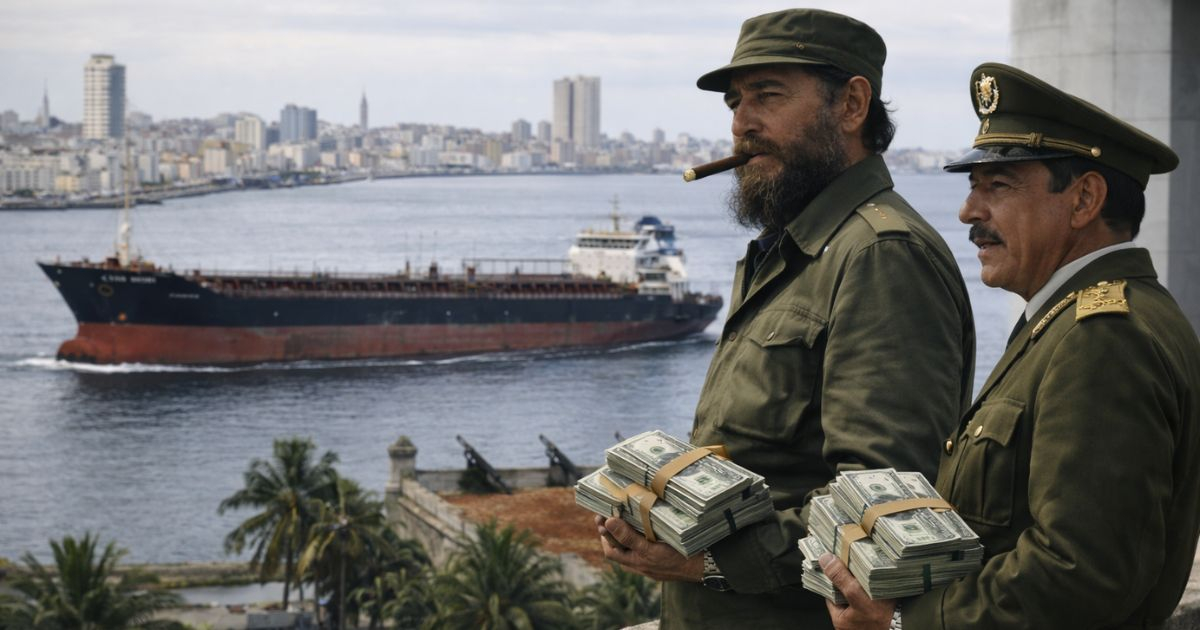
The intricate web of Cuba's oil trade began in 1960, when the island nation turned to the Soviet Union after U.S. companies refused to refine Soviet crude. This led to the nationalization of refineries in Cuba. The Soviet Union quickly became Cuba's primary oil supplier, with deliveries growing steadily to reach 13.1 million metric tons annually by 1985. At that time, Cuba's domestic consumption was about 10-11 million tons per year, while local production was almost negligible, covering only 6-9% of domestic needs.
The Soviet-Cuban Oil Exchange Mechanism
Cuba engaged in a unique re-export scheme: the island shipped sugar to the USSR at inflated prices—44.8 cents per pound compared to a global market price of just 4.1 cents. In return, it received oil priced below world market rates. This agreement allowed Cuba to sell surplus oil on Western markets, primarily in Western Europe, at spot prices, thus earning convertible currency. Notably, much of this oil never physically arrived in Cuba; the USSR often sold it directly in Europe and deposited the proceeds into Cuban accounts. Additionally, a triangular trade existed: Soviet oil supplied a Venezuelan refinery in Germany, while Venezuelan crude was shipped to Cuba, reducing transportation costs.
Years of Prosperity and Subsequent Decline
From 1983 to 1987, the re-export strategy flourished, accounting for over 40% of Cuba's convertible currency income. However, the collapse of the Soviet Union led to an abrupt end to this scheme, with oil deliveries dwindling dramatically in the early 1990s. According to the Oil & Gas Journal, the loss of oil re-export revenues was estimated at $1.6 billion, exceeding Cuba's total income from all other hard currency sources. This decline marked the beginning of Cuba's "Special Period," characterized by severe economic hardship.
The Venezuelan Oil Era
A new chapter began in 2000 when Fidel Castro and Hugo Chávez signed an agreement for Venezuela to supply Cuba with up to 53,000 barrels per day of oil under favorable terms. By 2012, this had increased to 105,000 barrels per day. In return, Cuba sent thousands of professionals, including doctors and educators, to Venezuela. Although the evidence of re-exports during this period is less clear, it is known that Cuba sold refined products from the Cienfuegos refinery, a joint venture with Venezuela's PDVSA, to third parties in the Caribbean.
The collapse of Venezuela's oil production in recent years has severely impacted Cuba, with shipments dropping to just 27,400 barrels per day by 2025. This decline has left Cuba facing a chronic energy deficit, with significant power outages and only minimal reserves remaining.
Enduring Economic Challenges
The historical reliance on subsidized oil trades has shaped Cuba’s economy significantly. The initial Soviet subsidies and subsequent Venezuelan oil deals provided crucial financial lifelines. Their loss has led to economic turmoil, making the regime’s reliance on such external support starkly evident. The re-export of oil, often unacknowledged, played a pivotal role in sustaining the Cuban government financially during challenging times.
Understanding Cuba's Oil Trade Dynamics
How did Cuba benefit from the Soviet oil trade?
Cuba benefited from receiving oil at prices lower than the global market, which it then resold for profit in Western markets, thus earning convertible currency.
What triggered the end of Cuba's oil re-export era with the USSR?
The collapse of the Soviet Union in the early 1990s led to a drastic reduction in oil deliveries, effectively ending Cuba's re-export operations and resulting in significant economic hardship.
How did the oil trade with Venezuela differ from the Soviet era?
While the Soviet era involved direct oil transfers and re-exports, the Venezuelan trade was characterized by concessions and the involvement of Cuban professionals in Venezuela, alongside refined product sales from joint ventures.
What are the current energy challenges facing Cuba?
Cuba faces significant energy shortages due to reduced oil imports from Venezuela and other sources, leading to frequent power outages and limited fuel reserves.