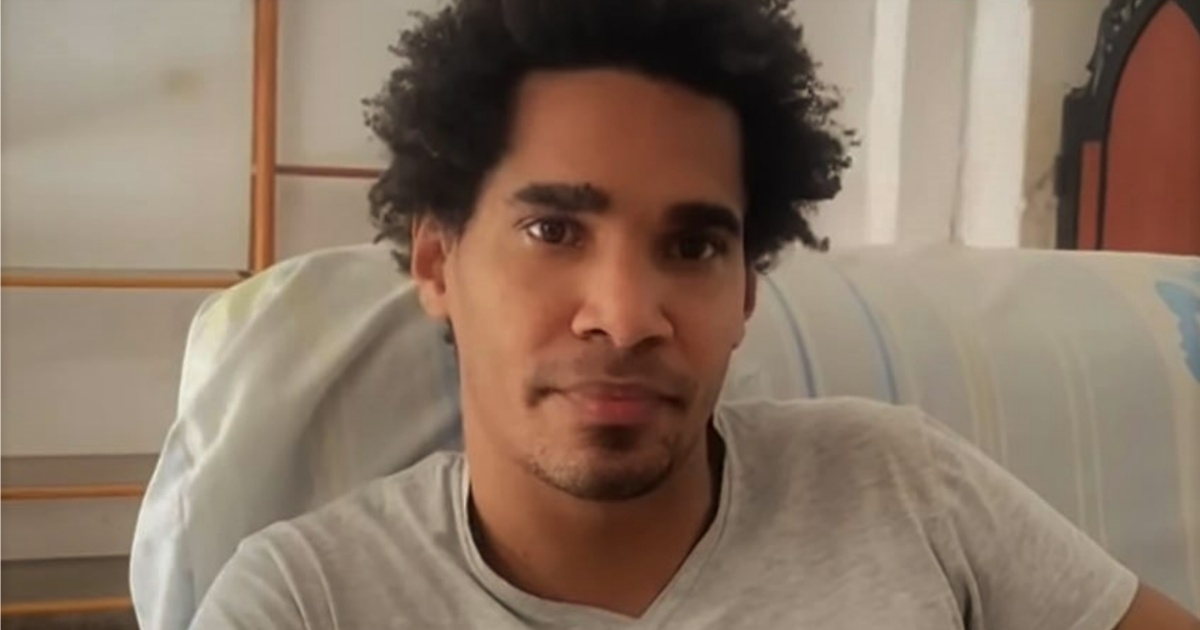
Political prisoner Luis Manuel Otero Alcántara has expressed his willingness to continue his activism from exile.
“Both Maykel and I were kept aside to see what Trump would do, and I’ve always felt like a kind of bargaining chip. With all that background in mind, I decided to go into exile,” Otero Alcántara said in a phone call with Ernesto Fundora, the director of a documentary about his work, as reported by Telemundo.
“They want to get rid of me, whether it's here, on the street, or anywhere else," the artist remarked, emphasizing that resistance to the Cuban regime should focus on a collective effort.
“There's not much more that can be done beyond what we've achieved as individuals,” he stated.
Discussing the island's current situation amid tensions with the Trump Administration, Otero noted, “Everyone lives with this strange fear of a bomb falling nearby, yet people say, ‘I’d rather die if it means my family can have a meal tomorrow.’”
In early February, Otero Alcántara urged authorities from prison to perceive the national reality through art and acknowledge the population's dire conditions. “I demand the Cuban regime look through the painting ‘Happy Peasants’ and recognize the destitution our people live in today. Art can also serve as a mirror,” he wrote.
The artist argued that change should not come from external pressure but as a response to the internal decay affecting Cuban society. “Given such material and spiritual poverty, it’s imperative to yield and allow life to progress. Don’t do it because of external pressure; do it so our people don’t continue to suffer,” he added.
In the same message, he linked the political power's persistence to a scenario of social collapse: “Do it so that disaster and violence no longer define Cuba.”
The documentary Luis Manuel Otero Alcántara: Estamos conectados, directed by Cuban filmmaker Ernesto Fundora, explores his artistic and civic journey, his role in the San Isidro Movement, and the impact of his actions on public discourse both inside and outside the island.
Understanding Luis Manuel Otero's Exile Decision
Why does Luis Manuel Otero Alcántara feel like a bargaining chip?
Otero Alcántara feels like a bargaining chip because he believes he was kept aside by Cuban authorities to see how political dynamics with the Trump Administration would unfold, suggesting his situation was being used for political leverage.
What is the significance of the painting 'Happy Peasants' according to Otero?
Otero Alcántara uses the painting 'Happy Peasants' to highlight the contrast between idealized portrayals of rural life and the harsh reality of poverty faced by the Cuban population, urging the government to acknowledge this discrepancy.
How does Luis Manuel Otero view the potential for change in Cuba?
Otero believes change should emerge from within, driven by the internal deterioration affecting Cuban society, rather than as a result of external pressures.