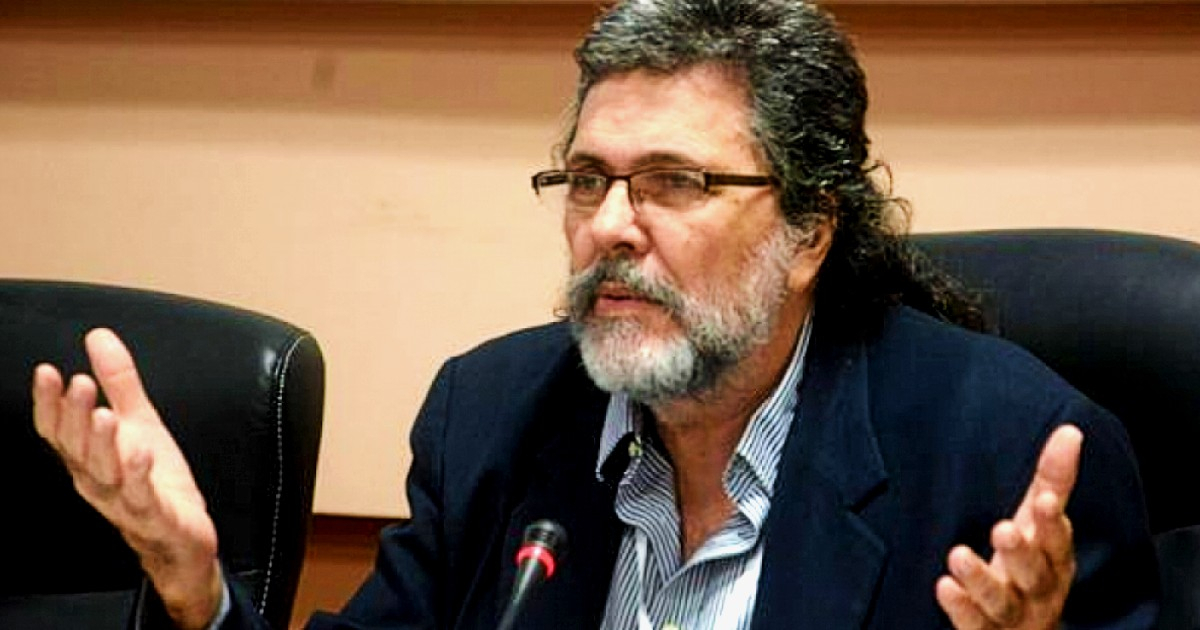
Abel Prieto Jiménez has issued another warning concerning Cuba's future in an article featured on Cubadebate, credited to REDH Cuba. He openly questions, "Are our days numbered?" Yet, rather than offering a self-critical reflection on the country's economic and social collapse, the piece primarily blames the "Empire" and an alleged international media offensive as the main reasons for the island's current crisis.
Prietos's narrative begins with the aftermath of Nicolás Maduro's arrest on January 3rd. He claims this event triggered a "wave of anti-Cuban euphoria" on social media, fueled by what he describes as "real and virtual annexationists" celebrating the potential demise of the Revolution.
The head of Casa de Las Américas portrays this phenomenon as a blend of historical grievances and "appetites for revenge," leading, in his view, to an "overtly fascist discourse."
In his critique, Prieto links this alleged offensive to an executive order signed by Donald Trump on January 29th, which he views as part of a strategy for "total economic suffocation" against Cuba. He backs his claims with a quote from activist Manolo De los Santos, who characterizes U.S. policy as "collective punishment," using "hunger, darkness, and disease as political weapons."
Beyond emphasizing external pressures, Prieto introduces what he calls "the meme war." He references an analysis by the Cubadebate Media Observatory, warning of a supposed "coordinated avalanche" of memes from Florida between January 30th and February 2nd, depicting Cuba as the "51st state" and Marco Rubio as a "key operator of punishment and transition."
The article describes these memes as annexationist propaganda, part of a psychological offensive intended to weaken the Cuban people's resolve. Within this context, Prieto suggests that U.S. "think tanks" are reacting to recent political affirmations by the regime, such as the tribute in Caracas to 32 fallen soldiers and the March of the Torches on January 27th.
Despite the question posed in the title, the underlying message reinforces the narrative of resistance. Prieto evokes a video of Fidel Castro mocking predictions about the Revolution's fall: "The 60s... it won't last past tomorrow... The 70s... it won't last past this week..."
Nevertheless, the article reveals a glaring inconsistency; while the government decries external campaigns, the internal crisis in Cuba deepens. The nation faces persistent blackouts, chronic shortages of food and medicine, rampant inflation, collapsed wages, and mass migration that has emptied entire neighborhoods.
In this scenario, Prieto's insistence on attributing national deterioration to "memes," social media, and external conspiracies appears more as an effort to shield the regime's political narrative than a plausible explanation for a weary population.
The question "Are our days numbered?" seems less like a genuine concern for the country's future and more like a rhetorical device to revive the old narrative of Cuba's perpetual resistance under siege.
Meanwhile, on the streets, many Cubans are not questioning whether the Revolution's days are numbered but rather how much longer they can endure.
Cuba's Current Challenges and Prieto's Perspective
What does Abel Prieto blame for Cuba's current crisis?
Abel Prieto primarily attributes Cuba's crisis to the "Empire" and an alleged international media campaign against the island, rather than acknowledging internal issues.
How does Prieto view the impact of social media on Cuba?
Prieto sees social media as a platform for "annexationists" to celebrate the potential fall of the Revolution, contributing to a wave of anti-Cuban sentiment.
What internal challenges is Cuba facing?
Cuba is dealing with continuous blackouts, chronic shortages of food and medicine, unrestrained inflation, reduced wages, and mass migration emptying neighborhoods.