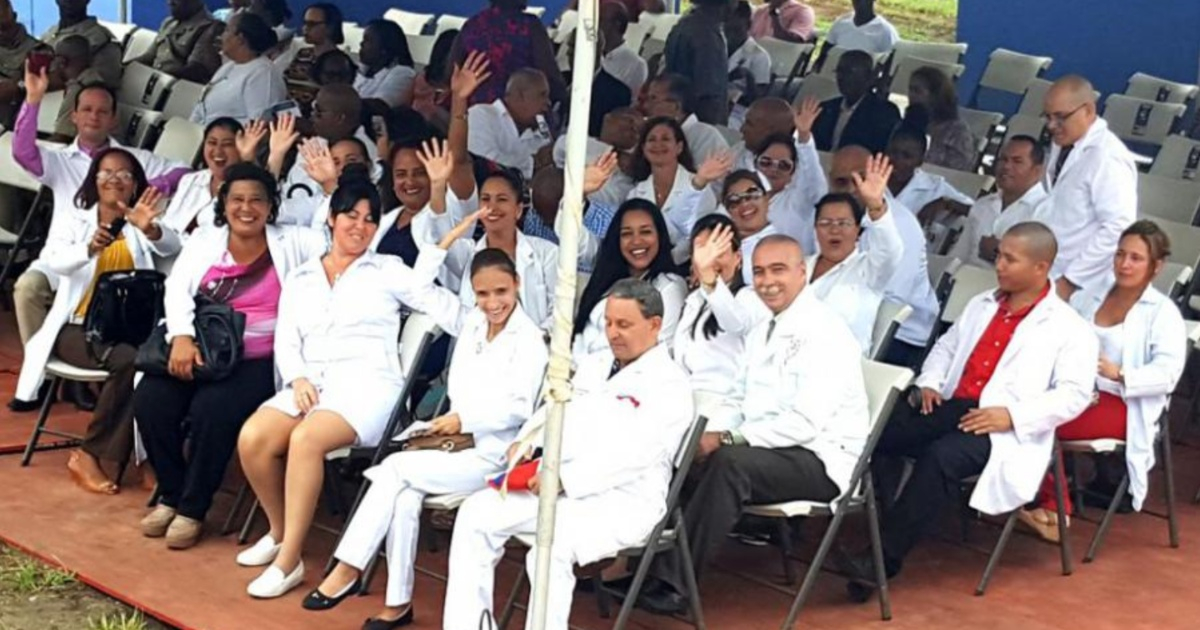
Guyana's Health Minister, Frank Anthony, has officially announced the termination of the country's bilateral medical cooperation agreement with Cuba. He explained that the agreement is no longer necessary because Cuban doctors are now independently coming to Guyana to seek employment opportunities.
Anthony shared this update during an interview with Kaieteur News. He stated that Guyana will continue to hire Cuban doctors and nurses who arrive on their own, provided they present their credentials, offering them "the same conditions as any Guyanese doctor."
He emphasized that there is "no need for the agreement" since the current system allows for hiring individuals who meet the necessary criteria upon arrival.
This decision coincides with speculation about potential links to U.S. pressure against Cuban medical programs abroad, which Washington accuses of exploitation and practices akin to human trafficking.
However, Anthony denied that the decision was influenced by U.S. pressure, asserting that "there was no specific reason" for ending the agreement.
The minister further noted that Guyana is adhering to its labor laws, which align with international expectations, including those expressed by the United States. "This country has labor laws that allow people to work and receive their salaries... we've been following standards consistent with what the U.S. government has requested," he stated.
Another Contract Termination with the Cuban Regime
Simultaneously, the government of St. Vincent and the Grenadines has announced a plan to decrease reliance on Cuban medical personnel as part of a "localization of medical staff" strategy.
Prime Minister Godwin Friday told the St. Vincent Times that a three-year phased reduction of dependence on Cuban doctors in the district will be implemented.
Friday attributed the shift to two main reasons: language barriers that, he noted, affect both patients and staff, and a desire to reduce costs associated with maintaining international medical teams.
The report also mentions that opposition leader Ralph Gonsalves questioned whether the changes were a response to U.S. pressure, though the prime minister did not present it as such when announcing the measure.
Under the administration of Donald Trump, Cuban "medical missions" have faced increased scrutiny in the U.S. Secretary of State Marco Rubio announced new visa restrictions in 2025 targeting Cuban officials and others deemed "complicit" in these programs.
Additionally, a statement from the U.S. Embassy in Barbados urged rejection of what it termed "forced labor" in Cuban medical programs, suggesting there are "alternative methods" for ethically hiring foreign personnel.
Understanding the Impact of Ending Cuban Medical Contracts
Why did Guyana end its medical cooperation agreement with Cuba?
Guyana ended the agreement because Cuban doctors are now independently coming to the country to seek employment, making the formal agreement unnecessary.
What is the reason for St. Vincent and the Grenadines reducing reliance on Cuban medical staff?
The reduction is part of a strategy to localize medical staff, addressing language barriers and reducing costs associated with international medical teams.