"Thank God, my son is finally home." Those words, penned from Havana, capture a Cuban mother's relief after enduring months of anxiety, uncertainty, and silence.
Immigration attorney Wilfredo Allen shared the message following confirmation that the young man, detained in the United States for several months, was ultimately deported back to Cuba on the first repatriation flight of 2026, which took place on Monday, February 9.
The young man's story was highlighted days earlier by his legal team as a cautionary tale for many Cuban families: the sudden shifts in immigration policies, unexpected detentions, and a process that turns into a nightmare even for those without a criminal record.
According to Allen's account, the young man entered the U.S. through Texas with an I-220A, joined his family in Tampa, applied for asylum, started working, and adhered to all immigration requirements. He even reported his change of address when relocating to San Francisco. Nevertheless, he never received a court date.
On November 21, he attended a routine ICE interview in San Francisco. He did not leave freely. A decision in his file altered everything: expedited removal.
Following this, he was shuffled through various detention centers, including facilities in California City and Arizona, before ending up at the Jackson Parish detention center in Louisiana. His legal defense sought remedies, including a habeas corpus, but the situation worsened.
Allen's office revealed that the young man was part of at least three deportation attempts. In one instance, the plane reached the Guantánamo Bay Naval Base. Another landed in Puerto Rico. Each time, the transfer was canceled, and he was sent back to Louisiana, further straining his family emotionally.
Finally, on Monday, February 9, he arrived in Cuba.
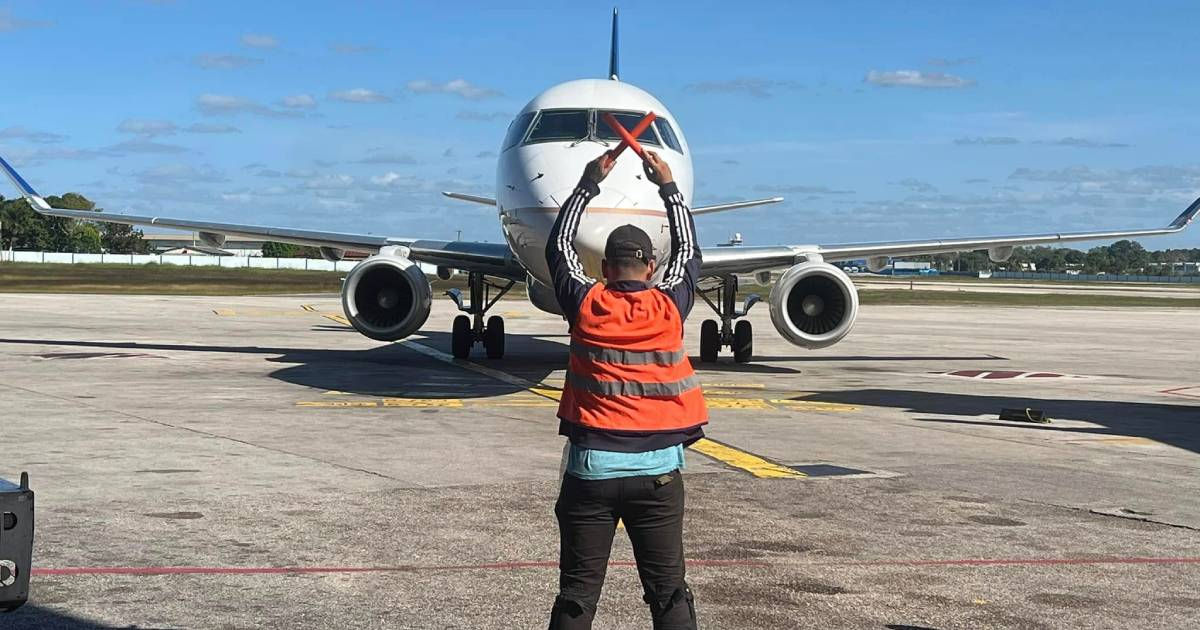
On that day, a total of 170 Cuban migrants were returned to the island from the United States in the year's first deportation flight, as reported by the Ministry of the Interior (MININT). The operation, conducted under bilateral migration agreements, landed at Havana's José Martí International Airport.
Cuban authorities confirmed that the flight carried 153 men and 17 women, noting that three individuals were taken to investigative bodies for alleged crimes committed before leaving the country.
The return comes at a particularly challenging time for Cuba: prolonged blackouts, shortages of food and medicine, transportation breakdowns, and a crisis reminiscent of the Special Period. For many deportees, going back does not mean "coming home" but rather returning to a nation with no immediate future.
This flight also signifies the resumption of deportations after a January hiatus and coincides with the intensification of migration policies by the Trump administration, which has increased expulsions of Cubans and even resorted to transfers to third countries or facilities outside the continental United States.
Understanding the Expedited Removal Process for Cuban Migrants
What is expedited removal in the context of U.S. immigration?
Expedited removal is a process that allows immigration authorities to quickly deport individuals without a formal hearing if they are found to be ineligible to enter or remain in the United States.
How does repatriation impact Cuban migrants?
Repatriation can be particularly challenging for Cuban migrants, as it often means returning to a country facing severe economic hardships and a lack of basic resources, making reintegration difficult.
What are the implications of the U.S. policy changes on Cuban deportations?
U.S. policy changes have resulted in increased deportations of Cuban nationals, often leading to abrupt and challenging adjustments for those affected and their families.