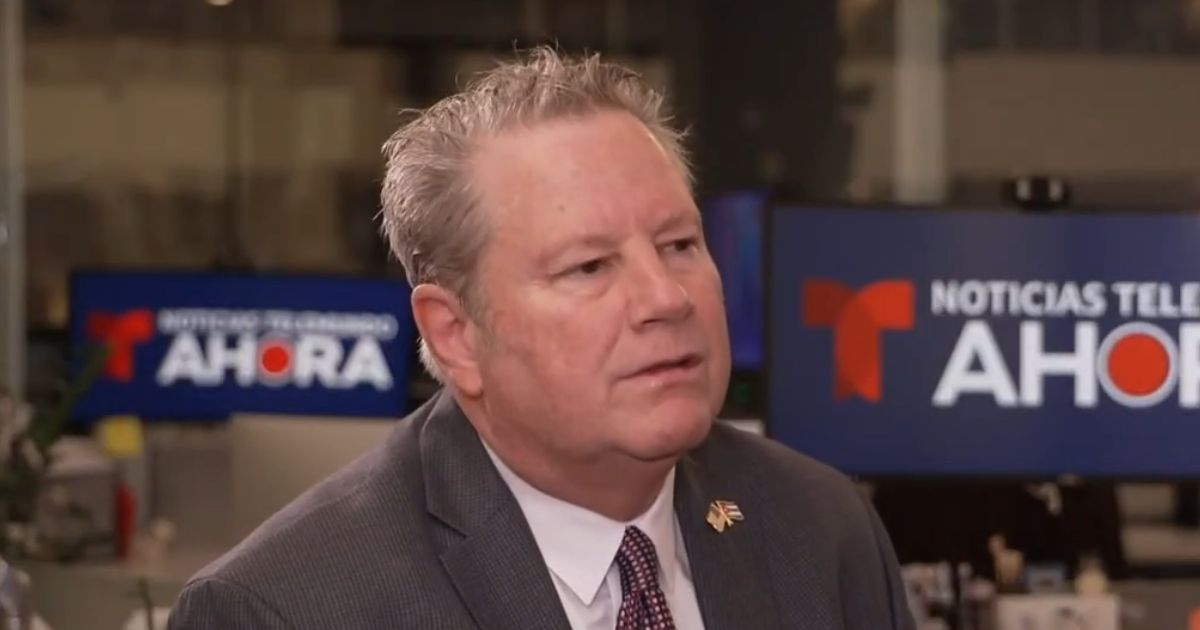
Mike Hammer, the head of the U.S. Mission in Cuba, has hinted that Washington might be engaging in talks with high-ranking figures within the Cuban regime. He suggested, without explicitly confirming, that there could be a Cuban counterpart to Delcy Rodríguez, who played a key role in Venezuela's recent political process.
During an exclusive interview with Telemundo's "Noticiero Ahora," Hammer stated, "There are discussions with some very high-ranking officials within the regime. Others may not be aware. Some might come out and declare, 'No, there's nothing going on.' Then, suddenly, a day or two later, they change their tune. This needs to be done in the way we are doing it," he emphasized.
Hammer drew parallels between the situation in Cuba and Venezuela, where power dynamics began to shift during a period of political transformation. "Just look at Venezuela. What happened there? Where did Delcy Rodríguez come from, and how are things shifting? Well, let's see," he added.
Speculations and Diplomatic Nuances
When asked directly by the journalist, "Who is the Delcy Rodríguez in Cuba?" Hammer responded with a smile, "You know I can't... Good question, I appreciate it. Good journalism. We're going to get into...". Although he refrained from naming names or providing specific details, his words left open the possibility of discreet dialogues with factions within the Cuban government, even as some public spokespeople deny any rapprochement.
Hammer's statements come at a critical juncture, as he reiterated that the situation in Cuba is reaching a breaking point. In the same Telemundo interview, Hammer revealed his belief that change is imminent by 2026. "Change is coming. It's unsustainable to wait any longer," he declared.
The Unsustainable Status Quo
According to Hammer, Cuba is facing a severe decline marked by the collapse of its energy infrastructure, a downturn in tourism, and worsening living conditions. After visiting several provinces, he reported hearing from many citizens that the current model is failing and the crisis worsens each year.
He described scenes of prolonged blackouts, food shortages, a transportation system in disarray, and unprecedented mass migration. He denounced political repression and the lack of fundamental freedoms, alongside signs of weariness within the leadership.
"The situation will only get more complicated by the day," he warned, emphasizing the regime's dwindling room for maneuver. Hammer stressed that it is up to Cuban authorities to decide if they are willing to engage in dialogue, but he insisted that time is not on their side. "It's time to speed things up," he concluded.
A Call for Change
Hammer asserted that he witnessed firsthand the deterioration after his return from Cuba. "The energy infrastructure is collapsing, everything is going wrong," he stated. He rejected claims that the crisis is due to recent U.S. measures, noting that the situation was already dire beforehand.
He reminded that the U.S. embargo does not restrict food or medicine and that Cuba maintains trade with numerous countries. "The problem isn't the lack of trade; it's that resources are used for the state's repressive machinery," he criticized.
Hammer questioned how the regime ensures fuel and vehicles for the police while large segments of the population lack electricity and transportation. He emphasized that the U.S. is "deeply concerned for the Cuban people" and does not wish for them to suffer further hunger or deterioration. This concern is shared by Secretary of State Marco Rubio.
He also noted that the current crisis differs from the Special Period of the 1990s, as the regime no longer has Venezuela's oil support. While he avoided detailing how a political change might unfold, Hammer reiterated that any transition should allow Cubans to rebuild the country's infrastructure and develop its economy with greater freedom.
In this context, his reference to Venezuela and Delcy Rodríguez implies that Washington is observing potential internal movements within Cuba's ruling elite. He insisted that the current system "is no longer sustainable" and that the international community cannot ignore the social and economic decline on the island. According to his perspective, the moment demands concrete decisions.
Understanding Cuba's Political Climate
What is the significance of a Cuban equivalent to Delcy Rodríguez?
A Cuban equivalent to Delcy Rodríguez would suggest the presence of a key figure within the regime who might facilitate political transformation, similar to the role Rodríguez played in Venezuela.
Why does Mike Hammer believe change is inevitable in Cuba?
Hammer believes change is inevitable due to the unsustainable economic and social conditions in Cuba, including failing infrastructure, declining tourism, and worsening living conditions.