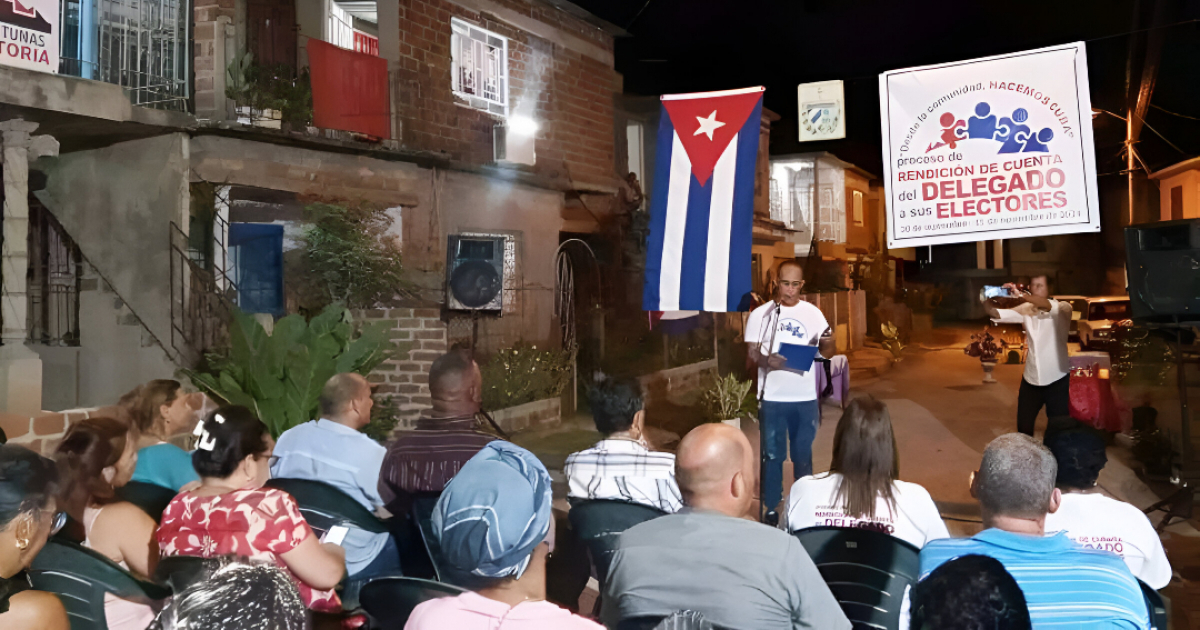
The Cuban government has temporarily released municipal delegates from their work duties to increase their political presence in neighborhoods amid a worsening economic and energy crisis.
This action was taken through Agreement No. 556-X from the Council of State, signed by the President of the National Assembly of People's Power, Juan Esteban Lazo Hernández. It responds to a challenging scenario marked by prolonged blackouts, fuel shortages, and declining basic services.
The agreement references Article 193 of the Constitution, which mandates that delegates fulfill the duties entrusted by their constituents in the community's interest, balancing this responsibility with their regular roles.
By citing this article, the government seeks to provide legal backing for the decision to temporarily release certain delegates from their jobs.
According to the official document, the presidents of the Municipal Assemblies have the authority to decide which delegates will be freed from their job responsibilities to devote more time to direct engagement in their areas, amid growing social discontent.
The text acknowledges the limited availability of fuel, issues within the electrical system, and the challenges in ensuring essential services. It also partly attributes the situation to measures enacted by the United States government.
The agreement stipulates that delegates must keep the public informed about government decisions and encourage community involvement in issues related to food production, price control, and energy, which are particularly sensitive in the current climate.
The document emphasizes that delegates should prioritize critical issues like food production, the energy crisis, and price regulation, topics that currently fuel much of the public's dissatisfaction due to inflation, power outages, and shortages of basic goods.
Additionally, Popular Councils and local administrations are tasked with strengthening oversight over territorial entities and conducting systematic analyses of community management.
This directive will be supervised by the Commission for Attention to Local Bodies of People’s Power and the Secretariat of the National Assembly, as the country grapples with one of its most severe energy and economic crises in recent years.
The directive does not specify a fixed duration, stating that the release from work duties will continue “until further notice,” leaving the measure's timeframe open-ended based on the crisis's development.
Understanding Cuba's Delegate Release Strategy
Why have Cuban municipal delegates been released from their jobs?
The Cuban government has released municipal delegates from their work duties to increase their political presence in neighborhoods as part of a strategy to tackle the country's worsening economic and energy crisis.
What issues are Cuban delegates expected to prioritize?
Delegates are expected to prioritize food production, the energy crisis, and price control, as these issues are significant sources of public dissatisfaction due to inflation, power outages, and shortages of essential goods.
Who oversees the implementation of the delegate release strategy?
The implementation of this strategy is overseen by the Commission for Attention to Local Bodies of People’s Power and the Secretariat of the National Assembly.